US News
Military Drone Defense Tests Prompt El Paso Airspace Shutdown
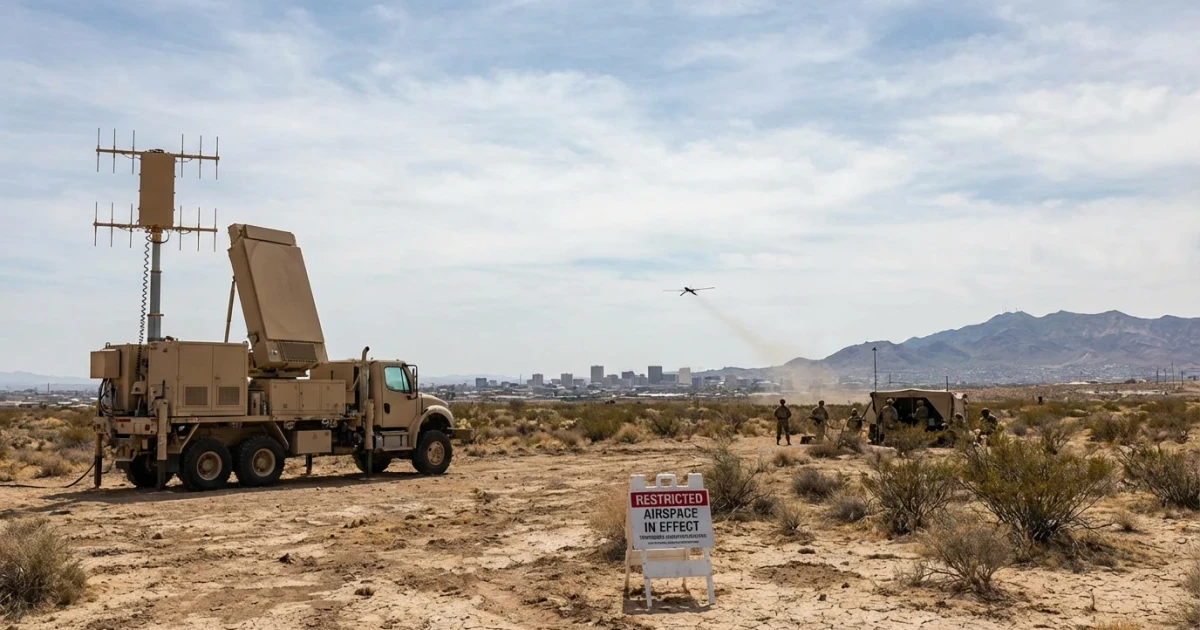
U.S. military testing of anti-drone technology prompted a temporary shutdown of airspace over El Paso, Texas, according to individuals briefed on the matter. The incident, which underscores the increasing focus on counter-drone operations by federal agencies, has raised new questions about how such activities affect commercial and civilian aviation in key corridors.
Details Emerge on Airspace Closure
Reports indicate that the Federal Aviation Administration (FAA) issued a Notice to Air Missions (NOTAM) restricting access to airspace over the El Paso area during the period of military testing. While official statements remain limited, people familiar with the situation confirmed that the cause was a scheduled demonstration of counter-unmanned aircraft systems (CUAS) technology.
Such airspace restrictions are not unprecedented, but they are infrequent over busy urban regions like El Paso. Data from the FAA’s U.S. Airspace Data portal shows that most temporary flight restrictions are related to VIP movements, space launches, or hazardous operations, making this incident noteworthy for its connection to emerging defense technologies.
Understanding Counter-Drone Technology
Efforts to mitigate the risks posed by unmanned aircraft have intensified in recent years. According to the Congressional Research Service, both the Department of Defense and the Department of Homeland Security have increased their investment in CUAS systems capable of detecting, tracking, and neutralizing drones that could threaten critical infrastructure or public safety.
- Technologies tested include radar and radio frequency detection, signal jamming, and kinetic interceptors.
- The El Paso exercise is part of a broader trend toward live operational testing in real-world environments, as documented in the Government Accountability Office’s counter-drone technology report.
- Such tests require airspace closures to ensure safety and prevent interference with civilian aircraft.
Impact on Aviation and Public Safety
The temporary shutdown in El Paso highlights the balancing act between national security and minimizing disruptions to commercial air travel. FAA guidance emphasizes that counter-drone operations must be closely coordinated to mitigate risks to manned aircraft and comply with federal law. Temporary flight restrictions (TFRs) are typically short-lived, but they can cause delays and rerouting for airlines and general aviation pilots.
As drone activity continues to grow nationwide, experts expect more such incidents. The Cybersecurity and Infrastructure Security Agency (CISA) notes that C-UAS capabilities are increasingly vital for protecting airports, military facilities, and other sensitive locations. However, the agency also calls for transparency and public engagement to address privacy and operational concerns.
Looking Ahead: Policy and Technology Evolution
The El Paso airspace closure signals a growing intersection between emerging defense needs and civilian airspace management. With the proliferation of commercial and recreational drones, authorities are expected to increase both the frequency and sophistication of counter-drone activities.
Ongoing reviews by agencies such as the FAA, Department of Defense, and Congress will shape future protocols for CUAS testing and deployment, aiming to strike a balance between innovation, safety, and public trust.