Science
Milky Way Shines in New SpaceX Dragon Photo
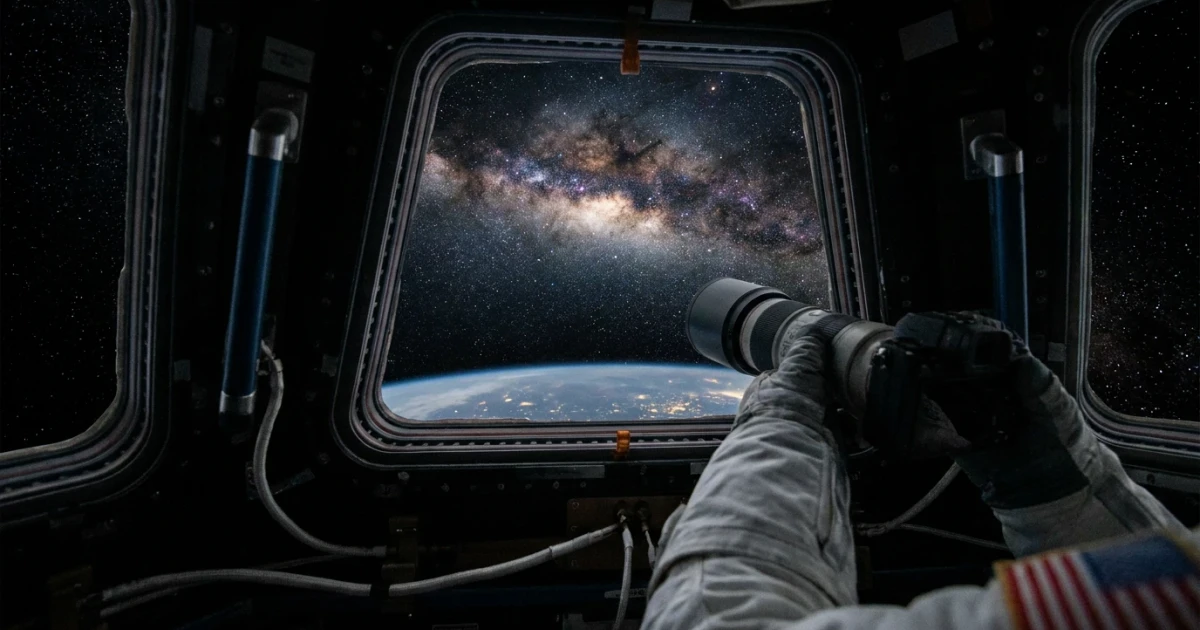
NASA astronaut Chris Williams has captured a rare and stunning view of the Milky Way’s central band from the vantage point of a SpaceX Dragon spacecraft, offering the public a fresh perspective on our home galaxy as seen from space.
Capturing the Milky Way from Orbit
The photograph, taken in April 2026 and shared by NASA, features the bright, central band of the Milky Way stretching vertically across the frame—a sight few ever witness directly. Williams, aboard the SpaceX Dragon during a mission to the International Space Station, documented the scene using specialized low-light imaging equipment, which enhances the intricate details of the galaxy’s dense star fields.
Understanding the Milky Way’s Structure
The Milky Way is a barred spiral galaxy that measures about 100,000 light-years in diameter and contains an estimated 100 to 400 billion stars. Our solar system is located roughly 27,000 light-years from the galactic center, nestled in one of the spiral arms. The central band visible in Williams’s photograph is composed of densely packed stars, gas, and dust, creating the luminous stripe that observers on Earth can only partially view due to atmospheric interference and light pollution.
- Diameter: 100,000 light-years
- Estimated stars: 100-400 billion
- Solar system distance from center: ~27,000 light-years
Why Space-Based Views Matter
Viewing the Milky Way from space, unimpeded by Earth’s atmosphere, delivers unmatched clarity. The NASA SkyView survey provides interactive maps showing how features like the galactic bulge and spiral arms appear across different wavelengths. Astronaut-captured images, such as this one by Williams, complement these surveys, adding a human touch and unique vantage point to scientific data collected by telescopes and satellites.
SpaceX Dragon: Expanding Astronaut Access
The mission carrying Williams was one of several recent collaborative flights between NASA and SpaceX, facilitating research and technology demonstrations on the International Space Station. The SpaceX Dragon spacecraft has become a vital tool for transporting astronauts and equipment, enabling more frequent opportunities for space-based astronomy and Earth observation.
Science and Public Engagement
Images like Williams’s help bridge the gap between technical research and public curiosity. They inspire new generations of scientists and provide context for ongoing missions such as the European Space Agency’s Gaia project, which has mapped over a billion stars in the Milky Way to date. Detailed images also support research efforts by organizations like the Sloan Digital Sky Survey, which studies the galaxy’s structure, composition, and evolution.
Looking Ahead
As commercial spaceflight continues to advance and missions become more frequent, the wealth of visual and scientific data about the Milky Way galaxy will only increase. Each new image captured from orbit not only expands our scientific knowledge but also deepens our appreciation of our place in the cosmos.