Health
Millions under heat alerts as dangerous July Fourth heat wave builds
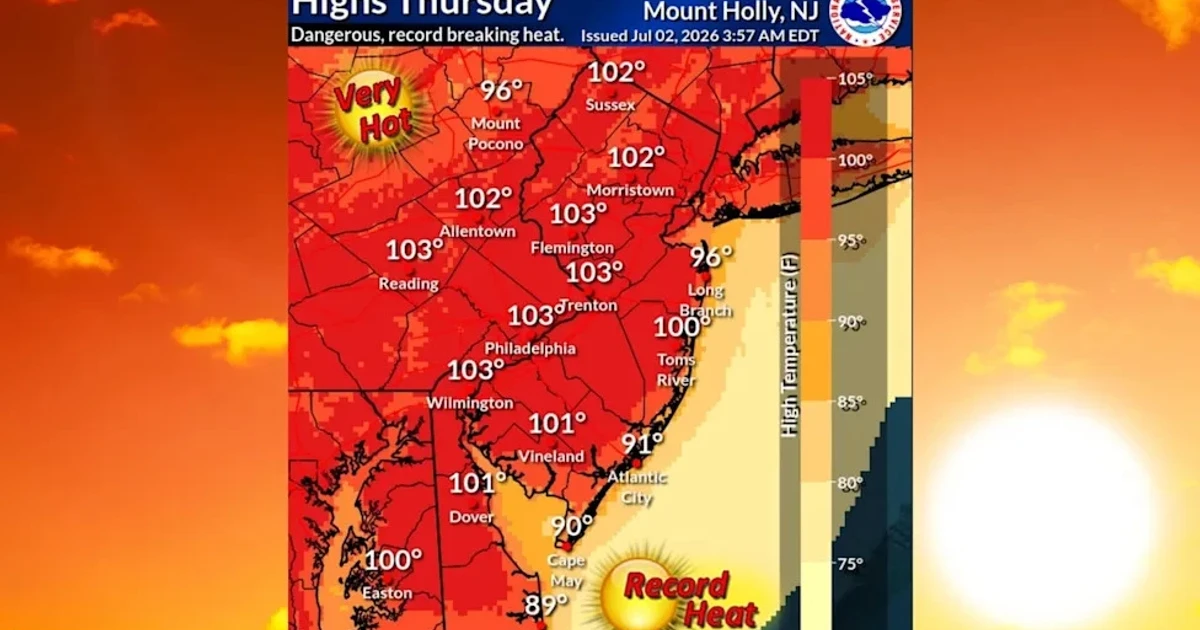
Millions of Americans were under heat alerts as a dangerous July Fourth heat wave built across the Plains, Northeast and much of the Midwest and East Coast, with humidity making the air feel far hotter than the thermometer showed. Heat index readings of 100 to 115 degrees were possible, and forecasters said the eastern U.S. heat was likely to peak on Friday and Saturday.
The National Weather Service said record-setting heat was expected over the next several days from the Intermountain West through the northern Plains, while dry and breezy conditions raised fire-weather concerns in the West. CBS News said the heat dome covered more than half of the United States, a sprawling pattern that put holiday travel, outdoor work and public safety plans under pressure at the same time.

The Weather Prediction Center’s experimental HeatRisk guidance flagged impactful heat threats for seven days, using a color-numeric index to show the potential for heat-related impacts. The National Weather Service says an Extreme Heat Warning is issued when an extreme heat event is expected in the next 24 to 36 hours, with a heat index of 110 or greater east of the Blue Ridge and 105 or greater west of it. That threshold underscores how quickly conditions can turn dangerous when humidity stays high through the day and overnight temperatures do not fall enough for bodies to recover.
State and city officials were already moving to blunt the toll. Maryland Gov. Wes Moore issued a State of Preparedness ahead of the holiday heat wave, while New York City was entering its first heat wave of 2026 during the last days of June and early July. In Philadelphia, the city health department said the previous week’s heat wave caused seven heat-related deaths, a reminder that the risks do not stay abstract once the alerts turn into emergency room visits and fatalities.

Another CBS News report later said some desert communities in the western United States could reach 117 degrees on July 9, showing how the same pattern that baked the East also left the Southwest exposed to punishing highs. With extreme heat building in both directions at once, emergency managers faced a familiar but worsening challenge: more people, in more places, were being asked to stay safe while the country’s power demand, cooling needs and public health systems climbed together.
Sources
- [1]news.google.com
- [2]cbsnews.com
- [3]weather.gov
- [4]wpc.ncep.noaa.gov