World
Mitch Albom's Haiti orphanage keeps faith amid gang violence
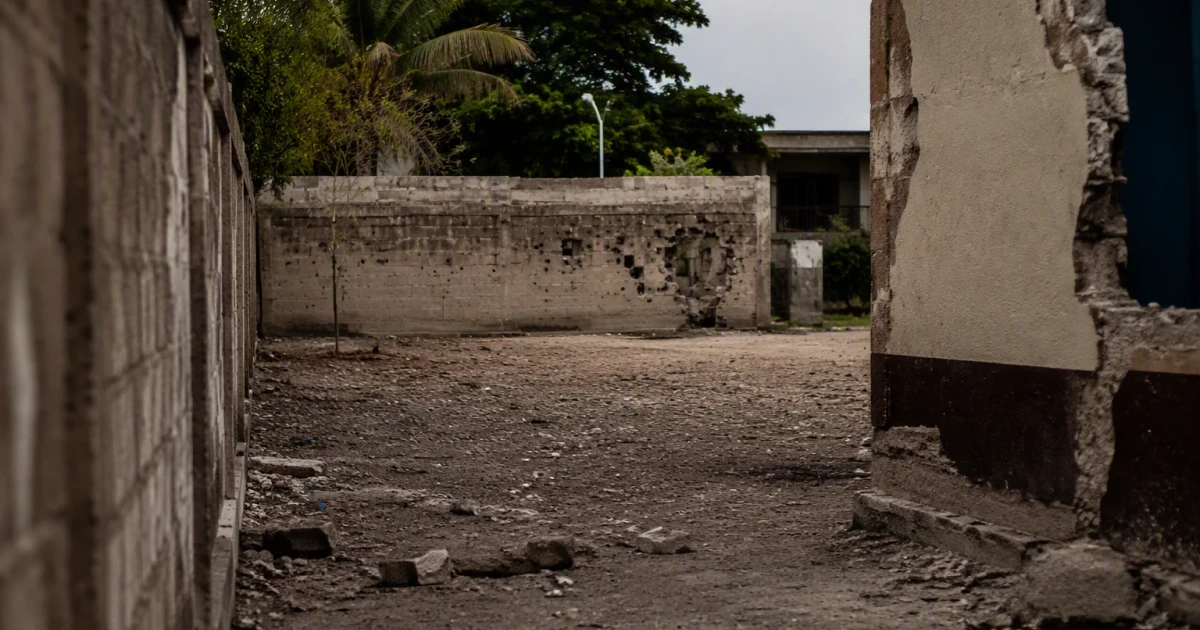
Keeping children alive in Port-au-Prince now means more than food and shelter. At Have Faith Haiti, Mitch Albom and his wife Janine run an orphanage that tries to protect some of the city’s most at-risk children while preserving school, routine and a sense of family in a place where gangs control daily life.
A refuge inside a broken capital
Have Faith Haiti is in Port-au-Prince, Haiti, and its own site describes the orphanage as a “big, sprawling, wildly different family” for children dealing with hardship, laughs and challenges. That language captures the scale of the job: the project is not only a place to sleep, but a structured home built around care, education and stability in a city where instability has become the norm.
The organization’s website makes that broader mission visible through its navigation. Alongside About and History, it includes Meet the Children, Core Programs, School, Life at the Orphanage and A Hole in the Roof, showing that the work extends from day-to-day supervision to education and the long arc of a child’s life there. In a capital where the state has been hollowed out by violence and insecurity, those pages read less like marketing than a list of functions that still have to be performed.
Mitch Albom’s role as caretaker, not celebrity
Albom has become the public face of the operation, but the story at Have Faith Haiti is less about fame than about endurance. He and Janine Albom run the orphanage, and the archive on the site says he writes about “running an orphanage in impoverished Port-au-Prince, Haiti, his kids, their hardships, laughs and challenges.” That framing is important because it shifts the focus from philanthropy as image to child protection as daily labor.
His public writing also records how close the danger can get. On Dec. 2, 2022, Albom wrote that a trip back from the airport involved a frightening encounter with angry protesters, a reminder that even ordinary travel can become risky in Port-au-Prince. By January 21, 2023, he was responding to a doctor who had worked in Haiti and told him the orphanage’s effort was “in vain,” a challenge Albom used to argue for continuing the mission rather than abandoning it.
The pressure inside the gates
The most alarming moments in Albom’s posts are the ones that make clear how vulnerable the children and staff are even on the property itself. On May 1, 2023, he wrote that staff feared someone might have been on the orphanage property as gangs and violent resistance gripped Haiti. That detail matters because it shows the risk is not abstract or confined to the streets outside; it can reach the walls of the home itself.
By March 22, 2024, Albom’s language had shifted toward a stubborn programmatic future, saying, “What’s next for Have Faith Haiti? Hope. Faith. Love. Family. Culture. Health. Sharing.” The list is revealing because it shows the institution trying to do several jobs at once: caring for children, maintaining identity, and holding together the basics of physical and emotional health. For children living through gang violence, that combination is part survival strategy, part education, part social infrastructure.
Why private orphanages are carrying so much weight
The deeper issue is what Have Faith Haiti represents in a country where private institutions are increasingly doing work that neither the Haitian state nor the wider aid system can reliably guarantee. The orphanage’s school page and core programs suggest a model built around continuity, not emergency relief alone. Children do not just pass through for temporary protection; they live inside a system that has to replace multiple missing public services at once.
That burden is visible in the way the organization narrates itself over time. A 2025 post titled “Smiles and growth in a summer of transition” points to adaptation rather than closure, while a Dec. 31, 2025 post praised the staff for continuing to press forward despite difficult conditions. Those are not the words of a place operating in calm. They are the language of a team trying to keep children’s lives organized while the surrounding city remains unstable.
A 2026 CBS News/60 Minutes profile sharpened that picture further by describing the orphanage as “a small oasis for children inside a gang-controlled city.” The phrase fits because it captures both the rarity and the fragility of the place. Have Faith Haiti is not solving Haiti’s crisis, but it is showing what child protection looks like when a family, a school and a shelter have to survive inside a city where normal civic life has nearly disappeared.