World
Monsoon landslides kill 14 in Bangladesh Rohingya camps
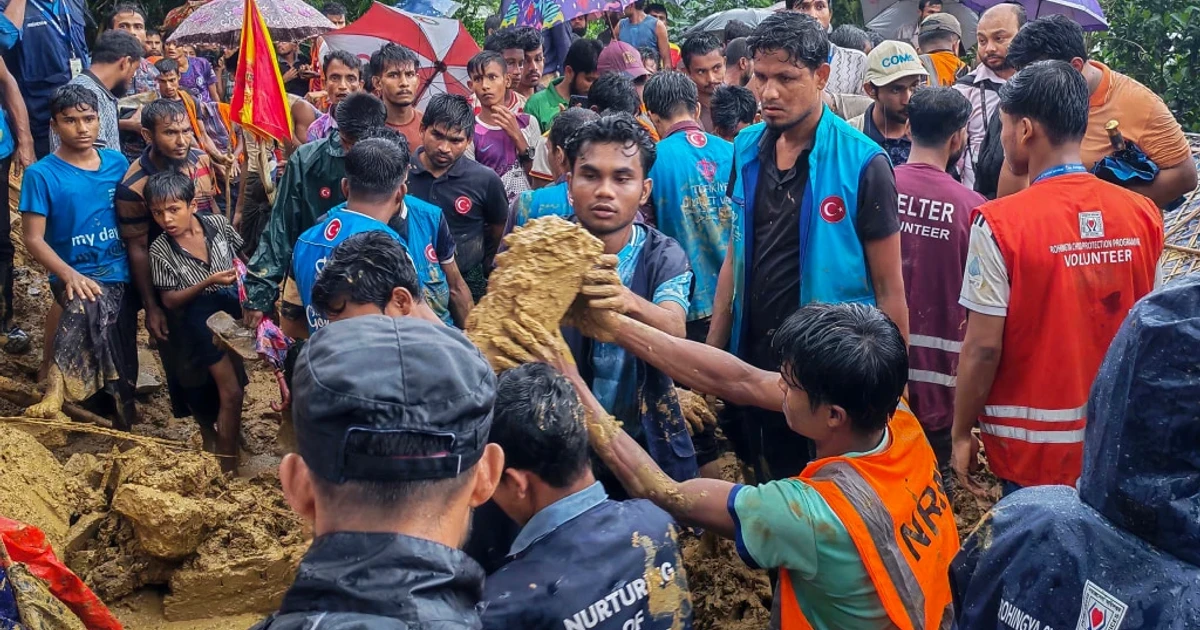
Monsoon rains triggered landslides and flooding across Rohingya camps in Cox’s Bazar, Bangladesh, killing at least 14 refugees and forcing thousands of families into emergency shelter after bamboo-and-tarpaulin homes were destroyed or submerged. The dead included three girls and a teacher when a landslide hit an Islamic learning center, while separate slides in six camps killed at least 10 more people as rescuers moved through waterlogged paths and unstable slopes.
The death toll shifted as volunteers and local authorities pulled survivors from the mud and tried to verify casualties. Officials first put the figure at eight in the madrasa collapse, then corrected it to five after double-counting during rescue operations. Other tallies put the number of dead from landslides at four locations in Cox’s Bazar at nine, underscoring how quickly the situation changed as crews reached cut-off areas and matched names with the injured and missing.
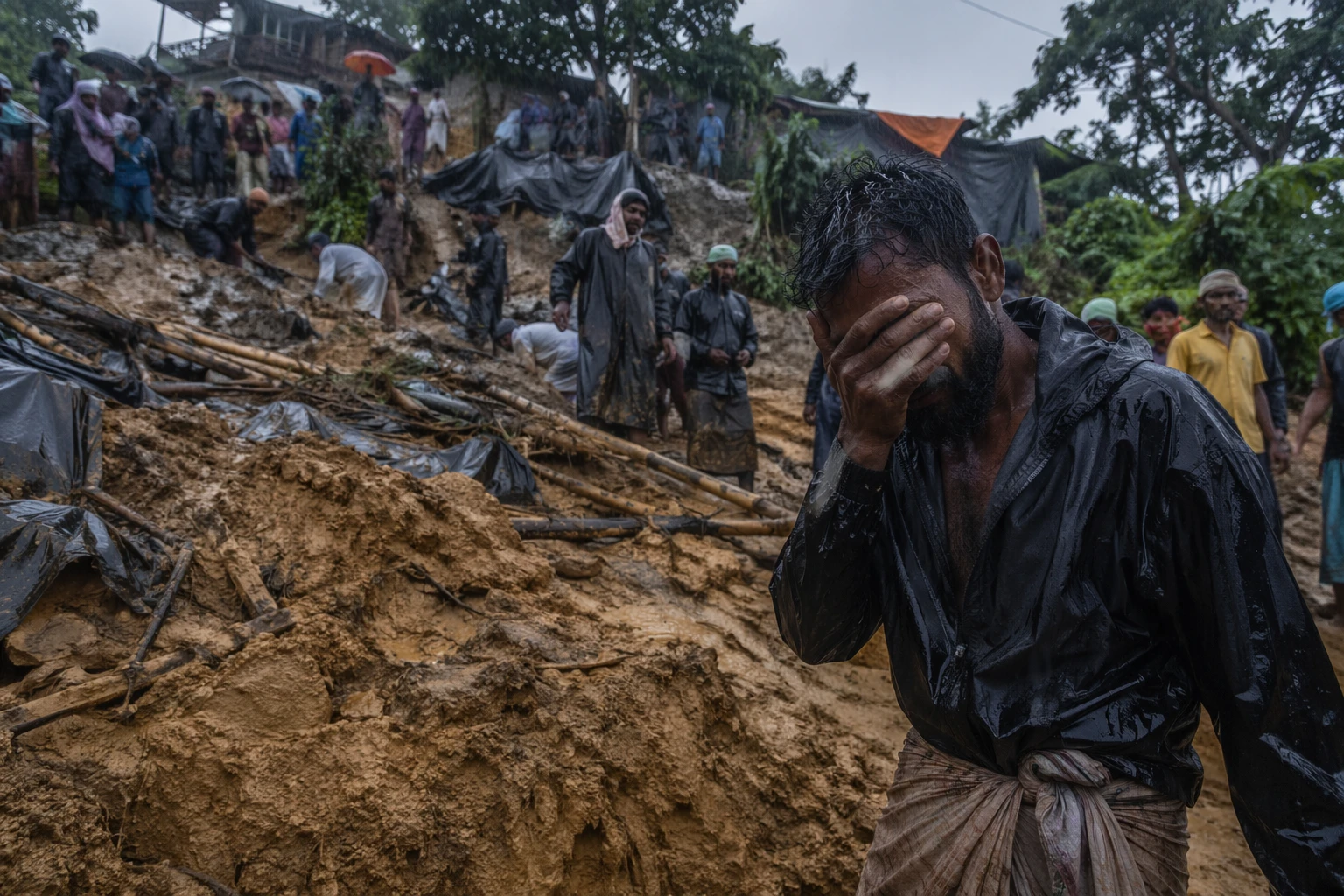
The disaster struck a settlement built for families that fled violence in Myanmar and now live on steep, unstable hillsides with poor drainage and fragile housing. The Rohingya population in Bangladesh remains in protracted displacement eight years after the 2017 influx, and UNHCR counts more than 1.1 million refugees in Cox’s Bazar and Bhasan Char. Relief groups and local authorities used loudspeakers, volunteers and community leaders to move residents out of high-risk zones, sending many into learning centers that had already become emergency shelters.
A United Nations Office of Internal Oversight Services audit issued on Dec. 26, 2025 found that the Inter-Sector Coordination Group was less effective in coordination, leading to fragmented implementation, duplication and gaps in service delivery. It found 67 percent of funds went to immediate response and only 17 percent to empowerment and solutions, while planning, management and monitoring shortcomings hurt energy, water, sanitation, health and shelter services. It listed eight recommendations and found none had been implemented.
In May 2026, the United Nations and partners appealed for $710.5 million to cover the most critical needs of Rohingya refugees and host communities in Cox’s Bazar and on Bhasan Char, a scaled-down 2026 plan that would reach up to 1.56 million people. The appeal was 26 percent smaller than the previous year, after the 2025-26 Joint Response Plan launched in March 2025 sought $934.5 million in its first year to assist about 1.48 million people. In June, the European Union provided a EUR 14 million development grant.
Sources
- [1]globalissues.org
- [2]oios.un.org
- [3]unhcr.org
- [4]data.unhcr.org
- [5]thedailystar.net
- [6]msn.com
- [7]aljazeera.com