Science
Moon Dust Mystery: NASA Unveils Surprising Limits on Earth’s Water Origins
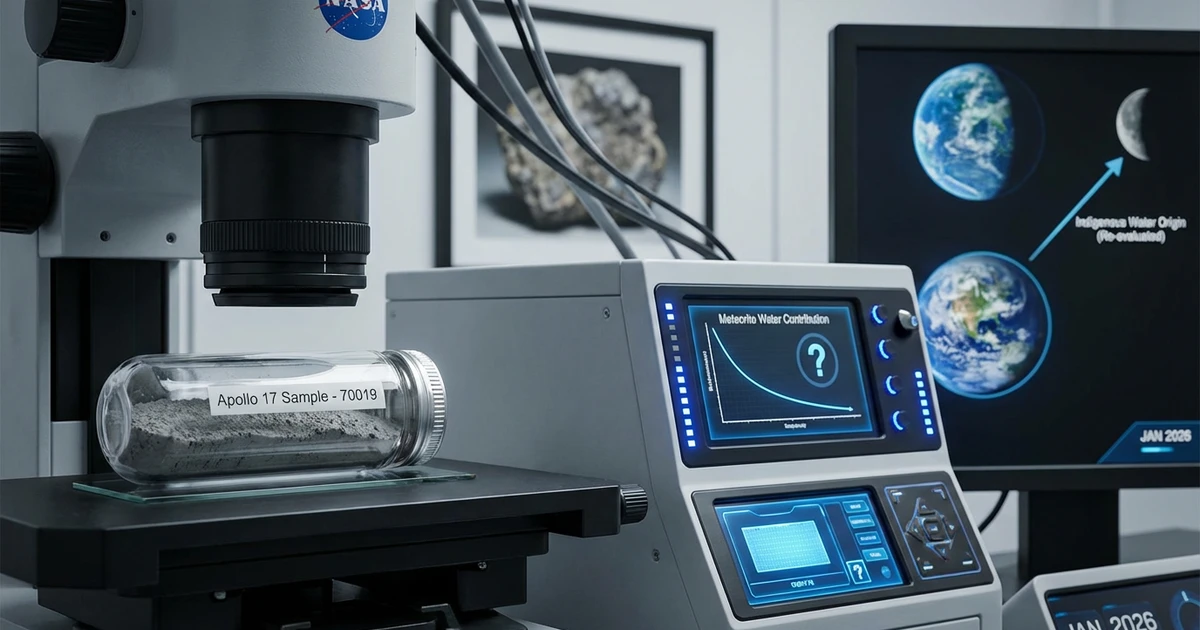
NASA’s latest research into 50-year-old lunar regolith samples has shed new light on one of planetary science’s most enduring mysteries: the origins of water on Earth. Findings from an in-depth analysis suggest that meteorites striking the Moon—and by extension, Earth—may have contributed far less water than previously thought, challenging longstanding assumptions about how our planet became habitable.
Half a Century Later: Revisiting Apollo Samples
For decades, scientists have pored over NASA’s Apollo-era lunar samples to uncover clues about the early solar system. Recent efforts focused on lunar regolith—commonly known as Moon dirt—collected over 50 years ago. This material acts as a natural archive, preserving evidence of impacts from meteorites and other space debris throughout lunar history.
Testing the Meteorite-Water Hypothesis
One dominant theory has posited that meteorite impacts delivered significant amounts of water to both the Moon and Earth. By analyzing the chemical and isotopic signatures within the ancient lunar regolith, NASA scientists sought to test whether these impacts could account for the water found on our planet today.
- Researchers examined the hydrogen isotopes in the lunar soil, which serve as fingerprints for sources of water.
- They found that the composition of hydrogen in the regolith did not match what would be expected if meteorites were a major contributor.
- The study concluded that meteorite impacts delivered only a limited amount of water to the lunar surface—and, by extension, to Earth.
Implications for Earth’s Water Origins
The results have significant ramifications for our understanding of how Earth came to possess its abundant water reserves. If meteorites are not the primary source, alternative hypotheses gain traction—such as water being present in the planet’s building blocks from the start, or delivered by other means like icy comets or interplanetary dust.
The Value of Lunar Regolith
Lunar regolith continues to be an invaluable resource for planetary scientists. Its relatively untouched condition preserves a record of solar system events that have long since been erased from Earth’s dynamic surface. This latest study demonstrates the power of revisiting legacy samples with modern technology, offering fresh insights even decades after their collection.
What’s Next in the Search for Water’s Source?
NASA’s findings open the door to new research directions. Scientists are now likely to intensify the search for other mechanisms behind Earth’s water, including:
- Studying comets and asteroids with different isotopic signatures
- Exploring the role of solar wind interactions with planetary surfaces
- Modeling planetary accretion with water-rich materials
Conclusion: Rethinking a Cosmic Puzzle
This research underscores the complexity of tracing Earth’s water to its true origins. By ruling out meteorites as the dominant source, NASA scientists have sharpened the focus of one of space science’s most captivating quests. Future lunar missions and advanced analytical techniques promise to uncover even more about the deep history locked in the surface of the Moon—and our own blue planet.