Politics
Moore’s Push to Redraw Maryland Map Fails
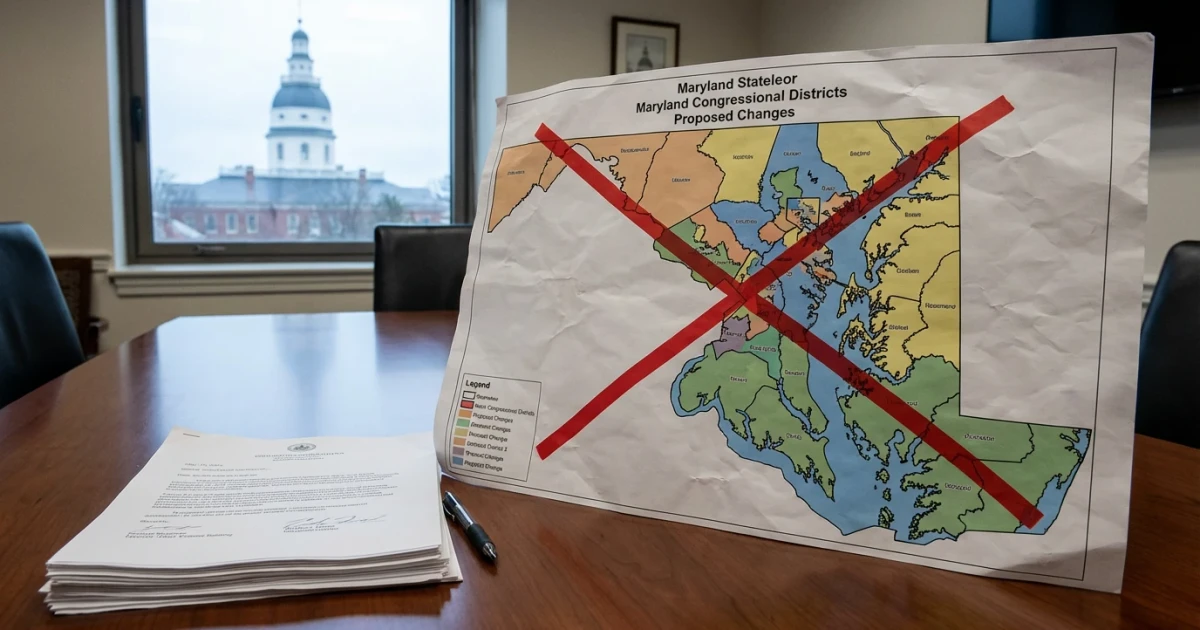
Maryland Governor Wes Moore has failed in his effort to redraw the state’s congressional district map, a move that aimed to bolster Democratic advantages in upcoming elections. The development leaves current district boundaries in place as Maryland heads into another federal election cycle.
The Redistricting Effort
The push to reshape Maryland’s congressional map came as Democrats sought to reinforce their hold on several districts that have become more competitive in recent years. Governor Moore, a Democrat, advocated for a new districting plan that would have potentially expanded his party’s representation in the U.S. House of Representatives. However, the effort fell short amid political resistance and ongoing legal scrutiny of Maryland’s redistricting process.
Background on Maryland’s Map
Maryland’s congressional boundaries have long been a subject of intense debate. The state has earned national attention for its partisan redistricting battles, with both parties accusing each other of gerrymandering. The last major redistricting in Maryland occurred following the 2020 Census, resulting in a map that has since guided two congressional election cycles. Official redistricting committees and legislative action have shaped the process, but disputes over political fairness persist.
Legal and Political Obstacles
Moore’s proposal faced significant legal hurdles, as Maryland courts have increased their scrutiny of partisan gerrymandering. Opposition also emerged from Republican lawmakers and independent advocacy groups, who argued that the changes would further entrench one-party dominance at the expense of competitive elections. The demographic and partisan data underpinning the current districts show a complex landscape, with suburban and rural shifts creating new battlegrounds in the state.
- Maryland currently sends seven Democrats and one Republican to the U.S. House, a split often cited in debates over fairness.
- The state’s population growth and demographic shifts, as shown in the 2020 Census Redistricting Data Map, have put pressure on lawmakers to periodically revisit district lines.
What’s Next for Maryland?
With Moore’s bid unsuccessful, the current congressional map will stay in effect for the 2026 elections. Analysts say the outcome keeps several districts competitive and may limit Democratic opportunities to expand their margins in the U.S. House. According to previous legislative proposals such as House Bill 1048, any future changes would require broad consensus in the General Assembly and likely further court review.
This episode underscores the ongoing challenges of redistricting reform in Maryland, where political, demographic, and legal factors combine to make the process highly contentious. As the state prepares for the next round of federal and state elections, all eyes will remain on how district lines influence the balance of political power.