Health
More Americans struggle to afford health care, Gallup finds
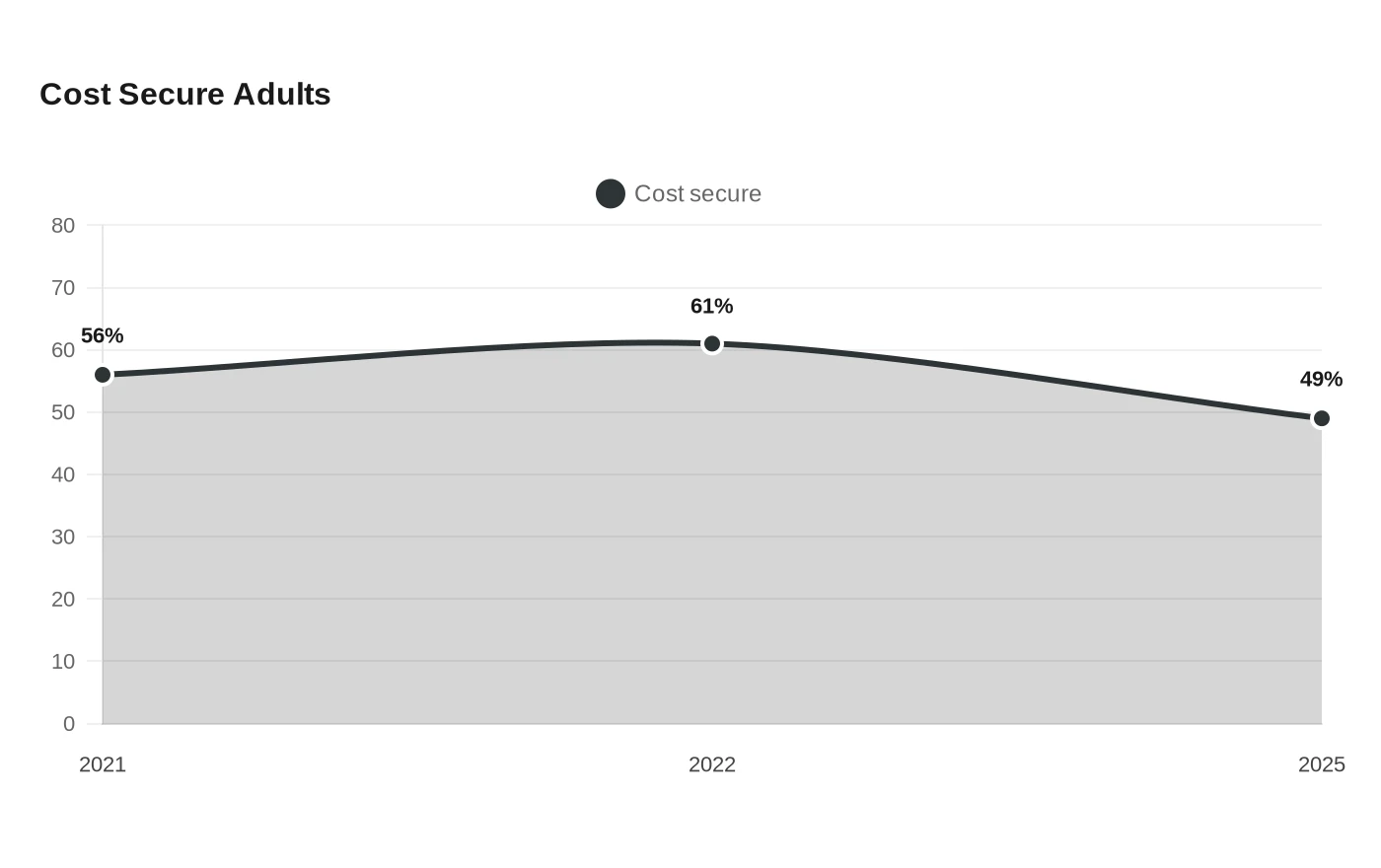
Half of Americans could no longer be counted on to afford quality health care, and the squeeze showed up in concrete ways: delayed prescriptions, skipped care and families forced to choose between medicine and other bills. Gallup said 49% of U.S. adults were classified as cost secure in 2025, the first time in five years the share fell below half.
The West Health-Gallup Healthcare Affordability Index, launched in 2021, showed the share of cost secure adults sliding from 56% that year to 49% in 2025, after a peak of 61% in 2022. Gallup said an estimated 2.8 million more Americans reported they could not afford health care in 2025 than in 2024, while 41% were cost insecure and 10% were cost desperate.
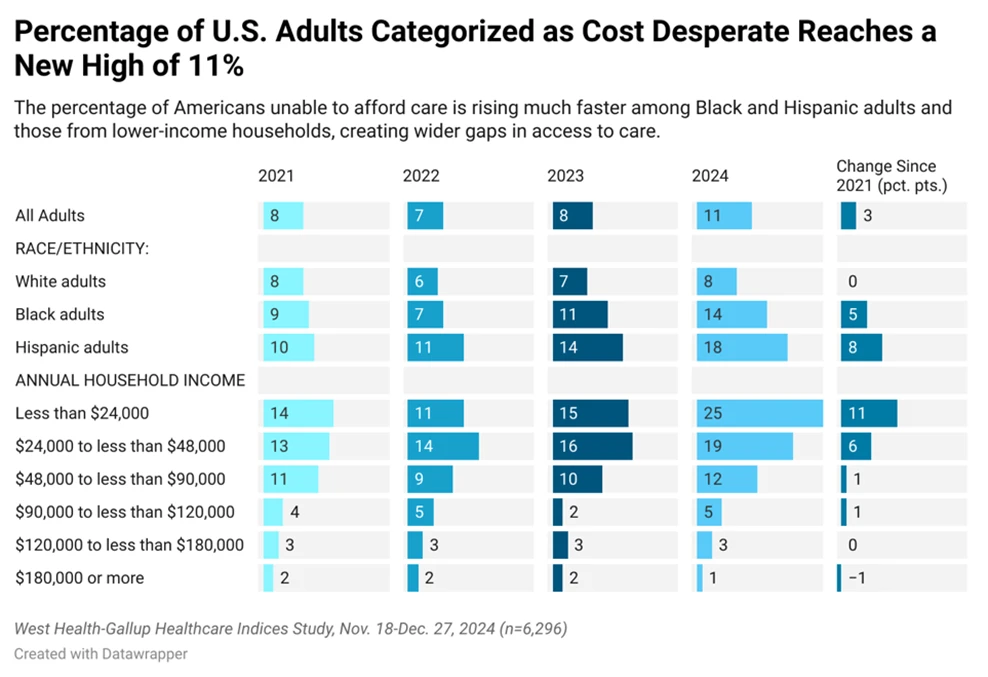
The problem was not evenly spread. In the June 2026 update, 38% of Black adults and 32% of Hispanic adults were cost secure, compared with 55% of White adults. Gallup and West Health said the decline since 2021 was far steeper for Black and Hispanic adults than for White adults, underscoring how inflation and medical costs have widened the gap between insurance coverage and actual access.
Twannetta Weaver, a Florida adult learner, offered a stark example of how that gap works in real life. She chose a high-deductible plan through her employer because it seemed like the responsible thing to do. After she slipped a disk in her back in 2025, the bills for medication and physical therapy became so overwhelming that she had to delay graduation by a year, while also trying to cover tuition, books and family expenses.
The latest Gallup field period ran from Oct. 27 to Dec. 22, 2025, with 5,660 adults surveyed, and the results were collected before enhanced Affordable Care Act subsidies expired. Even before those changes took effect, 47% of adults said in November 2025 that they worried they would not be able to afford necessary health care in the coming year. One in five, or 20%, said they or someone in their household had not been able to pay for prescription medications in the past three months.

Earlier West Health-Gallup findings showed how severe the access problem had become. In April 2025, 35% of Americans, about 91 million people, said they could not access quality health care if they needed it that day, and 11%, about 29 million adults, were already classified as cost desperate. That same release said affordability problems were especially high among Black adults and Hispanic adults, as well as households earning under $24,000 a year.
State rankings also showed that even the strongest performers were far from solving the problem. Iowa, Massachusetts, Washington, D.C. and Rhode Island ranked highest for health care experiences in November 2025, yet about 15% of people in those top states still said they could not pay for prescriptions in the previous three months. In the bottom 10 states, that figure rose to 29%, a sign that the affordability cliff remains national, deep and increasingly hard to ignore.
Sources
- [1]usnews.com
- [2]news.gallup.com
- [3]westhealth.org