Technology
More Colleges Introduce Artificial Intelligence Majors
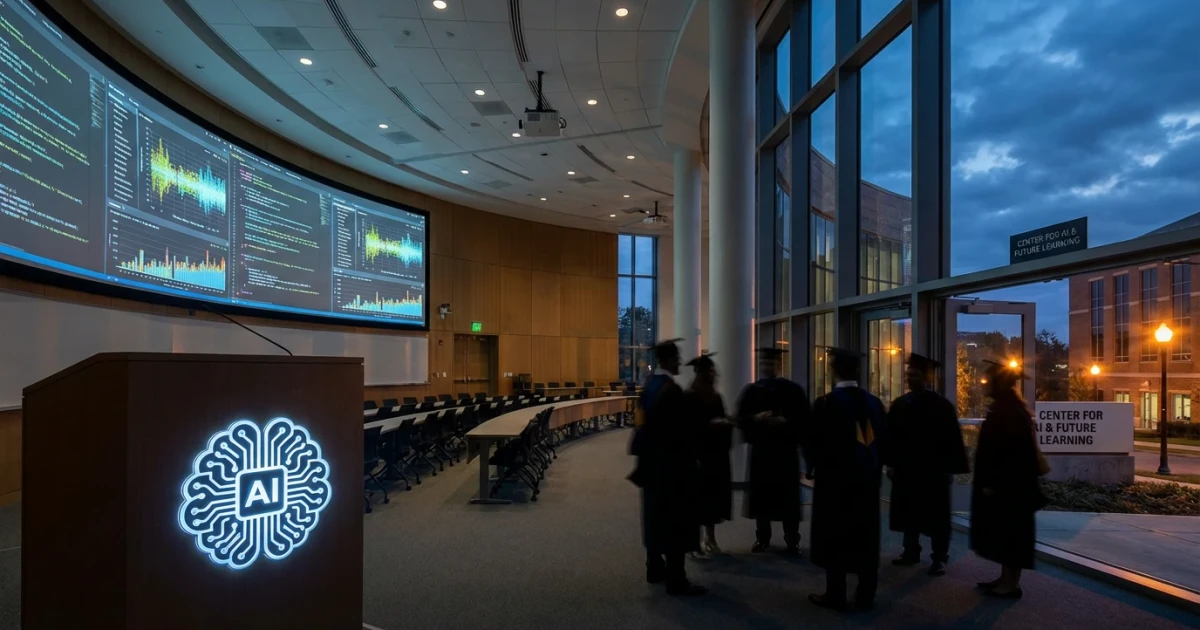
Colleges and universities across the United States are increasingly rolling out dedicated majors in artificial intelligence (AI), responding to rising student interest and surging demand from the tech industry. As AI transforms sectors from health care to finance, these programs aim to equip graduates with targeted skills for a rapidly evolving job market.
What Is an AI Major?
An artificial intelligence major is an undergraduate degree program focused on foundational and advanced topics in AI, including machine learning, natural language processing, computer vision, robotics, and ethics. Unlike traditional computer science degrees, which cover a broad range of computing topics, AI majors emphasize the theory, development, and application of intelligent systems. Programs often combine coursework in mathematics, statistics, computer programming, and specialized AI algorithms.
For example, Stanford University’s undergraduate major in Artificial Intelligence includes core courses in logic, data structures, and machine learning, with electives in areas such as computer vision and human-centered AI. Students also engage in hands-on projects and research, preparing them for roles in both academia and industry.
Growth of AI Degree Programs
According to the National Center for Education Statistics, the number of universities offering AI-focused bachelor’s degrees has grown steadily in the past few years. The New York Times has published interactive data showing dozens of U.S. institutions now offer dedicated AI majors or concentrations, a marked increase from just a handful a decade ago. Carnegie Mellon University was among the first to launch a standalone undergraduate AI major in 2018; since then, institutions such as the Massachusetts Institute of Technology, Stanford, and the University of California system have followed.
- The ASEE’s Engineering by the Numbers report shows a notable uptick in computer science and AI-related degree enrollments since 2020.
- The U.S. News & World Report’s rankings highlight that several U.S. universities now rank among the world’s leaders in AI research and education.
Why AI Majors Are Gaining Traction
The rise of AI majors is closely linked to workforce needs. A recent analysis by the National Science Foundation notes that AI-related occupations are projected to grow much faster than average for STEM fields, driven by demand for machine learning engineers, data scientists, and AI ethicists. Employers increasingly seek graduates with specialized training in AI, beyond general programming skills.
Universities are also responding to student demand. Many students see AI as an exciting field with broad societal impact and strong career prospects. The AAAI AI Curricula Database documents dozens of AI course offerings and program structures, reflecting the field’s diversity and rapid evolution.
What Students Learn and Where They Go
AI majors typically cover:
- Mathematical foundations (linear algebra, probability, statistics)
- Programming languages (Python, C++, Java)
- Machine learning, neural networks, and deep learning
- Applications in robotics, computer vision, and language processing
- Ethics and policy considerations in AI development
Graduates pursue careers in technology, research, healthcare, finance, and more, or continue to advanced study. According to U.S. News, job placement rates for AI majors are strong, with many entering roles at major tech companies or AI-focused startups.
Challenges and Future Outlook
While the growth of AI majors is rapid, some educators caution that curricula must keep pace with technological change and ethical considerations. There are ongoing debates about how much emphasis to place on technical skills versus broader impacts, and how to ensure equitable access to AI education.
Still, with AI poised to influence nearly every aspect of modern life, the expansion of undergraduate AI programs marks a significant development in STEM education. For students and employers alike, these degrees are quickly becoming a key pathway to the future of work and innovation.