Business
Most American households lack wealth to weather financial setbacks
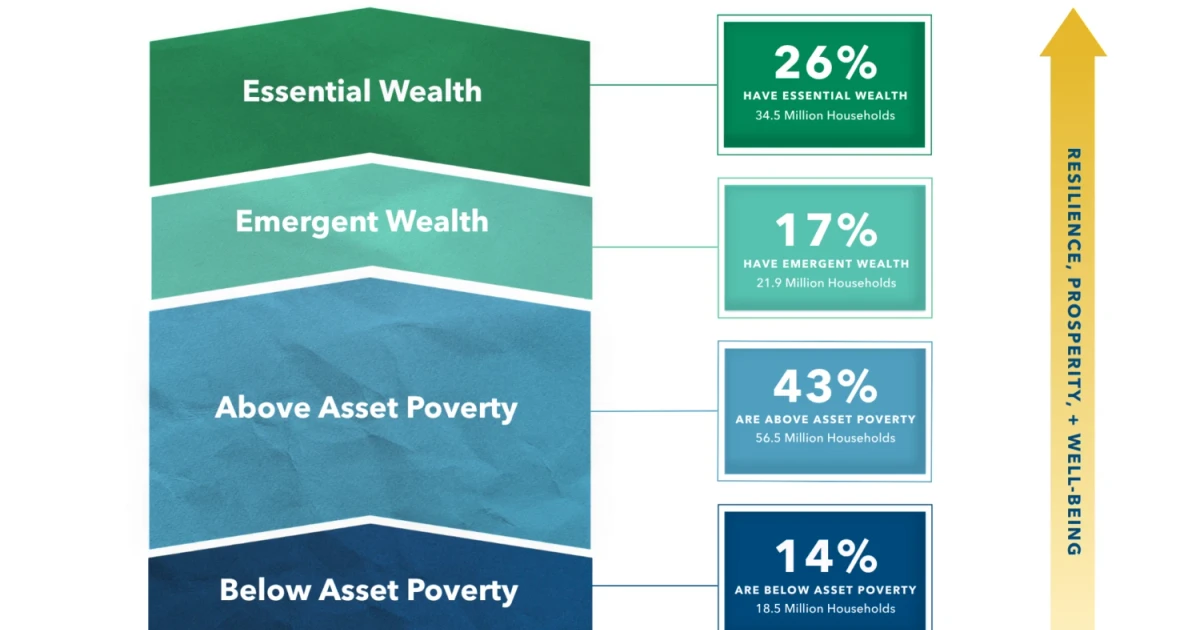
Three in four American households do not have enough wealth to absorb a financial shock or move toward major life goals, the Aspen Institute Financial Security Program found in a June 22 report. The new benchmark, called essential wealth, was laid out by Genevieve Melford and Steven Brown as a way to measure whether families have the assets to stay financially resilient.
The Aspen report did not appear out of nowhere. It built on a November 2025 primer, Toward the Development of an Essential Wealth Concept and Measurement, and a March 2023 paper, The Case for Early Wealth Building Accounts, showing a longer effort to define the level of wealth families need to be secure. That shift matters because the problem is not just wages. Wealth, not income alone, determines whether a household can handle a job loss, a medical bill or a move toward homeownership without falling backward.
A CBS News analysis tied to the Aspen work put the annual income needed for a typical U.S. family to thrive at $145,000, and said about half of Americans fall short of that mark. The same analysis said people under 40 who meet the essential-wealth threshold have enough money for a down payment on an entry-level home, a sign that even first steps into asset building are now out of reach for many younger households.

The housing market has made that gap sharper. Separate June 30 data showed less than 40% of U.S. households can afford a starter home, while another report counted 242 U.S. cities with entry-level homes priced at $1 million or more. Nearly half of those cities are in California, where the lower rungs of the market have become as inaccessible as luxury housing was a generation ago.
Stress is showing up across the balance sheet. NEFE said on January 29 that 8 in 10 U.S. adults reported stress and 77% experienced a financial setback in 2025, underscoring how common it has become for families to lose ground rather than build savings. The Federal Reserve’s Report on the Economic Well-Being of U.S. Households in 2025, published in May 2026, added another national benchmark for a consumer economy in which routine setbacks are increasingly hard to absorb.
Sources
- [1]cbsnews.com
- [2]aspeninstitute.org
- [3]finance.yahoo.com
- [4]facebook.com
- [5]nefe.org
- [6]federalreserve.gov