US News
Most Americans plan to work longer, but retire earlier than expected

Millions of workers are building retirement plans around a paycheck that may never come. The gap is stark: 75% of workers say they expect to work for pay in retirement, but only 30% of retirees say they actually did, a split that turns one of the most common retirement assumptions into a gamble.
The mismatch is not just a matter of intention. Allianz Life’s 2026 retirement study found that 42% of retired Americans left work earlier than planned, while 53% retired about when expected and only 5% retired later than expected. That means the largest share did not get the exit date they had mapped out, a reality that can upend savings targets, Social Security timing and health coverage decisions.

The reasons are often outside workers’ control. AARP reported in 2026 that 67% of older workers believe it would be difficult to find a new job right now. Among them, 35% pointed to age discrimination as the main reason, while 22% cited health issues or a disability. For many older Americans, the idea that retirement income can be supplemented later by part-time work runs into a labor market that is less welcoming than the planning spreadsheets assume.

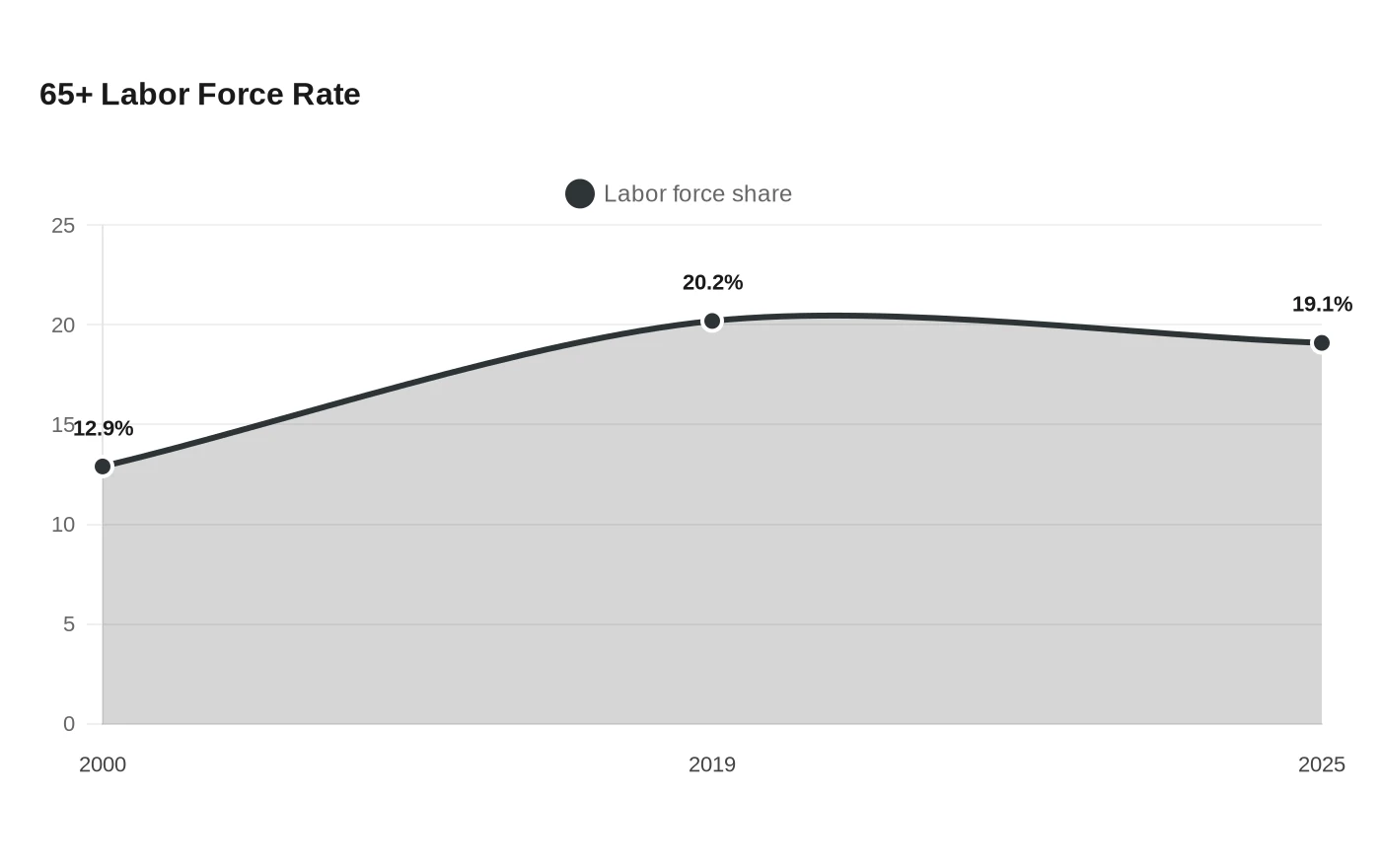
Federal labor data show that more older Americans are working than in past decades, but not enough to erase the risk. The U.S. Bureau of Labor Statistics said 19.1% of Americans age 65 and older were in the labor force in 2025, up from 12.9% in 2000 and below the 20.2% peak reached in 2019. The broader trend shows that continued work is possible for many, yet the participation rate also underscores how far reality can fall short of the expectation that retirement will be only partial or temporary.

Research from the Boston College Center for Retirement Research points to the most common failure point in standard advice: health shocks. The center has found for years that more than a third of older workers retire earlier than planned, and it identifies health problems as a major driver. That leaves a clear policy and personal-finance lesson. Retirement planning that assumes workers can always stretch into later years by staying employed is built on a fragile premise, especially when illness, job loss or age discrimination can end that plan in an instant.
Sources
- [1]news.google.com
- [2]ebri.org
- [3]allianzlife.com
- [4]aarp.org
- [5]bls.gov
- [6]crr.bc.edu
- [7]usatoday.com