Entertainment
Mumbai women film their lives on smartphones, challenge stereotypes
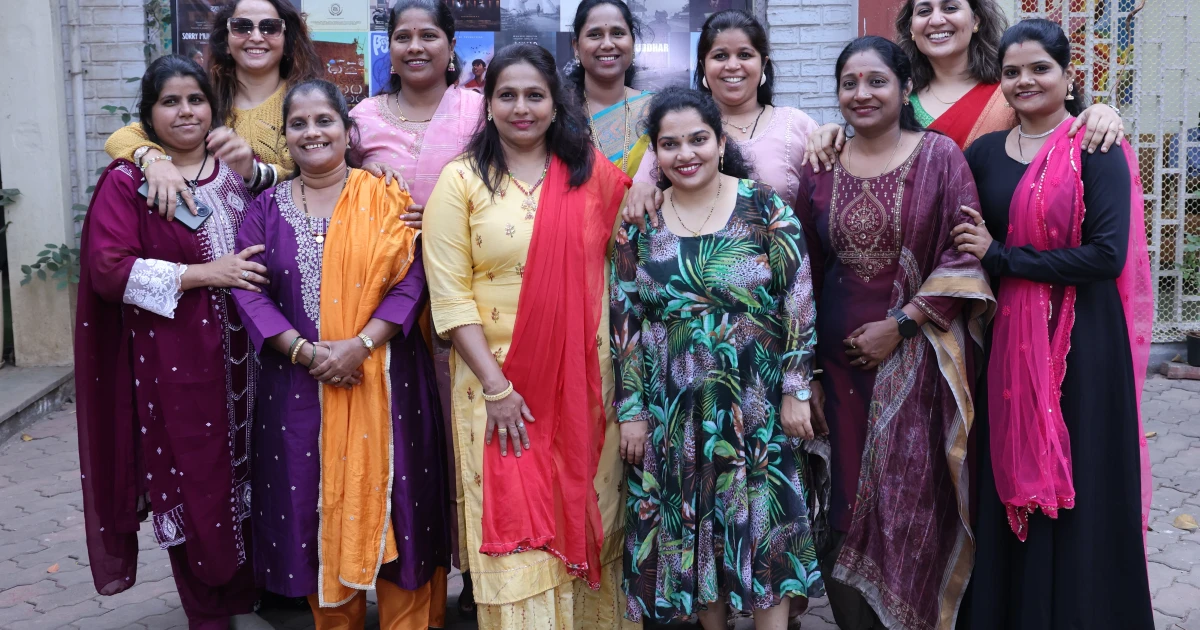
When ten working-class women from Mumbai’s eastern suburbs picked up smartphones to film their own lives, the documentary about them became something larger than a portrait of neighborhood routine. It became a test of authorship: what changes when domestic workers, community health workers, toilet operators and home caregivers decide what matters, where to point the camera, and how to tell the story themselves.
The result is Mast Mahila Mandali, or Cool Ladies Club, a 72-minute film built from two years of weekly training and filming. Conceived in 2024 as a community-led project connected to CORO India’s Right to Pee campaign, the film pushes directly against the flat stereotypes often attached to women from Mumbai’s slums. Instead of outside narration flattening their lives, the women’s own friendships, jokes, arguments, aspirations and plans form the documentary’s center.
How the film was made
The project began with a simple but radical premise: teach women from the M-East Ward to make a film using the phone already in their hands. Shilpi Gulati, a filmmaker and assistant professor at the Tata Institute of Social Sciences, led the process over two years, covering the basics of framing, lighting and editing with basic smartphones rather than conventional film equipment. One of the devices used was a Xiaomi POCO X3 Pro, a reminder that the barrier to entry was not technology alone but access, training and permission.
That method matters because it changes the power relationship at the heart of documentary work. The women were not positioned as passive subjects waiting for interpretation. They became operators, observers and co-authors, shaping how their surroundings looked and what their daily labor meant. The shared direction credits reported in coverage include Anjum Shaikh, Darshana Mayekar, Gauri Rane, Kavita Khomne, Rohini Kadam, Rehana Shaikh, Sheetal Navle, Kavita Ghuge, Nazneen Siddiqui and Vaishali Mane, all residents of M-East Ward neighborhoods that include Govandi, Deonar and Chembur.
Why the title matters
The film’s title, suggested by Gulati and chosen by the women, was intended as a direct pushback against the idea that women from low-income communities are somehow defined by lack. Rehana Shaikh described a “cool lady” as someone who is bindaas, relaxed, fearless and true to her heart. That definition does more than sound catchy. It rewrites the emotional grammar of the film, placing self-possession where stigma often stands.
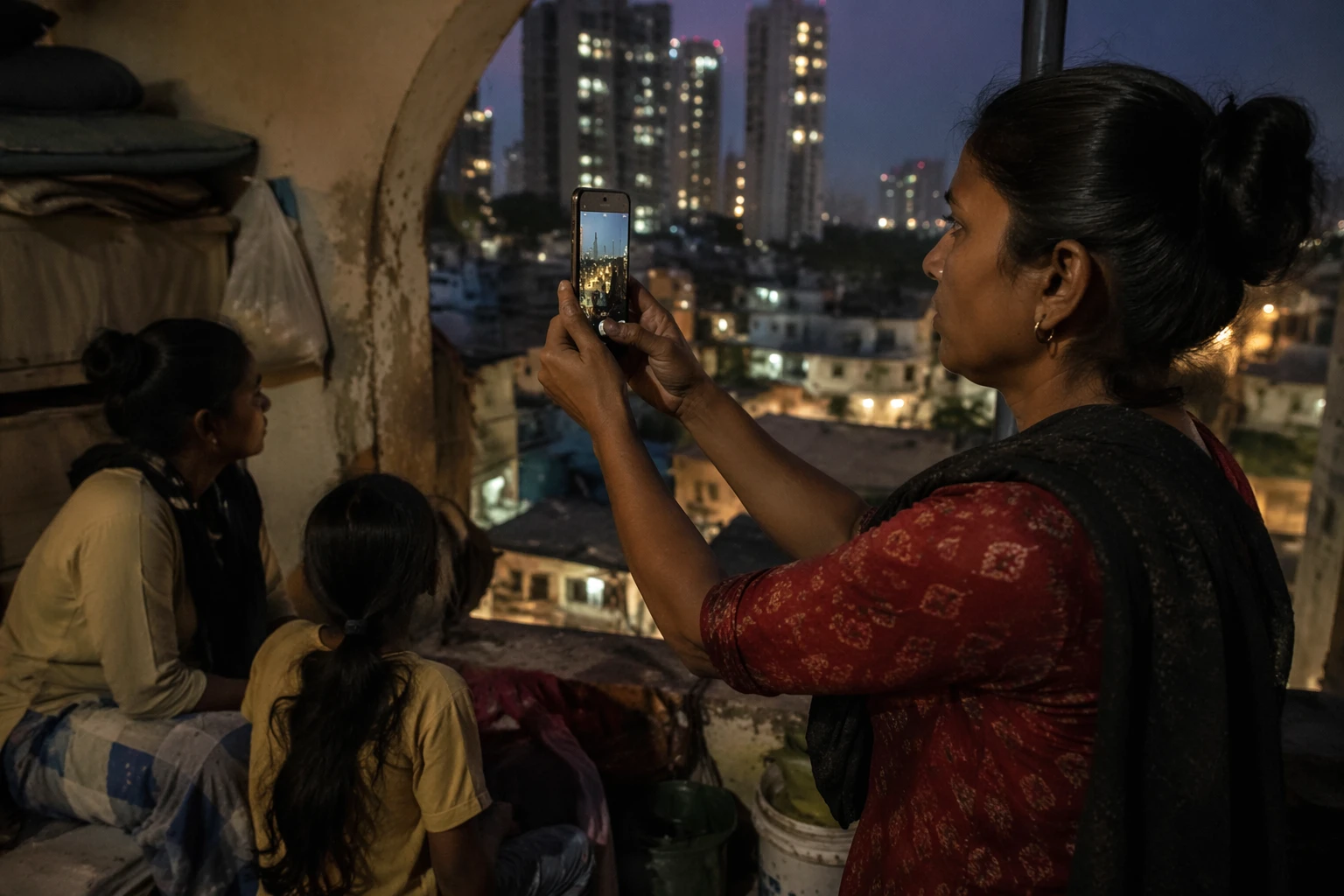
This is where the documentary becomes especially revealing. A conventional report on working-class women might catalogue hardship, but the women’s own lens captures texture that statistics alone cannot: how people joke while working, how arguments unfold in cramped homes, how ambition survives long shifts, and how dignity is built in ordinary routines. The film’s power lies in making those moments documentary-worthy without asking permission from outside elites.
The campaign behind the camera
Mast Mahila Mandali is tied to CORO India’s long-running Right to Pee campaign, which argues for free, hygienic and secure public toilets for women in Mumbai. CORO says only 1 out of every 3 public toilet seats in the city is designated for women, a blunt measure of how public infrastructure can still be built around unequal assumptions. In that context, the film is not just cultural work. It is part of a broader fight over whose bodily needs count in urban policy.
CORO India says it was founded in 1989 and has a 35-year legacy focused on empowering marginalized communities. Its grassroots programs have built a network of more than 1,100 grassroots leaders and 250 partner organizations across Maharashtra, Rajasthan and Delhi. The women behind this documentary are part of that organizing ecosystem, which helps explain why the project feels less like a one-off arts experiment and more like a field report from within a movement.
A screening that became a public event
The film’s premiere at Regal Cinema in Mumbai gave the project a scale that matched its ambition. The screening, held in spring 2026, took place in the city’s 1930s art-deco theater before an audience of about 1,200 people. More than 1,000 people had already registered in advance, including family members, neighbors, grassroots leaders, academics, development-sector figures and members of Mumbai’s film community.

That turnout matters because documentary distribution in India remains a stubborn challenge, especially for films rooted in labor, women’s lives and neighborhood politics. Organizers framed the Regal screening as a milestone for CORO, not just a launch. A subsequent screening at the National Gallery of Modern Art in Mumbai extended the film’s reach into another institutional space, suggesting that a community-made work can travel far beyond the locality that produced it.
What this method reveals that outsiders often miss
The most interesting thing about Mast Mahila Mandali is not simply that the women filmed themselves. It is that the method changes what counts as a public story. When working-class women hold the camera, everyday labor becomes visible on its own terms, without needing to be translated into pity, spectacle or outsider expertise.
That shift has economic as well as cultural significance. Domestic work, care work and sanitation work are essential but often undervalued labor markets, and the film places those jobs inside the frame as lived experience rather than abstract category. By linking those lives to the Right to Pee campaign, the documentary also shows how infrastructure, gender and dignity intersect in city life.
In the end, Mast Mahila Mandali suggests a simple but consequential truth: access to the camera changes access to meaning. When the people most often described from the outside become the ones doing the describing, documentary stops being only observation and becomes a form of civic power.
Sources
- [1]npr.org
- [2]vpm.org
- [3]indianexpress.com
- [4]tribuneindia.com
- [5]coroindia.org
- [6]ngmaindia.gov.in