Technology
Musk says SpaceX’s orbital AI data centers are already within reach

Elon Musk is casting orbital AI data centers as an extension of SpaceX’s existing satellite business, not a leap into science fiction. In a June 8 video conversation posted by SpaceX on X, Musk, communications manager Dan Huot and satellite engineering director Ian Dahl said the company already has much of the needed technology inside its Starlink network. The transcript of the discussion was later filed with the U.S. Securities and Exchange Commission.
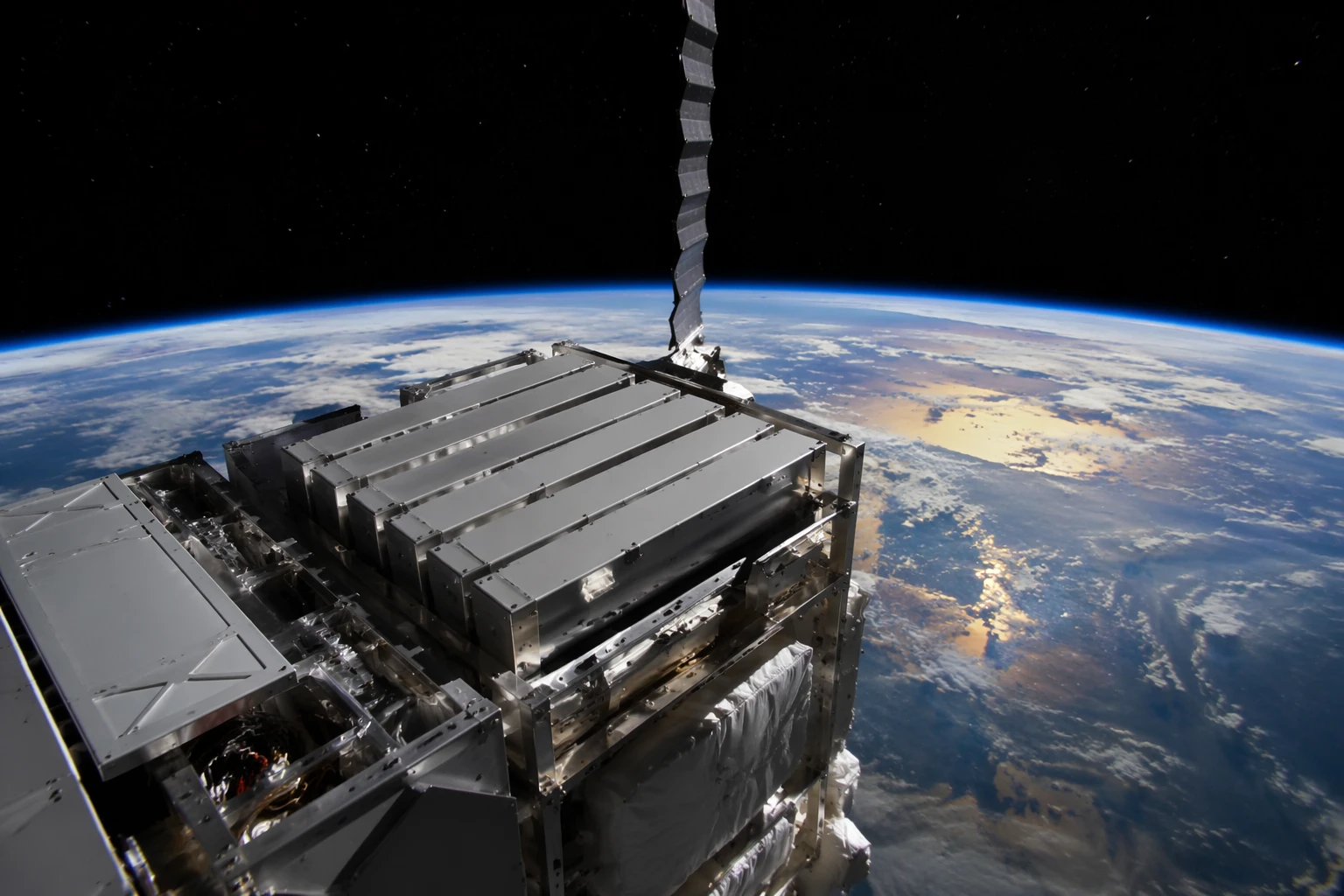
Musk framed the idea as an engineering problem SpaceX can solve with hardware it already knows how to build. He said orbital AI computing is not a “super hard problem” and pointed to the Starlink V3 satellites as the closest existing model. SpaceX said the proposed AI satellites would run on solar power and shed heat by radiating it into space, a basic requirement for any computer farm beyond Earth that has to generate and expel enormous amounts of waste heat without conventional cooling towers, water systems or a terrestrial power grid.
The company’s first proposed AI satellite was described as producing about 150 kilowatts of peak power and about 120 kilowatts of sustained compute power. Musk compared that level to a single Nvidia GB300 AI server rack, a telling benchmark because Nvidia markets its DGX GB300 rack-scale systems for modern AI factories and high-density data-center use. SpaceX is trying to make orbital compute sound less like a moonshot and more like another step in the Starlink buildout.
The pitch arrives as SpaceX prepares for an initial public offering expected to value the company at about $1.75 trillion. Reuters has reported that SpaceX set a share price of $135 and is seeking roughly $75 billion in an all-primary offering. Investor demand has reportedly reached about $150 billion, roughly twice the amount SpaceX wants to raise. That level of interest helps explain why Musk would want orbital AI to look practical, scalable and connected to the company’s existing satellite infrastructure.
SpaceX also has a longer paper trail on the concept. Reporting in 2026 described a Federal Communications Commission filing tied to plans for a million-satellite orbital data-center constellation, suggesting the company sees space-based computing as part of a broader platform strategy rather than a one-off experiment. The technical pitch is clear enough: use low Earth orbit for power and cooling. The harder question is whether launch costs, manufacturing scale, logistics and day-to-day operations can match Musk’s confidence, or whether investors are being asked to underwrite an infrastructure dream that still has to survive gravity, economics and customer demand.
Sources
- [1]money.usnews.com
- [2]sec.gov
- [3]msn.com
- [4]nvidia.com
- [5]spacenews.com
- [6]semiengineering.com