Science
Mysterious Glowing Iron Bar Discovered in the Ring Nebula Baffles Astronomers
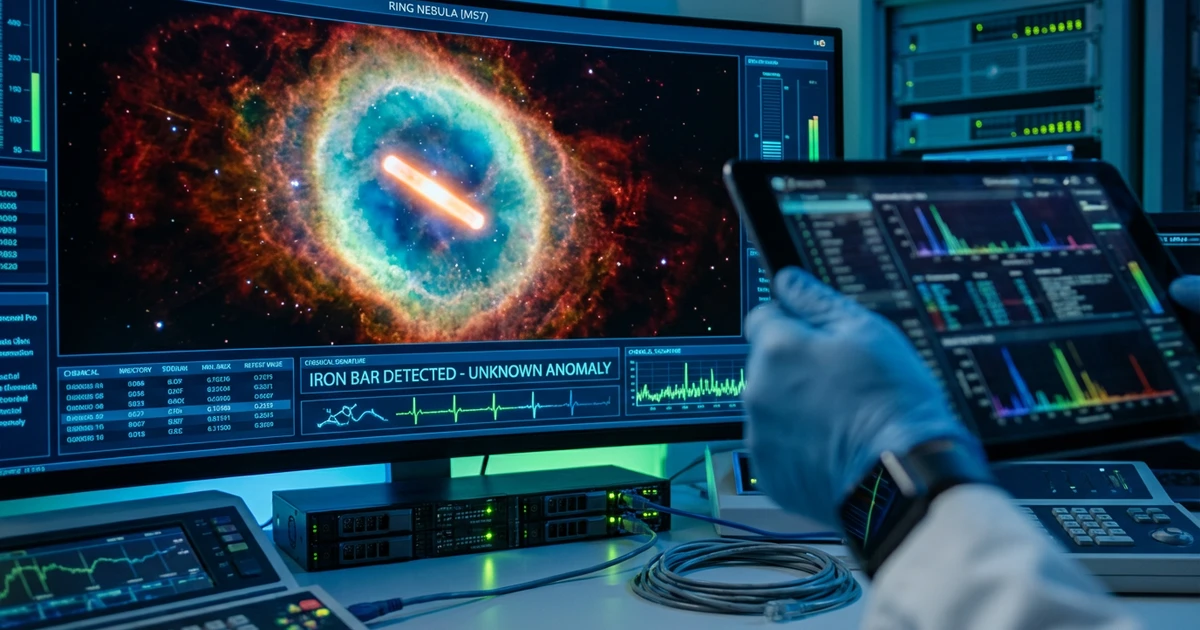
Astronomers have detected a mysterious, glowing bar of iron inside the famous Ring Nebula, confounding expectations and raising intriguing questions about the processes at work in dying stars. The phenomenon, highlighted in ScienceAlert’s recent report, marks an unexpected development in the study of planetary nebulae and the late stages of stellar evolution.
What Did Scientists Find in the Ring Nebula?
The Ring Nebula, also known as Messier 57 or M57, is a well-known planetary nebula located about 2,600 light years from Earth in the constellation Lyra. Its iconic donut-like appearance has made it a frequent subject of astronomical imaging and research. However, the discovery of a distinct, glowing bar composed of iron within the nebula is unprecedented.
- The bar emits a unique glow, suggesting that it is made primarily of iron.
- This structure is unlike anything previously observed in planetary nebulae, which are generally dominated by gases such as hydrogen, helium, oxygen, and nitrogen.
Why Is This Discovery So Unusual?
Typically, planetary nebulae are remnants of stars that have shed their outer layers, creating shells of ionized gas. While iron is present in stars, it is rarely found in such a concentrated and luminous form within nebulae. The striking appearance of the iron bar stands in contrast to the diffuse, gas-rich composition scientists expect.
This discovery has left experts searching for explanations. Some possibilities being considered include:
- The iron bar may be the relic of a rare or violent stellar process.
- It could be the result of interactions with a companion star or a previously unknown feature of stellar death.
- The structure might provide clues about nucleosynthesis and the distribution of heavy elements in the universe.
Implications for Our Understanding of Stellar Evolution
This finding challenges conventional models of how stars end their lives and enrich the cosmos with heavier elements. Normally, planetary nebulae are considered to be relatively well-understood, but the presence of a concentrated iron structure forces astronomers to revisit assumptions about the processes at play.
As researchers examine the glowing bar further, several key questions arise:
- How did the iron bar form within the Ring Nebula?
- What mechanisms could cause such a bar to glow so prominently?
- Does this phenomenon occur in other planetary nebulae, or is it unique to M57?
What’s Next for Astronomers?
The discovery is likely to spur additional observations using advanced telescopes, both from the ground and in space. Spectroscopic analyses may help determine the precise composition, temperature, and structure of the iron bar. Comparative studies with other nebulae could reveal whether this is an isolated event or a previously overlooked aspect of nebular evolution.
Conclusion: A New Celestial Mystery
The glowing bar of iron in the Ring Nebula opens a fresh chapter in the study of dying stars and cosmic recycling. As astronomers continue to decode the nebula’s secrets, this discovery underscores the universe’s capacity for surprise—and the ongoing importance of curiosity-driven exploration in astronomy.
Sources
- [1]ScienceAlert