World
Mystery comet 3I/ATLAS may have come from Milky Way thick disk
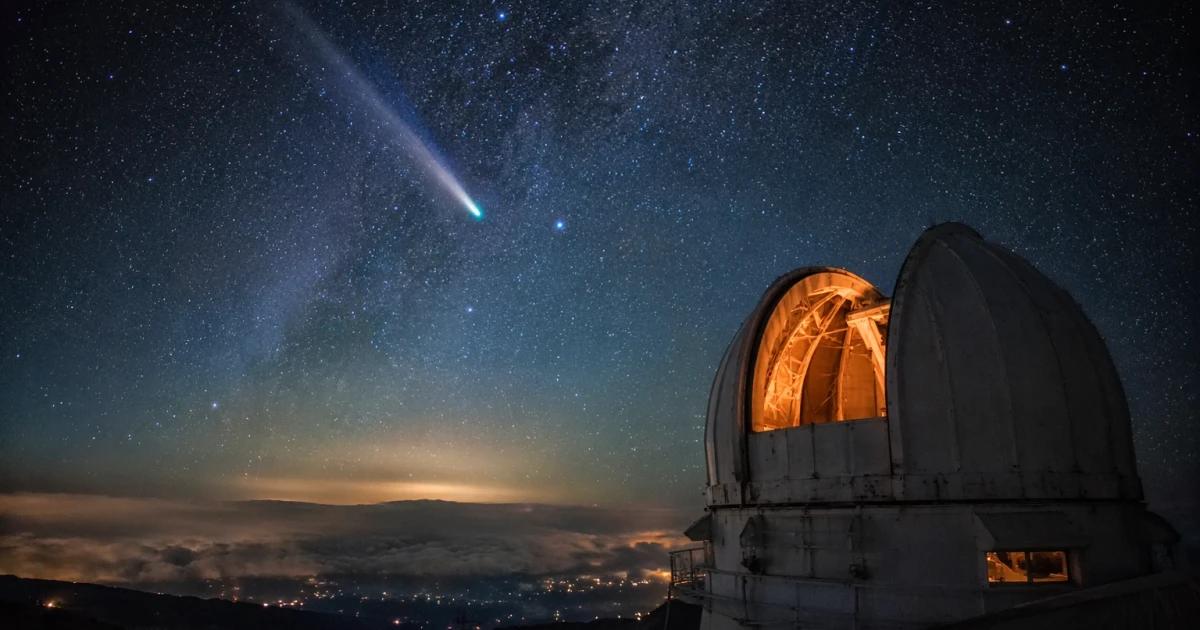
A comet from beyond the solar system may be carrying a chemical record from an era long before Earth formed. Early modeling of 3I/ATLAS pointed to the Milky Way’s thick disk, a region populated by many stars older than 10 billion years, raising the possibility that the object itself could be 10 to 12 billion years old.
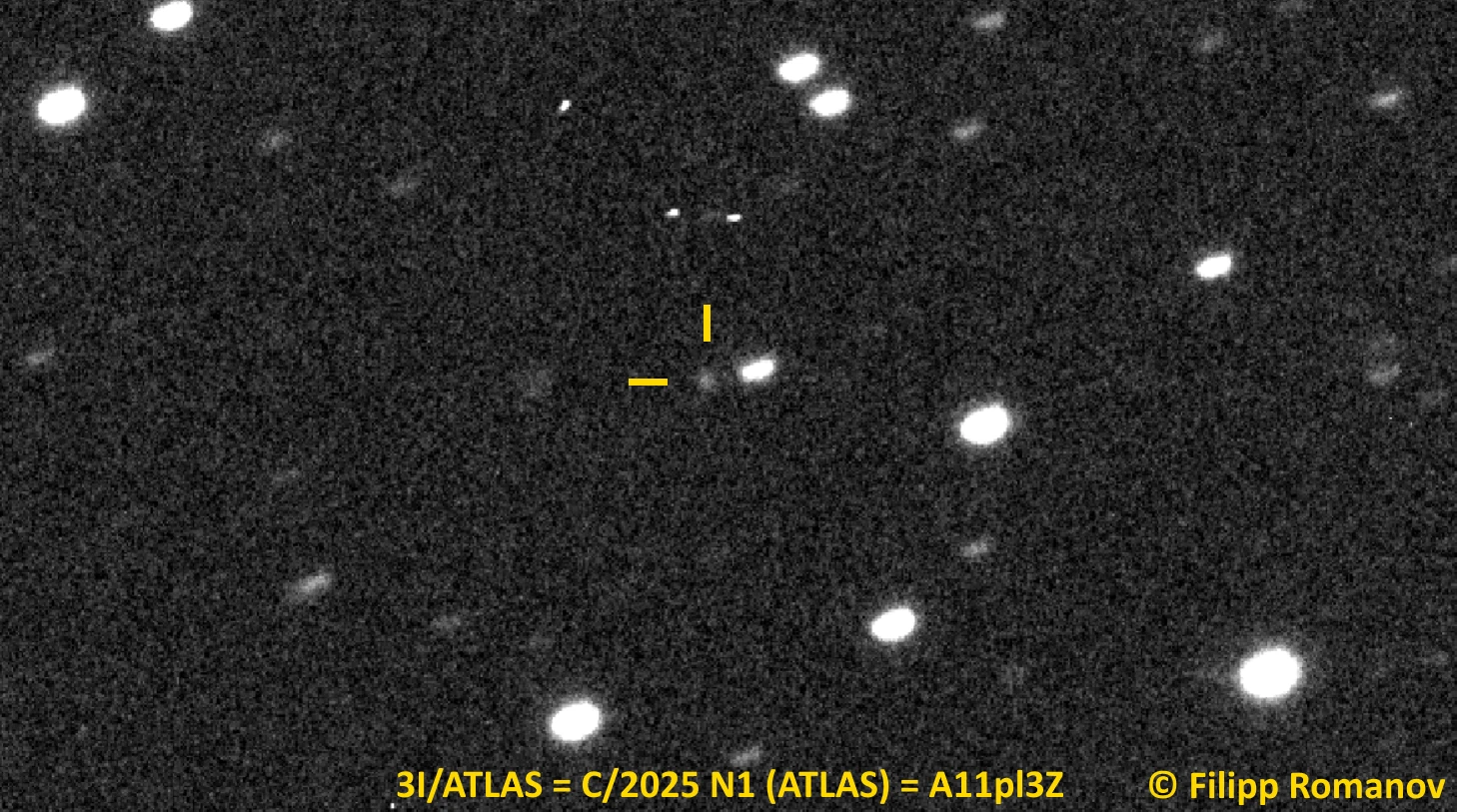
3I/ATLAS was first spotted on July 1, 2025, by the NASA-funded ATLAS survey telescope in Río Hurtado, Chile, and was confirmed as only the third known interstellar object ever observed, after 1I/Oumuamua in 2017 and 2I/Borisov in 2019. NASA said the comet followed a hyperbolic, unbound path through the solar system, never threatening Earth and coming no closer than about 170 million miles, or 270 million kilometers, about 1.8 astronomical units away. Hubble observations estimated its nucleus at between about 1,400 feet and 3.5 miles across, while the comet was traveling about 137,000 mph when discovered and reached about 153,000 mph at perihelion.
The closest solar pass came on October 30, 2025, when 3I/ATLAS moved to about 130 million miles, or 210 million kilometers, just outside Mars’ orbit. ESA said the comet reappeared from behind the Sun in early December 2025, giving astronomers another look at an active object that had already drawn attention for its unusual origin and speed. ESA also described interstellar comets as scientifically valuable because they are true outsiders carrying clues about how worlds form beyond our own.
The strongest evidence for an ancient origin came from James Webb Space Telescope observations. NASA and ESA reporting said the data showed unusually high deuterium, about 30 times more than in solar-system comets, along with only traces of carbon-13 compared with carbon-12. Those chemical ratios pointed to a very cold, primordial birth environment, one that researchers said fit a system formed 10 to 12 billion years ago. For astronomers, that is what makes 3I/ATLAS so important: as an interstellar outsider, it offers a rare snapshot of the composition and evolution of planetary systems across the Milky Way, and possibly a glimpse into a much older galaxy than the one we inhabit today.
Sources
- [1]cbsnews.com
- [2]science.nasa.gov
- [3]esa.int
- [4]sciencealert.com
- [5]physics.ox.ac.uk