Science
NASA Advances Space Telescope to Track Hazardous Asteroids
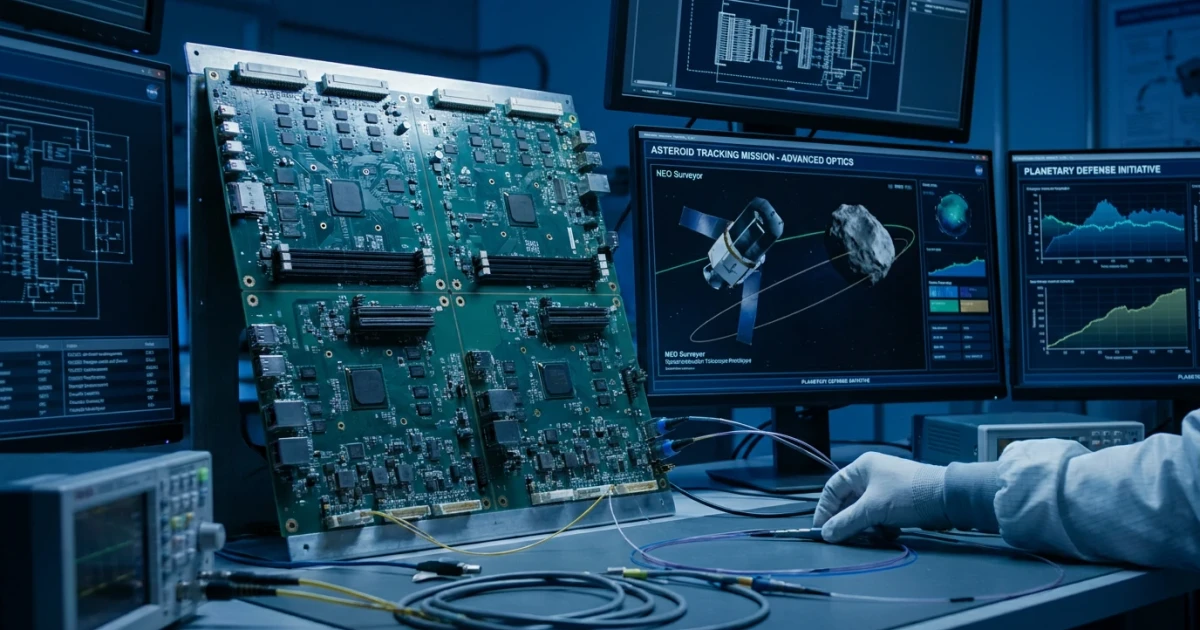
NASA is moving forward with testing a next-generation space telescope that experts say could significantly improve the detection of asteroids large enough to cause city-level devastation. The project, developed as part of the agency's ongoing commitment to planetary defense, is designed to spot and track so-called “city-killing” asteroids that might otherwise go unnoticed by current ground-based telescopes.
Building on Decades of Asteroid Detection
For years, astronomers have relied on a mix of ground and space-based observatories to discover and monitor near-Earth objects (NEOs). However, some asteroids, especially those approaching from the direction of the Sun, remain difficult to detect. NASA's new telescope, known as the Near-Earth Object Surveyor (NEO Surveyor), is specifically engineered to address these gaps. The mission is set to expand the search for potentially hazardous asteroids, focusing on those larger than 140 meters in diameter—big enough to inflict serious regional damage if they were to impact Earth.
Next-Generation Technology in Action
The NEOCam/NEO Surveyor mission leverages advanced infrared sensors that can detect the heat signatures of asteroids, making it possible to spot objects even in the glare of sunlight. This technology is a significant leap from previous surveys, which often missed asteroids on challenging trajectories or with dark, hard-to-see surfaces. According to technical papers from NASA's Jet Propulsion Laboratory, the new telescope is expected to discover and characterize tens of thousands of previously undetected NEOs over its operational lifetime.
- As of 2026, astronomers have catalogued over 32,000 near-Earth asteroids, with the vast majority found by ground-based surveys.
- Only about 40% of the estimated population of large, potentially hazardous asteroids have been identified, highlighting the need for improved detection capabilities.
Protecting Earth from Impact Threats
NASA's focus on planetary defense has grown in recent years, especially following high-profile events such as the 2013 Chelyabinsk meteor in Russia, which injured over 1,000 people. The National Academies of Sciences and other agencies have long recommended more robust space-based surveys to close detection gaps and improve warning times for dangerous objects.
The NEO Surveyor mission aims to provide data not only for early warning but also for future mitigation efforts, informing decisions about potential asteroid deflection missions or civil preparedness actions. The mission has been formally cleared to begin construction, with launch currently targeted for later this decade.
International Collaboration and Data Sharing
The effort to hunt for hazardous asteroids is global. NASA works alongside partners such as the European Space Agency’s NEO Coordination Centre, pooling data and coordinating observations to maximize coverage. The new telescope is expected to dramatically increase the number of NEOs tracked each year, filling in crucial blind spots and providing more comprehensive sky coverage than ever before.
Looking Ahead
As NASA continues testing the next-gen space telescope, astronomers and planetary defense experts anticipate a new era of asteroid discovery and hazard mitigation. The combination of advanced technology and global collaboration is set to make Earth safer from the threat of untracked space rocks, giving scientists and decision-makers more time to prepare for the unexpected.