Science
NASA Chief's Call to Restore Pluto's Planet Status Stirs Debate
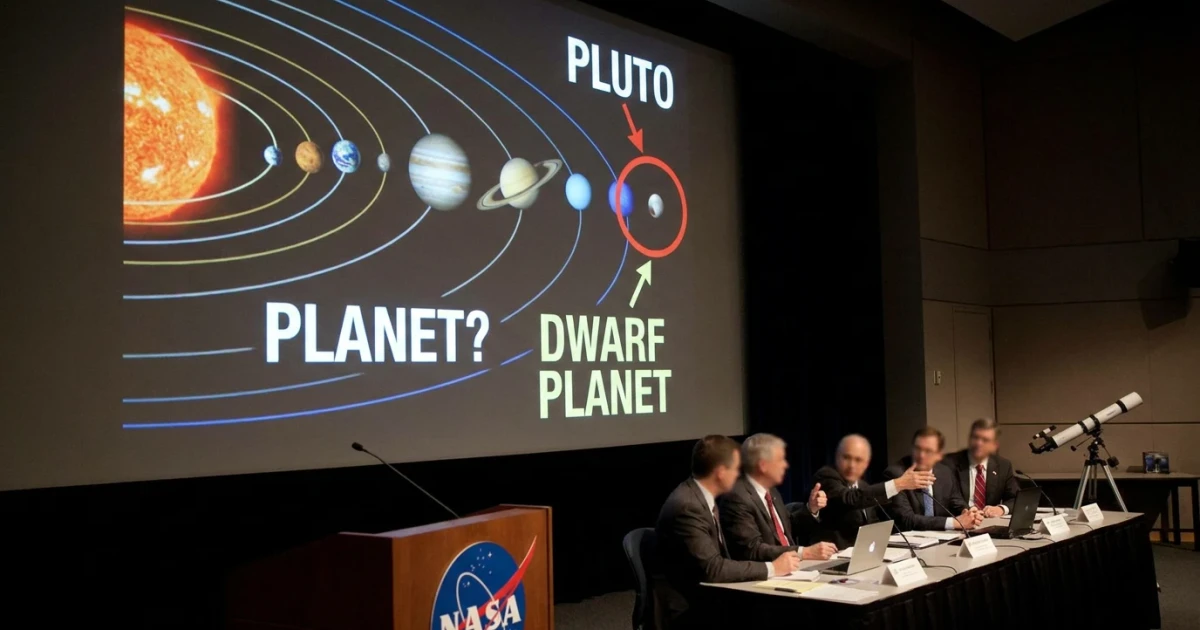
NASA administrator Jared Isaacman has rekindled the heated debate over Pluto’s classification, publicly advocating for its restoration as a planet. This revived controversy highlights ongoing divisions within the astronomical community and prompts renewed scrutiny of how the solar system’s bodies are defined.
NASA Chief Champions Pluto’s Planet Status
The question of Pluto’s planetary status has lingered since the International Astronomical Union’s (IAU) 2006 resolution stripped it of its traditional designation. Speaking recently, Isaacman stated he is “very much in the camp of ‘make Pluto a planet again,’” reigniting a debate that, as reported by Nature, continues to divide astronomers worldwide. This stance puts NASA’s leadership at odds with the current consensus, which has classified Pluto as a dwarf planet for nearly two decades.
Background: Pluto’s Demotion
Discovered in 1930, Pluto was long considered the ninth planet. In 2006, the IAU redefined the term "planet" through Resolution B5, requiring a planet to:
- Orbit the Sun
- Be spherical due to its own gravity
- Clear its orbital neighborhood
Pluto’s inability to clear its orbit led to its reclassification as a "dwarf planet." This decision, while grounded in scientific rationale, provoked strong reactions from both the public and many scientists, as outlined in Nature’s analysis of the planetary debate.
Why the Debate Continues
Supporters of restoring Pluto’s status argue the IAU’s definition is too restrictive and excludes bodies that display characteristics commonly associated with planets. Critics of the current definition note that many exoplanets, and even some objects within our solar system, would be classified differently under alternative criteria. The Planetary Society’s explainer details these complexities, revealing that even among experts, there is no universally accepted definition.
On the other hand, proponents of maintaining the current definition contend that scientific rigor and clarity are necessary for effective classification. They argue that constant redefinition based on public sentiment or tradition risks undermining astronomical taxonomy.
Scientific and Cultural Importance
Pluto remains scientifically significant. NASA’s New Horizons mission provided a wealth of data, revealing Pluto’s complex geology, thin atmosphere, and unexpected surface activity. This has reignited interest in how planetary characteristics are weighed in classification debates. For many, Pluto’s demotion felt like a loss of identity and cultural heritage, further fueling calls for reconsideration.
What’s Next?
With NASA’s chief publicly supporting the pro-planet camp, the issue may return to the international stage. However, as Nature reports, the astronomical community remains deeply divided, and any changes would require substantial consensus within the IAU. For now, Pluto remains a dwarf planet according to official records, but the debate is far from settled.
As new discoveries are made and definitions are revisited, Pluto’s case will likely continue to spark discussion—not only about one distant world, but about the very nature of planetary science itself.