Science
NASA Eyes Pacific Weather as Artemis II Splashdown Nears
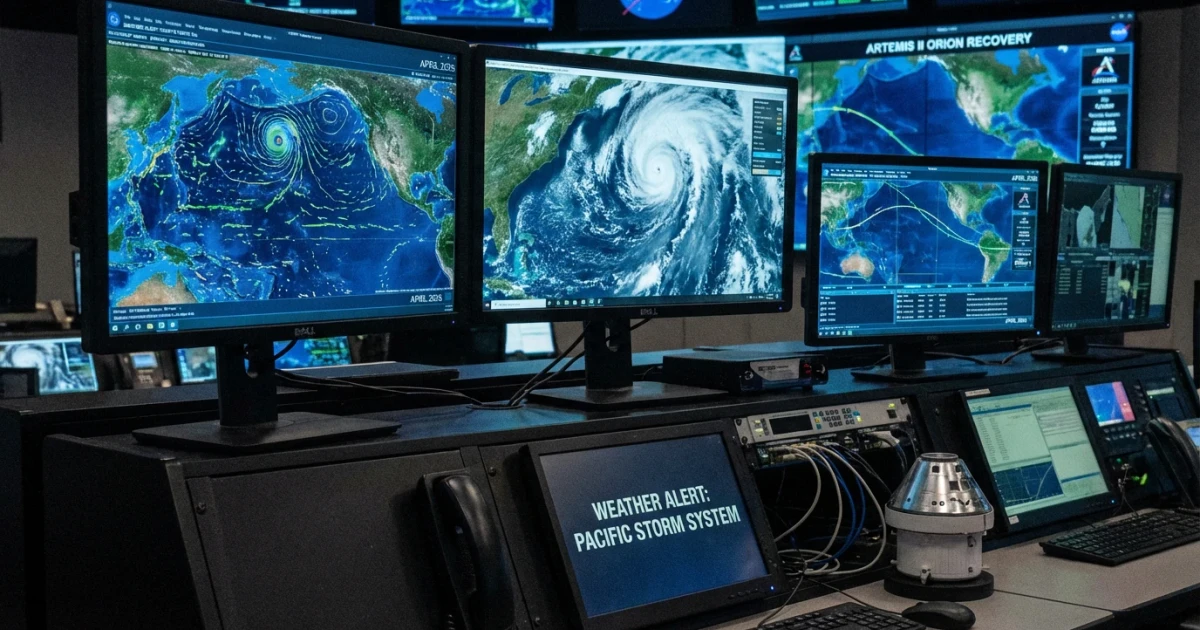
NASA’s Artemis II mission is approaching its highly anticipated conclusion, with the Orion spacecraft scheduled for splashdown in the Pacific Ocean. While current forecasts suggest favorable conditions for a safe landing, NASA remains vigilant, closely monitoring a developing Pacific storm that could potentially disrupt recovery operations.
Orion’s Return and Splashdown Planning
Artemis II marks a significant milestone in NASA’s return to the Moon, sending astronauts on a lunar flyby before their return to Earth. As the mission enters its final phase, attention turns to the splashdown procedures for Orion. NASA’s landing and recovery teams have spent months preparing for the capsule’s descent, drawing from lessons learned during previous missions and rigorous simulations.
According to the official Artemis II Press Kit, the Orion spacecraft will deploy parachutes to slow its descent before splashing down at a pre-selected location in the Pacific. Recovery teams will be on standby to secure the crew and capsule, following protocols detailed in the Artemis II Landing and Recovery Operations guide.
Weather Monitoring and Pacific Storm Concerns
While the current NOAA forecasts indicate generally favorable conditions for Orion’s return, NASA is not taking any chances. ABC7 Los Angeles reports that mission planners are tracking a developing storm system in the Pacific Ocean, which could pose a risk to both the splashdown and subsequent recovery efforts. The agency is prepared to adjust the landing location or timing if the storm’s trajectory changes and begins to threaten the primary recovery zone.
- NASA regularly monitors data from the NOAA National Hurricane Center to assess potential hazards.
- Contingency plans are in place for alternate landing sites, should weather conditions deteriorate near the primary zone.
- Safety protocols for astronauts and recovery personnel are prioritized in all weather-related decisions.
Details on the Orion capsule’s splashdown capabilities, including its ability to withstand rough sea states and its advanced parachute system, are available in the official Orion Splashdown Fact Sheet.
Mission Objectives and Next Steps
Artemis II represents the first crewed lunar mission under NASA’s Artemis program, setting the stage for future expeditions to the Moon and beyond. The successful completion of Orion’s splashdown will mark a crucial achievement, validating spacecraft systems, crew procedures, and NASA’s ability to recover astronauts safely from deep space missions.
Mission experts emphasize that flexibility is key in splashdown operations. As outlined in the Artemis II Frequently Asked Questions, weather is one of the primary variables that can influence both the timing and location of Orion’s return. NASA’s ability to adapt to evolving conditions ensures that crew safety remains paramount.
Looking Ahead
With the Orion spacecraft poised for a Pacific splashdown, NASA is balancing optimism with caution. The agency’s experience with prior missions, combined with robust monitoring of Pacific storm activity, provides confidence that Artemis II will conclude safely. However, the developing weather system underscores the complexity and unpredictability of space exploration and recovery operations.
As splashdown approaches, NASA will continue to provide updates, ensuring transparency and the highest safety standards for the Artemis II crew and mission support teams.