Science
NASA Finishes Construction of Roman Space Telescope
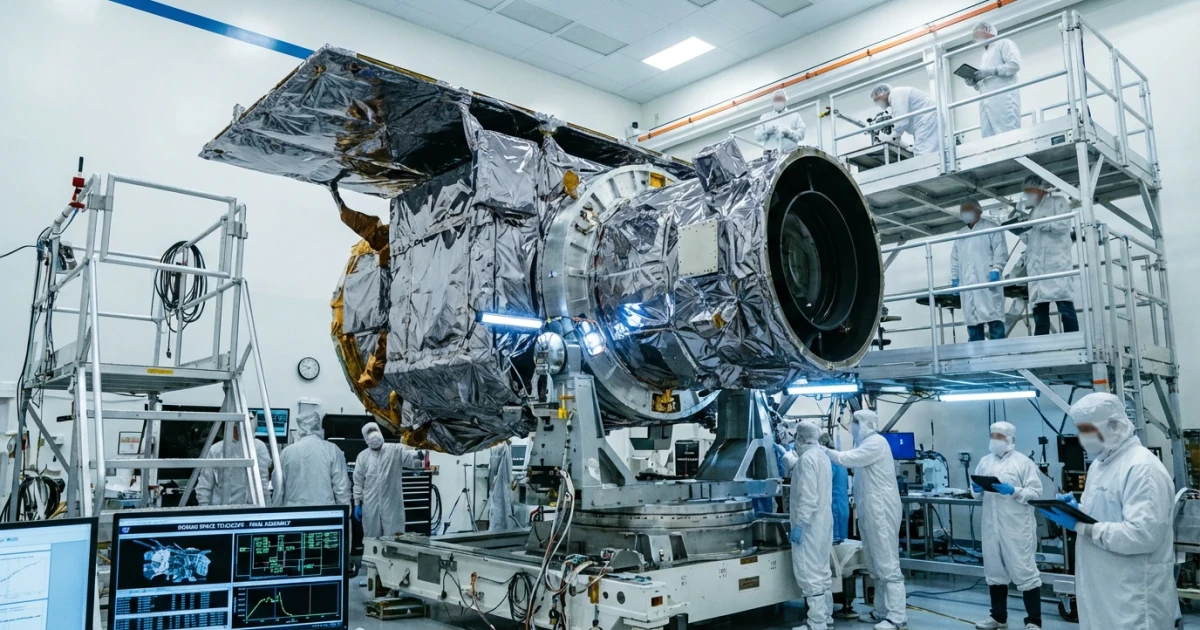
NASA has officially completed construction of the Nancy Grace Roman Space Telescope, marking a milestone in the development of what is set to become one of the world’s most advanced space observatories. The telescope, described as NASA’s next great observatory, is now on track for a highly anticipated launch this September, according to multiple sources including NASA and Space reporting.
Major Milestone for NASA’s Astrophysics Program
The completion of the Roman Space Telescope—named in honor of Nancy Grace Roman, NASA’s first Chief of Astronomy—signals the conclusion of its complex assembly and integration phase. NASA announced the achievement in December 2025, with Space highlighting that Roman is now poised to join the ranks of NASA’s flagship observatories like the Hubble and James Webb telescopes.
- The mission is expected to last at least five years, with a possible extension depending on its performance and scientific returns.
- Roman’s science goals include probing the mysteries of dark energy, searching for and imaging exoplanets, and conducting wide-field infrared surveys of the universe.
- With a field of view 100 times greater than Hubble’s infrared instrument, Roman will be able to map large areas of the sky with unprecedented depth and detail.
Advanced Capabilities and Scientific Promise
NASA’s official records detail Roman’s technical milestones, including the integration of its primary mirror, wide-field instrument, and advanced coronagraph for exoplanet studies. The telescope’s cutting-edge technology will enable it to collect data that could answer longstanding questions about the structure and evolution of the cosmos.
- Roman’s data catalog will be made publicly available, supporting open science and collaborative research across the globe.
- Its publications are expected to cover a wide range of topics, including dark energy, exoplanet demographics, and the evolution of galaxies.
Countdown to Launch
With construction complete, the Roman Space Telescope will now undergo final preparations for shipment to its launch site. The official timeline projects a launch window in September 2026, a schedule confirmed by both NASA and Space. The telescope will be launched aboard a heavy-lift rocket and sent to a stable orbit far from Earth’s atmosphere, where it can conduct uninterrupted observations.
NASA’s teams are now focused on final testing, calibration, and integration with the launch vehicle. These steps are critical to ensure that all instruments function as expected once the telescope is deployed in space.
Looking Ahead to Roman’s Scientific Legacy
The completion of the Nancy Grace Roman Space Telescope represents a significant investment in the future of space science. With its advanced instruments and ambitious mission objectives, Roman is expected to build on the legacy of its predecessors and open new frontiers in the study of the universe.
As its launch draws closer, scientists and the public alike are eager to see what discoveries Roman will bring. Its observations could reshape our understanding of fundamental cosmic mysteries, from the nature of dark energy to the formation of distant worlds. For those interested in tracking mission progress and accessing future data releases, NASA maintains an official operations center with up-to-date information and resources.