Science
NASA Introduces New Roman Space Telescope for Universal Survey
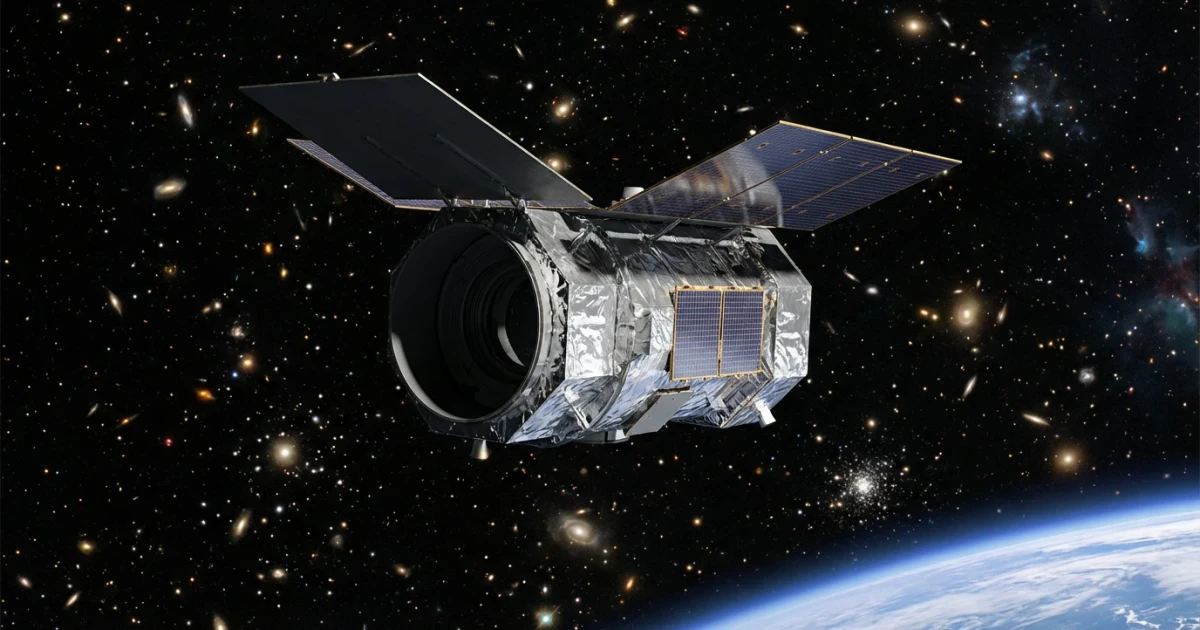
NASA has formally introduced its latest astronomical powerhouse, the Nancy Grace Roman Space Telescope, which is poised to deliver an unprecedented, detailed survey of the universe. Scheduled for launch in September, the telescope is designed to provide scientists and the public with a comprehensive 'atlas of the universe' and marks a major milestone in space observation.
Next-Generation Observatory Ready for Launch
The Nancy Grace Roman Space Telescope—named after NASA's first Chief of Astronomy—has been officially completed, according to NASA officials cited by Bloomberg. The telescope is NASA’s next flagship observatory, following in the footsteps of missions like the Hubble and James Webb Space Telescopes. Unlike its predecessors, the Roman Telescope is specifically built for large-scale surveys and is expected to dramatically expand our understanding of the cosmos.
- Launch Date: September (final date to be confirmed by NASA)
- Main Objective: Create a wide-field atlas of the universe to map its structure and evolution
- Mission Duration: Initially planned for at least five years of operation
Design and Capabilities
NASA has emphasized the Roman Telescope’s ability to collect vast amounts of data in record time. Its wide field of view is nearly 100 times greater than that of Hubble, allowing it to image large areas of the sky with remarkable resolution. This will enable the creation of a detailed atlas, offering astronomers an extensive resource for studying everything from galaxy formation to dark energy.
The Roman Telescope is equipped with advanced instruments, including a high-resolution Wide Field Instrument and a Coronagraph Instrument for direct imaging of exoplanets. According to Bloomberg’s coverage, these state-of-the-art tools will help address some of the most pressing questions in astrophysics, such as the distribution of dark matter and the fate of the universe’s expansion.
Scientific Ambitions: Mapping the Universe
Le Monde highlighted NASA’s goal to produce an 'atlas of the universe.' The telescope’s mission is to map billions of galaxies, trace the structure of the cosmos, and help unravel the mysteries of dark energy and dark matter. Its surveys will also contribute to the ongoing search for exoplanets, potentially identifying thousands of new worlds beyond our solar system. For those interested in the technical details and data products, NASA maintains an official archive for mission documentation and datasets.
- Expected to discover thousands of exoplanets using gravitational microlensing techniques
- Will map the structure and growth of the universe with unprecedented precision
- Data will be publicly available, fostering global collaboration and research
Broader Significance for Astronomy
The Roman Telescope’s wide-field capabilities and survey speed are expected to transform how scientists approach cosmic research. As detailed in NASA’s mission explainer, it will complement the deep, narrow-field studies of the James Webb Space Telescope, offering a broader context for discoveries made by other observatories.
NASA officials, as reported by Bloomberg, see the Roman Telescope as essential for answering foundational questions about the universe’s past, present, and future. Its publicly accessible data will enable astronomers worldwide to pursue discoveries and contribute to humanity’s knowledge of the cosmos.
Looking Forward
With its launch targeted for September, excitement is building in the scientific community. The Roman Space Telescope promises to unlock new insights, from mapping the cosmic web to searching for distant worlds. As its journey begins, the world will be watching to see what secrets this next-generation observatory will reveal.