Science
NASA Moves Forward with Artemis II After Initial Assessments
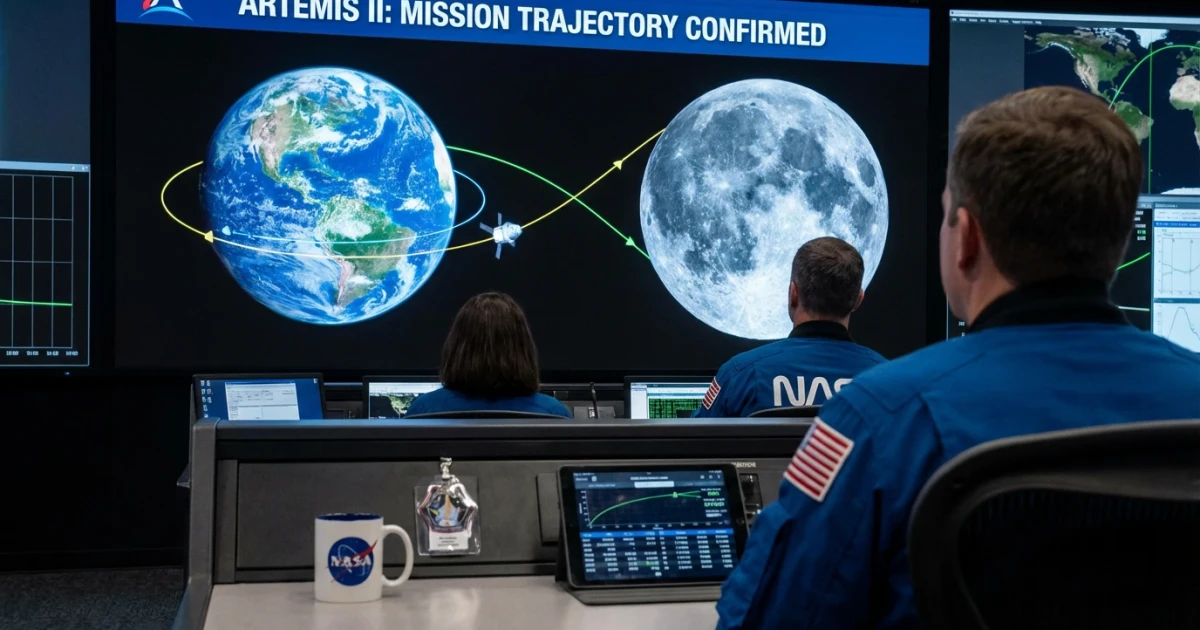
NASA has confirmed continued progress toward the next phase of its Artemis program after completing initial assessments for the Artemis II mission. The assessment marks a significant milestone as the agency prepares for the first crewed lunar flyby in over half a century, underscoring the United States’ renewed commitment to deep space exploration.
Initial Assessments Keep Artemis II on Schedule
According to a recent update from NASA, the early evaluations of Artemis II’s critical systems and mission readiness have yielded encouraging results. While specific technical findings were not publicly detailed in the initial coverage, the agency’s announcement signals that major obstacles have been addressed, keeping the mission on track for its intended timeline.
- Artemis II is slated to be the first mission to send astronauts beyond low Earth orbit since Apollo 17 in 1972.
- The mission will utilize NASA’s Orion spacecraft and the powerful Space Launch System (SLS) rocket.
- The crew will conduct a lunar flyby, paving the way for future landings under the Artemis program.
Why Artemis II Matters
Artemis II is a vital step in NASA’s broader Artemis program, which aims to establish sustainable human presence on the Moon and lay the groundwork for eventual missions to Mars. The mission will test life-support systems, navigation, and deep space communication protocols essential for future lunar and Martian expeditions.
The mission’s success is crucial for maintaining momentum within the Artemis timeline. Data from NASA’s Artemis program statistics highlights the complexity and scale of each mission, with Artemis II serving as the program’s first crewed test beyond low Earth orbit.
Technical Readiness and Program Context
NASA’s announcement comes after a series of preparatory activities, including system integration and simulations. The initial assessments cover hardware performance, crew safety measures, and contingency planning, all of which are essential for a mission of this magnitude. The Artemis program status update emphasizes that such reviews are standard milestones designed to identify and mitigate risks early in the process.
By confirming that Artemis II is on track, NASA reinforces its ability to meet international and commercial partnership commitments associated with the broader Artemis goals. These partnerships are central to advancing lunar science, developing new technologies, and fostering a commercial space economy.
What’s Next for Artemis II
With initial assessments completed, NASA will proceed with final preparations, including hardware verification, crew training, and launch rehearsals. The mission’s progress will continue to be closely monitored, with further updates and technical reviews scheduled in the months ahead.
- Artemis II will test all mission-critical systems in real flight conditions.
- The crew will spend roughly 10 days in space, traveling thousands of miles beyond the Moon before returning to Earth.
- Success will directly inform the planned Artemis III mission, which will attempt a crewed lunar landing.
Looking Ahead
NASA’s commitment to a robust review process underscores the agency’s focus on safety and mission assurance. The progress on Artemis II not only keeps the United States at the forefront of lunar exploration but also sets the stage for future international cooperation and scientific discovery on the Moon and beyond. As preparations advance, the space community and the public will be watching closely, anticipating the next historic chapter in human spaceflight.