Science
NASA Plans Drone Mission to Explore Titan’s Skies
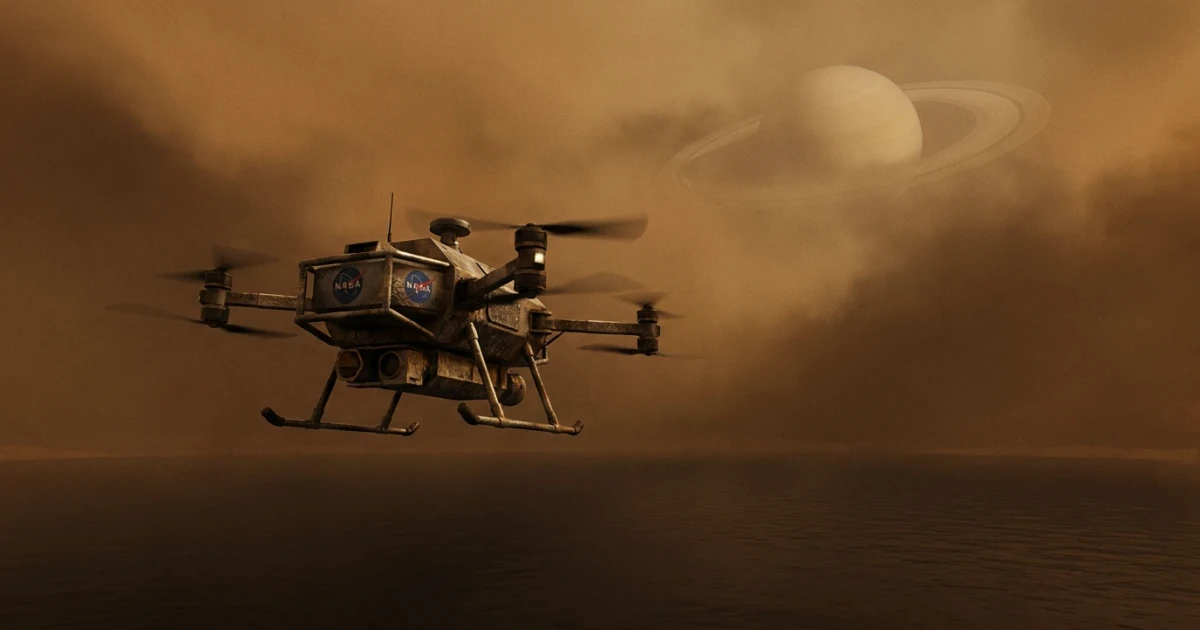
NASA is preparing to embark on a unique mission to Titan, Saturn’s largest moon, by sending a nuclear-powered drone to explore its surface and atmosphere. Unlike any other world in the solar system, Titan is shrouded in a dense, nitrogen-rich atmosphere and features rivers and lakes of methane and ethane—a landscape that has intrigued scientists for decades.
Why Titan Is a Compelling Target
One of the most distinctive characteristics of Titan is its atmosphere, which is actually thicker than Earth’s. Titan’s surface pressure is about 1.5 times that of our planet, and its dense air makes it a prime candidate for aerial exploration. The moon’s hydrological cycle, however, is fundamentally different from Earth’s: instead of water, Titan’s rivers and lakes are composed of liquid methane and ethane, as confirmed by Cassini-Huygens data.
- Atmospheric pressure on Titan is 50% greater than on Earth’s surface
- Surface lakes and rivers are made of methane and ethane
- Temperature averages around -179°C (-290°F), creating a unique environment for chemical processes
Why NASA Is Sending a Drone
On Titan, the thick atmosphere and low gravity make flying far more efficient than driving. NASA’s upcoming Dragonfly mission will send a nuclear-powered rotorcraft, designed to soar over the moon’s plains, dunes, and impact craters. The mission aims to study prebiotic chemistry and search for signs of life, leveraging Titan’s Earth-like processes in an alien context.
Unlike Mars rovers, which face rough terrain and thin air, a drone on Titan can take advantage of the dense atmosphere to cover vast distances quickly and safely. The Dragonfly drone will hop between diverse locations, analyzing organic materials and the chemistry of Titan’s surface and atmosphere.
What Scientists Hope to Learn
Researchers are excited by Titan’s Earth-like features, including dunes sculpted by wind, river channels, and large seas. The presence of organic molecules and complex weather patterns—complete with methane rain—suggests that Titan could offer clues about the building blocks of life, or even host unique forms of habitability.
- Analyze organic molecules in Titan’s atmosphere and surface
- Map surface features and study seasonal changes
- Investigate the methane cycle, which parallels Earth’s water cycle but with different chemistry
Looking Ahead
The Dragonfly mission represents a leap forward in planetary exploration, leveraging Titan’s unusual conditions to attempt scientific feats impossible elsewhere in the solar system. As NASA prepares for launch, scientists and space enthusiasts alike are hopeful that the mission will broaden our understanding of worlds beyond our own—and perhaps even bring us closer to answering fundamental questions about life in the universe.