Science
NASA Powers Down Voyager 1 Instrument After Decades in Space
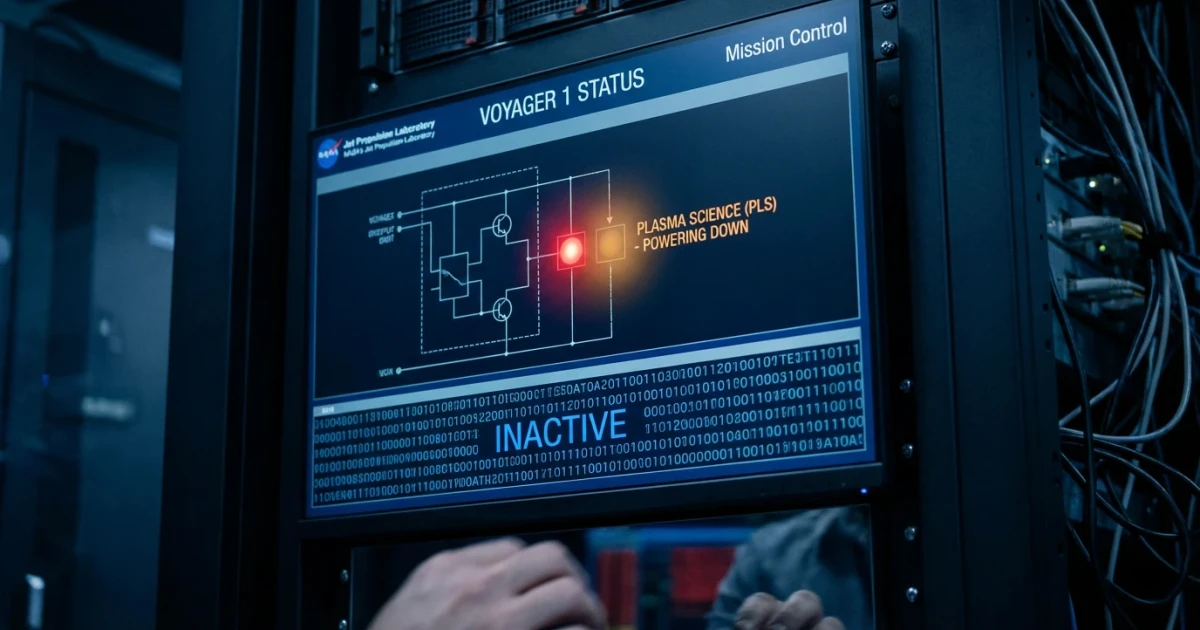
Voyager 1, the farthest human-made object in space, has entered a new chapter in its remarkable mission as NASA shut down one of its scientific instruments to conserve power. This decision, covered by outlets like Hackaday and NPR, underscores both the probe's endurance and the ongoing challenges of operating technology launched nearly half a century ago.
Voyager 1’s Historic Legacy
Launched in 1977, Voyager 1 was originally designed for a four-year mission to study Jupiter and Saturn. However, it has far surpassed its intended lifespan, continuing to transmit valuable data as it explores the outer reaches of our solar system and beyond. Voyager 1 crossed into interstellar space in 2012, becoming the first spacecraft to do so, and remains a symbol of human ingenuity and curiosity.
Powering Down an Instrument
As first reported by NPR and highlighted in Hackaday, NASA recently turned off the Plasma Wave Subsystem (PWS) on Voyager 1 to conserve the spacecraft’s dwindling power supply. With each passing year, Voyager 1’s power source—the onboard radioisotope thermoelectric generators (RTGs)—produces less energy as their plutonium fuel decays. As a result, mission managers face difficult choices about which instruments to keep running.
The PWS has been crucial for monitoring the environment beyond the solar system, measuring plasma waves and providing insights into the nature of the interstellar medium. Its deactivation marks a significant moment for the mission, as each instrument shutdown brings Voyager 1 closer to the end of its scientific operations.
Impact on Science and Mission Operations
- Voyager 1 has operated for more than 48 years, sending back data from greater distances than any other spacecraft.
- It is currently over 15 billion miles (24 billion kilometers) from Earth, with communication signals taking over 22 hours one way.
- The spacecraft’s power output decreases by about 4 watts per year, requiring periodic shutdowns of nonessential systems and instruments.
While the loss of the PWS means fewer real-time measurements of plasma activity, other key instruments remain operational, including the Cosmic Ray Subsystem and the Low-Energy Charged Particle instrument. These continue to provide valuable information about the environment outside our solar system.
Looking Ahead
NASA engineers are carefully managing Voyager 1’s remaining power, aiming to keep at least some instruments running into the 2030s. Each decision to power down a system is made with the goal of maximizing scientific return as long as possible. Even as its capabilities diminish, Voyager 1 remains a touchstone for humanity’s reach into the cosmos. Its mission timeline provides a record of extraordinary achievements.
Enduring Inspiration
Despite the gradual shutdown of its systems, Voyager 1 continues to capture the imagination of scientists and the public alike. The probe’s status page offers ongoing updates as it traverses the uncharted territory of interstellar space. Its journey stands as a testament to the durability and ambition of human space exploration.
As NASA prioritizes its remaining power, Voyager 1 will keep beaming back data for as long as it can, offering a window into the vastness of space and the enduring quest to understand our place in the universe.