Science
NASA Prepares Artemis III SLS Core Stage for Public Rollout
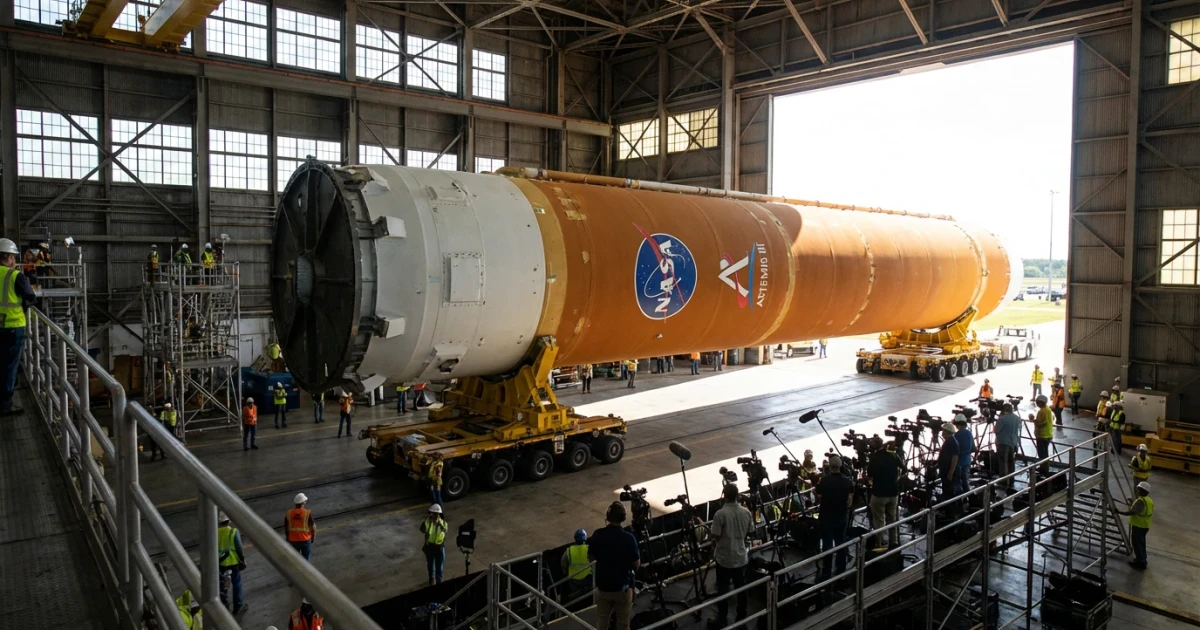
NASA has announced an upcoming rollout event for the core stage of the Space Launch System (SLS) rocket, a major milestone in preparation for the Artemis III mission. This event, open to members of the media, offers a firsthand look at the hardware that will power the first crewed mission to the lunar surface in over 50 years.
Artemis III: The Next Step Toward Returning to the Moon
Scheduled for launch in the coming years, Artemis III aims to land astronauts near the lunar South Pole, a region never before visited by humans. According to the official NASA Artemis launch schedule, this mission represents a critical step in NASA’s goal of establishing a sustainable human presence on the Moon and eventually paving the way for crewed missions to Mars.
- Artemis III will be the first mission to return humans to the Moon since Apollo 17 in 1972.
- The mission will deliver a diverse crew to the lunar surface, including the first woman and first person of color to walk on the Moon.
- Key objectives include testing new lunar surface technologies, performing science experiments, and gathering data for future exploration.
Space Launch System: NASA’s Most Powerful Rocket
The Space Launch System (SLS) is NASA’s most powerful rocket to date, designed to carry astronauts and cargo beyond low-Earth orbit. The core stage of the SLS, which will be featured at the rollout event, stands over 212 feet tall and houses the rocket’s main engines and fuel tanks. According to the NASA SLS Fact Sheet, the SLS can generate up to 8.8 million pounds of thrust at liftoff, making it capable of carrying the Orion spacecraft, astronauts, and essential cargo to lunar orbit.
- The SLS core stage is a key component in the Artemis III mission architecture.
- The rocket’s design allows for future upgrades, supporting increasingly ambitious missions to the Moon and Mars.
Rollout Event: A Behind-the-Scenes Look
NASA’s invitation to the media highlights the agency’s commitment to transparency and public engagement in its space exploration efforts. During the rollout, attendees will have the opportunity to observe the transportation of the SLS core stage from its assembly facility to the launch preparation area. According to NASA, these events provide insight into the complex logistical and engineering processes required to assemble, test, and launch a rocket of this scale.
Rollout Highlights
- Media and the public will see the massive SLS core stage as it is moved into position for final integration with other rocket components and the Orion spacecraft.
- Astronauts, engineers, and NASA officials are expected to be present to discuss the mission’s significance and answer questions.
- The event underscores the progress made since previous Artemis missions and signals the final stages of pre-launch preparations for Artemis III.
Looking Ahead: The Road to Artemis III Launch
As NASA continues its preparations, the rollout of the SLS core stage marks one of the last major milestones before the rocket is readied for flight. The flight records and statistics from previous Artemis missions have demonstrated the SLS’s reliability and performance, building confidence in its ability to carry astronauts safely to lunar orbit.
With Artemis III, NASA hopes not only to land humans on the Moon but also to establish the foundation for long-term exploration. The mission’s success will depend on seamless integration of complex hardware, extensive testing, and the dedication of engineers and astronauts involved in the program.
For those interested in the future of human spaceflight, the Artemis III SLS core stage rollout offers a rare glimpse into the engineering marvels and collaborative efforts driving NASA’s return to the Moon. As the mission moves closer to launch, anticipation is building for what could be a defining moment in the history of space exploration.