Science
NASA Prepares to Announce Artemis III Moon Mission Crew
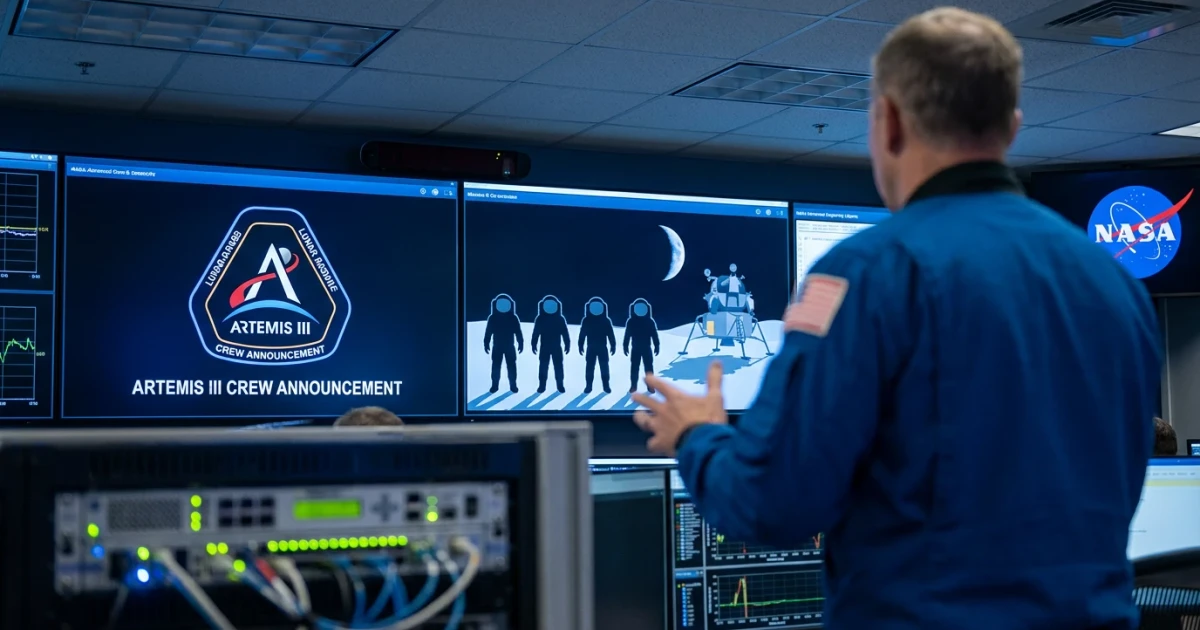
NASA is poised to announce the crew that will embark on the Artemis III mission, the United States' first attempt to land humans on the Moon in over fifty years. With the official crew reveal imminent, attention is focused on the astronauts shortlisted for this historic journey, as well as the mission's scientific and exploration objectives.
The Artemis III Mission: Goals and Significance
Artemis III is designed as a pivotal chapter in NASA's lunar exploration program, aiming to land astronauts near the lunar South Pole. According to NASA's mission manifest, the crew will conduct advanced science experiments, test new technologies for sustained lunar presence, and lay groundwork for future Mars missions. This mission will mark the first time a woman and a person of color are expected to set foot on the lunar surface, highlighting NASA's commitment to representation and diversity.
- Artemis III will be the first crewed lunar landing since Apollo 17 in 1972.
- The mission targets the lunar South Pole—a region believed to contain water ice and other resources critical for long-duration exploration.
- The crew will perform surface operations for approximately a week, conducting sample collection and deploying scientific instruments.
Meet the Artemis Astronaut Shortlist
Anticipation surrounds the announcement of the Artemis III crew, with several candidates already highlighted in NASA's official Artemis Team. This pool of astronauts, announced in recent years, features individuals with diverse backgrounds in engineering, science, medicine, and military aviation. The selection process weighs not only technical proficiency and spaceflight experience, but also teamwork and leadership qualities essential for the mission’s success.
The Artemis candidates include seasoned space travelers as well as newer recruits, all of whom have undergone rigorous training for lunar mission demands. NASA’s public shortlist features:
- Astronauts with spaceflight experience aboard the International Space Station (ISS)
- Test pilots with advanced engineering backgrounds
- Scientists specializing in geology, medicine, and planetary science
- Service members from the U.S. Navy, Air Force, and Marine Corps
Although NASA has not confirmed the final Artemis III crew, the shortlist reflects the agency’s emphasis on skills diversity and mission adaptability.
What Sets Artemis III Apart
Unlike earlier missions, Artemis III will leverage new vehicles and systems, including the Space Launch System (SLS) rocket and the Orion spacecraft. The crew is expected to dock with a human landing system for descent to the lunar surface. According to the Artemis III Science Definition Team Report, the mission’s science goals focus on searching for water ice, studying the Moon’s geology, and demonstrating technologies crucial for future Mars expeditions.
- The mission will test advanced spacesuits, mobility tools, and autonomous systems
- Experiments will include regolith sampling and in-situ resource utilization demonstrations
- Data gathered will inform NASA’s plans for a sustainable lunar presence through the Artemis program
Looking Ahead: Crew Announcement and Lunar Exploration
As NASA prepares for the official Artemis III crew reveal, the mission stands as a cornerstone in the agency’s broader lunar and Mars exploration strategy. The final crew selection will highlight the astronauts’ unique training and readiness for the challenges of deep space travel and lunar surface operations.
With Artemis III, NASA aims to inspire a new generation of explorers, advance lunar science, and demonstrate international leadership in space exploration. The world now awaits the next chapter in humanity’s return to the Moon.