Science
NASA Releases iPhone Footage of Earthshine from Artemis II
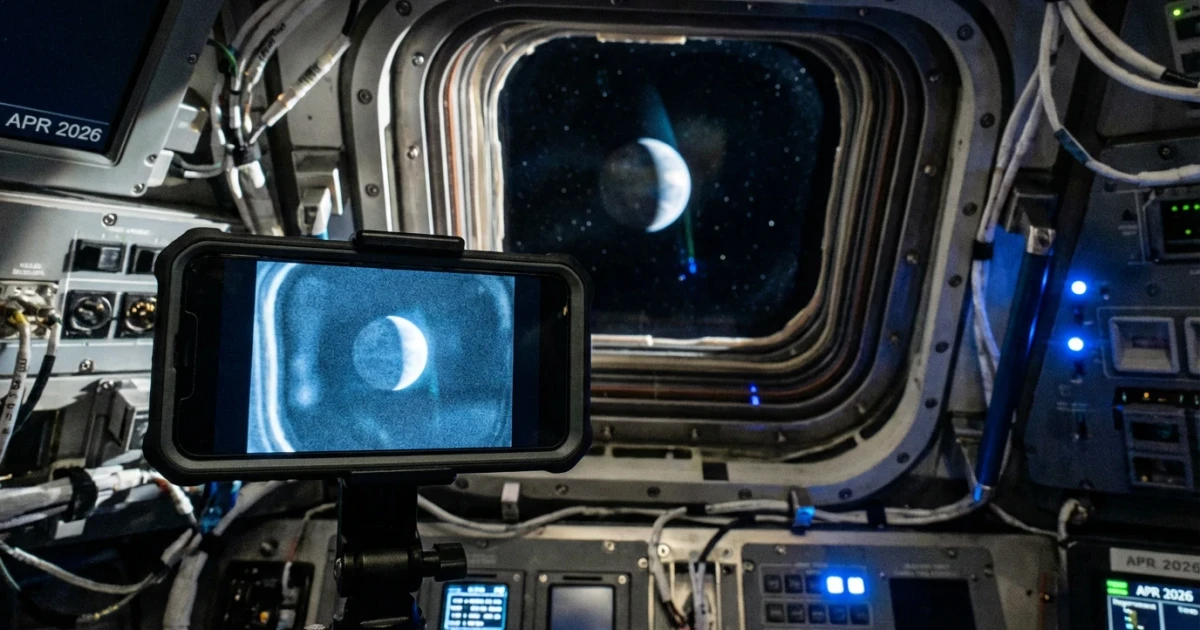
NASA has released new footage showcasing the phenomenon of Earthshine, captured on video by an iPhone aboard the Orion spacecraft during the Artemis II mission. The short video, recorded as the crew traveled through space, offers a uniquely vivid perspective of the Moon faintly illuminated by sunlight reflected off Earth—an effect scientists and skywatchers know as Earthshine.
Documenting Earthshine with Everyday Technology
The video, shared by NASA and highlighted by outlets including 9to5Mac, was captured using a standard iPhone device, demonstrating how commercial technology can contribute to space exploration. The Orion crew used the phone to record the ethereal glow as the Earth’s reflected light softly lit up the dark side of the Moon. This marks one of the first times such high-quality Earthshine imagery has been obtained with consumer-grade equipment during a deep space mission.
NASA’s official Artemis II Mission Milestones gallery now features this footage, alongside a range of images and videos documenting significant moments from Orion’s journey. The use of an iPhone for scientific documentation was part of a broader suite of technology demonstrations conducted throughout the mission.
Understanding the Earthshine Phenomenon
Earthshine occurs when sunlight reflects off Earth’s surface and clouds, illuminating the Moon’s night side with a faint, ghostly glow. While Earthshine can be observed from the ground during certain lunar phases, capturing it from space provides a new level of clarity and context. NASA’s Earthshine explainer describes the phenomenon as a key visual link between our planet and its satellite, and notes that such observations help scientists study Earth’s reflectivity, atmospheric conditions, and even changes in global climate patterns.
Footage Highlights and Mission Context
- The video was recorded aboard the Orion spacecraft as part of the Artemis II mission milestones.
- Artemis II is NASA’s first crewed mission to the Moon since Apollo, designed to test systems and gather data ahead of future lunar landings.
- NASA’s Earthset video—another highlight from Orion—captures the Earth setting behind the lunar horizon, adding to the mission’s visual record.
The iPhone’s camera was able to handle the challenging lighting conditions of space, capturing not only the illuminated crescent of the Moon but also the gentle, bluish glow of Earthshine. NASA’s use of commercial technology for space imaging is part of a trend toward integrating off-the-shelf devices to enhance data collection and outreach.
Broader Implications and Next Steps
The success of this video underscores the growing role of commercial devices in space science. As NASA prepares for subsequent Artemis missions, including planned lunar landings and extended stays on the Moon, the ability to quickly capture and share scientific observations with readily available devices may increase the speed of data analysis and public engagement.
For those interested in further details and visual highlights, NASA’s Artemis II interactive portal provides mission milestones, raw footage, and technical information. Meanwhile, the public can continue to follow the evolving story of Artemis as NASA leverages technology, both advanced and everyday, to bring the wonders of space closer to home.