Technology
NASA satellite autonomously finds targets in orbit for the first time

A NASA-led system has crossed a threshold in space operations: an Earth-observation satellite did not just collect images, it decided on its own what to look at next. In a first in-orbit test, the spacecraft looked about 300 miles, or 500 kilometers, ahead of its path, processed the scene onboard and chose whether to keep imaging or skip it, all in under 90 seconds and without human involvement.
The test marked the first flight of NASA Jet Propulsion Laboratory’s Dynamic Targeting concept, a system the lab says has been in development for more than a decade. NASA describes the approach as a way for satellites to look ahead, process data onboard and repoint instruments autonomously, a shift that could make orbital sensing far more responsive when minutes matter.
That first demonstration, flown in mid-July 2025 on the briefcase-sized CogniSAT-6 satellite built by Open Cosmos, was deliberately modest: cloud avoidance rather than hunting fires, storms or other fast-moving events. NASA said clouds can block optical Earth-observation imagery as much as two-thirds of the time, so skipping useless scenes can sharply improve the yield of a mission. Preliminary analysis using actual MODIS cloud data suggests Dynamic Tasking could cut the share of cloudy data from roughly two-thirds to less than 10%.
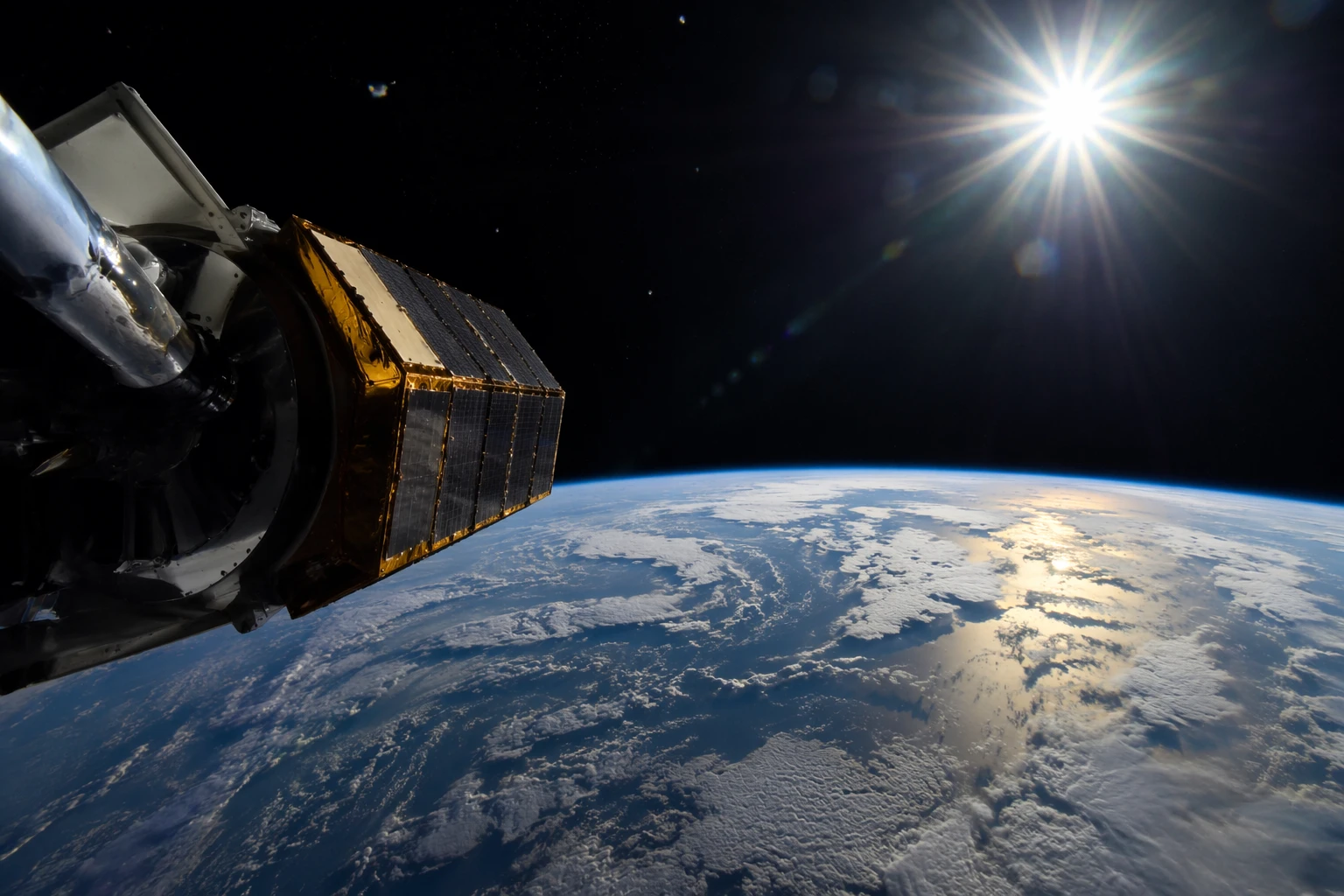
“The idea is to make the spacecraft act more like a human,” Steve Chien of NASA’s Jet Propulsion Laboratory said. Instead of waiting for ground controllers to sift through data after the fact, the machine made the judgment in orbit and moved on.
The longer-term aim is more ambitious. NASA wants satellites that can autonomously hunt short-lived phenomena such as wildfires, volcanic eruptions and rare storms, where fast decisions could improve disaster response, sharpen scientific observations and reduce the lag between event and image. The same capability also raises accountability questions, because a spacecraft that can choose its own targets in real time changes who, or what, is in control of the sensor.
The pace of that transition is already visible outside NASA. In 2026, Planet Labs said its Pelican-4 satellite used onboard AI to identify airplanes from orbit, a task its engineers said took 18 months to make reliable. Together, the two milestones show that onboard intelligence is moving from experiment toward operations, and that satellites are starting to become decision-makers, not just cameras.
Sources
- [1]techcrunch.com
- [2]nasa.gov
- [3]ai.jpl.nasa.gov
- [4]thenextweb.com
- [5]spectrum.ieee.org