Science
NASA says pristine meteorite reveals ancient water on asteroid parent body

A New Jersey amateur astronomer who recognized the Hillsborough meteorite’s fireball and collected fragments almost immediately gave NASA scientists something unusually rare: a sample that stayed close to its original state before moisture and handling could change it. The rock fell on July 16, 2024, and the speed of recovery let researchers examine ancient material from an asteroid parent body with far more confidence than they usually can.
NASA said the preserved fragments are helping researchers probe ancient water, chemical evolution inside the parent asteroid and the ingredients that may have supported life in the early solar system. Primitive meteorites can change after they land, especially when they are exposed to water or handled without care, which makes a fast recovery scientifically valuable. In this case, the fragments were stored in protective materials before contamination could take hold.
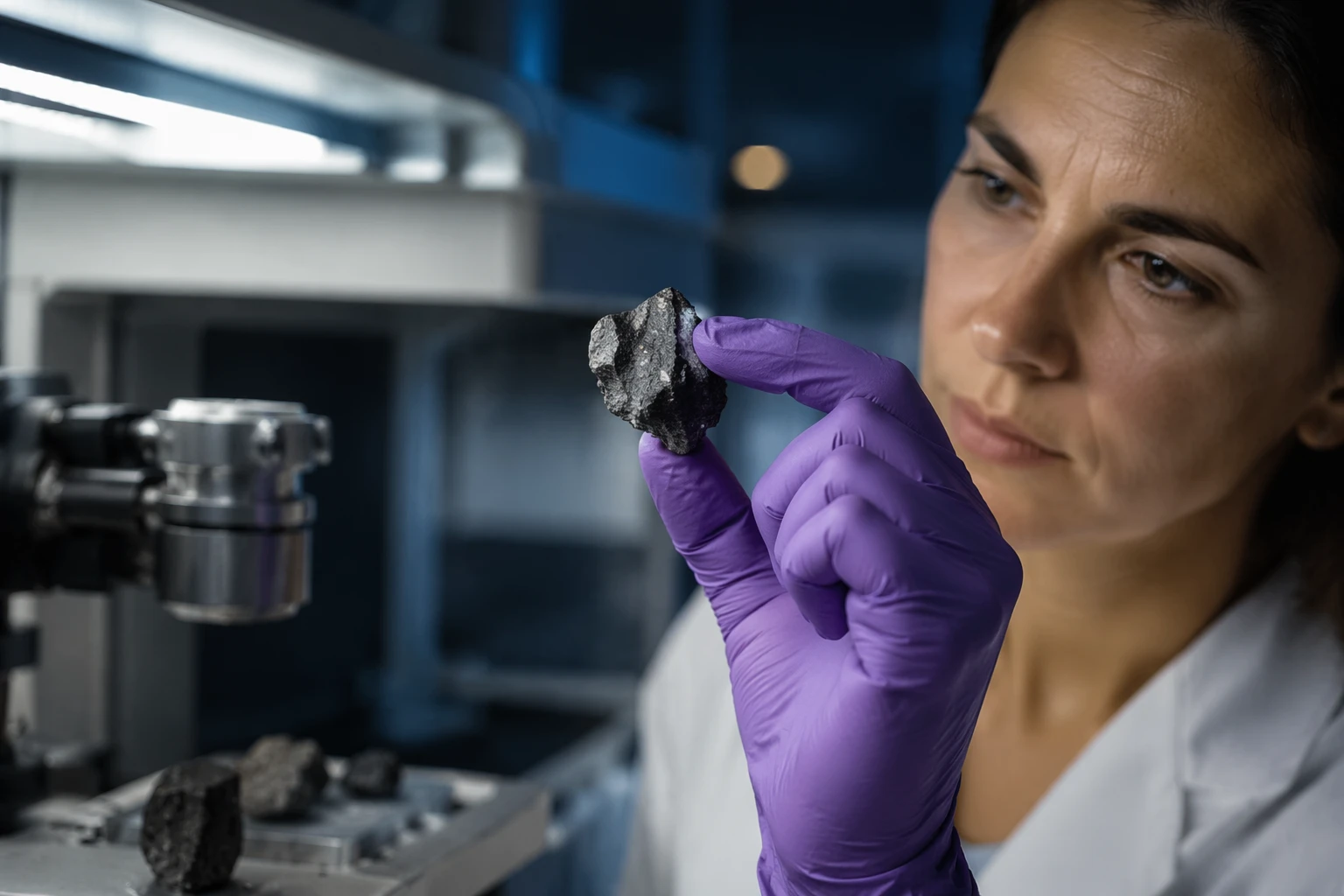
Scientists reconstructed the object’s path using camera footage of the fireball and radar data, then combined that information with laboratory analysis to trace the meteorite back to the asteroid belt. The study, published in Science Advances, found evidence that salty water once altered minerals inside the meteorite’s parent body and helped preserve unusual minerals and organic compounds. NASA identified the Hillsborough meteorite as a CM carbonaceous chondrite, a carbon-rich class of primitive rock that carries some of the oldest material in the solar system.
That combination of a documented fireball and a quickly recovered sample gives researchers a tighter link between what falls to Earth and the conditions where it formed. It also strengthens the case that some asteroids underwent chemical processing by liquid water billions of years ago, long before Earth developed the environments familiar today.
For planetary scientists, that is the value of pristine material: it sharpens the record. A meteorite recovered before Earth’s weather and surface conditions can rewrite its chemistry gives a clearer view of how water and organic molecules were distributed in the young solar system, and why those building blocks mattered.