Science
NASA Spitzer Telescope Rescue Mission Clears Major Test
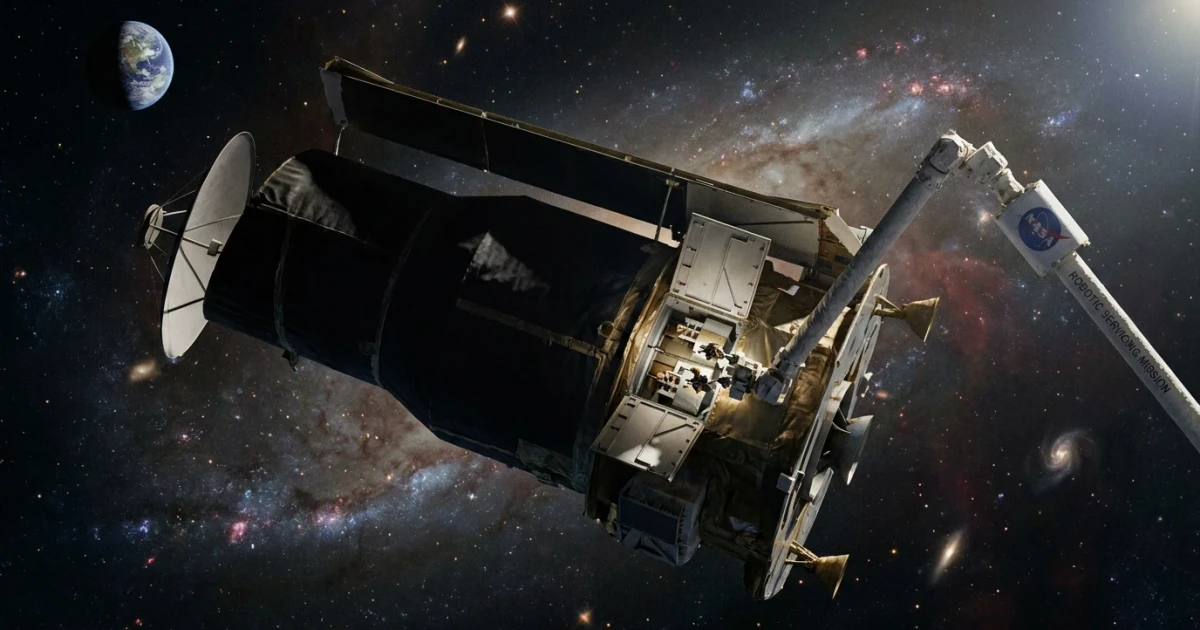
NASA’s Spitzer Space Telescope, one of the agency’s most valuable astronomical assets, is a step closer to renewed operations after its rescue mission successfully cleared a pivotal testing milestone. The milestone, reported by Spaceflight Now, marks significant progress toward restoring the $500 million observatory, which has played a vital role in expanding our understanding of the universe.
Testing Milestone Brings Hope for Spitzer’s Future
The rescue mission’s latest achievement signals that key systems and procedures designed to revive Spitzer have been validated through rigorous simulation and hardware tests. NASA engineers have been working to overcome technical challenges that led to the telescope’s reduced functionality, aiming to restore its ability to conduct groundbreaking infrared observations.
- Spitzer’s mission has contributed to discoveries ranging from exoplanets to distant galaxies since its launch in 2003.
- The telescope is valued at $500 million, reflecting the significant investment in its scientific infrastructure.
- NASA’s rescue project is detailed on the official Spitzer Rescue Mission page, outlining objectives and progress.
Technical Challenges and Mission Objectives
The Spitzer rescue mission was initiated after the telescope encountered issues that curtailed its ability to collect data efficiently. Engineers have focused on restoring critical systems, including communications and power management, to enable Spitzer to resume its scientific observations. The successful test milestone confirms that the mission’s technical solutions are viable, paving the way for further operational trials and potential full restoration.
According to NASA’s documentation, the rescue effort involves:
- Reconfiguring software and hardware components to bypass damaged systems
- Validating instrument performance through ground-based simulation
- Assessing long-term viability of renewed operations for scientific research
Spitzer’s Impact and the Scientific Community’s Response
The Spitzer Space Telescope has been instrumental in collecting infrared data that supports a wide range of astronomical research. Its observations have led to the identification of exoplanets, characterization of star formation, and exploration of distant cosmic phenomena. The telescope’s archived datasets remain a rich resource for scientists, while the possibility of renewed operations brings excitement to the community.
Researchers continue to reference Spitzer’s contributions in published papers, highlighting the ongoing demand for its unique infrared capabilities.
What’s Next for the Rescue Mission?
With the critical test milestone achieved, NASA and its engineering teams will proceed to the next phase of the rescue mission: full-scale operational trials in space. The agency aims to monitor system stability and instrument performance under real conditions, with hopes to restore Spitzer’s ability to produce high-value scientific data.
As outlined in the official project updates, the coming months will be crucial for validating the long-term sustainability of the rescue solutions. If successful, Spitzer could resume its role as a leading tool for cosmic exploration, offering new opportunities for discovery.
Analysis and Forward Look
The passage of this testing milestone is a testament to NASA’s commitment to maximizing the value of its scientific investments. The Spitzer rescue mission not only reflects technical ingenuity but also underscores the importance of maintaining and restoring space infrastructure. As the mission advances, the scientific community and the public will be watching closely, eager to see what new insights Spitzer may uncover if fully revived.