Technology
NASA turns on upgraded Cold Atom Lab for quantum research in space
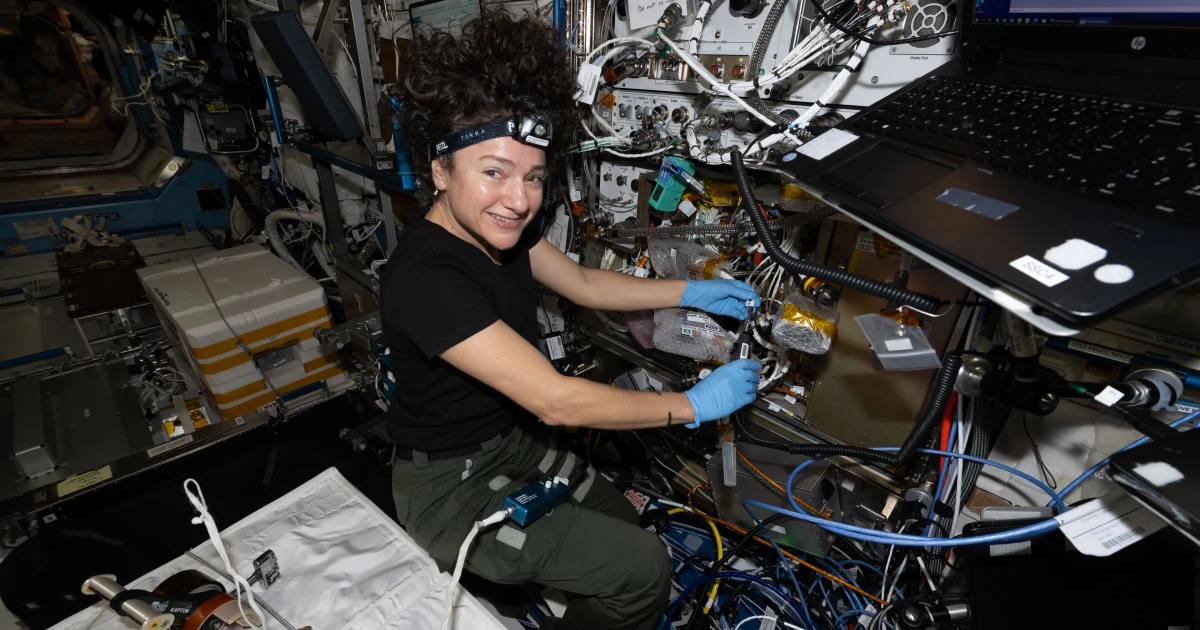
Astronauts aboard the International Space Station turned on NASA’s upgraded Cold Atom Lab, a tiny physics facility about the size of a minifridge that can chill atoms to below minus 459 degrees Fahrenheit, just above absolute zero. In the station’s microgravity environment, those ultra-cold atoms can form Bose-Einstein condensates and behave as one quantum object, a state of matter that is far harder to sustain on Earth.
That is the practical advantage NASA is chasing. On the ground, gravity and other disturbances quickly disrupt the delicate quantum states the lab is designed to study. In orbit, the near-weightless setting lets those states stay coherent longer and grow larger, giving researchers access to experiments that cannot be duplicated in terrestrial labs. NASA says that makes the station a rare test bed for fundamental physics with direct links to measurement, sensing and navigation technologies.
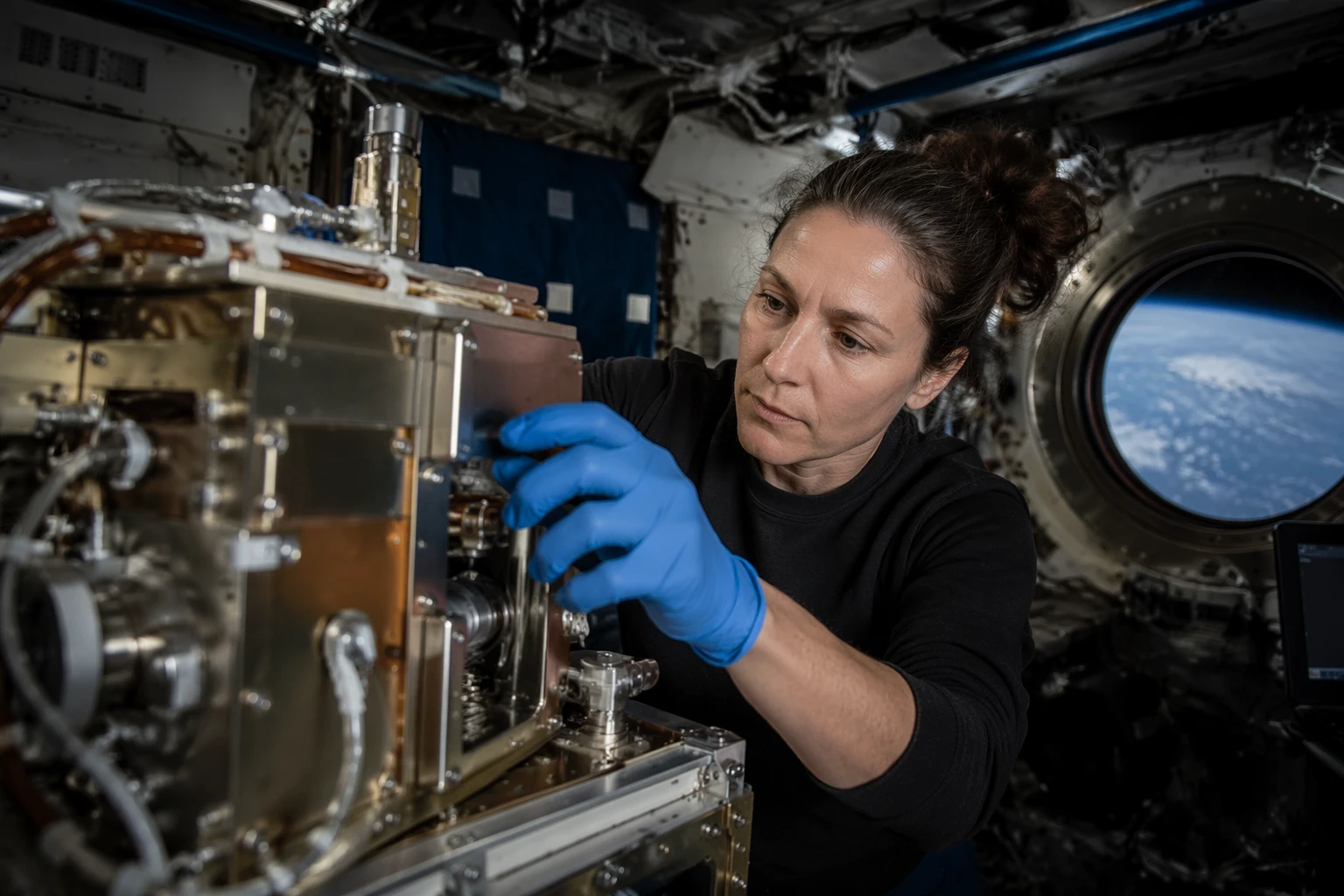
The latest hardware package reached orbit on April 11, 2026, aboard a Commercial Resupply Services mission, and NASA says NG-24 is scheduled to be the final resupply mission for the Cold Atom Laboratory. The update includes two modules, SM-3X and HXM-1. SM-3X is designed to collect more atoms and create Bose-Einstein condensates up to five times larger than those made with earlier modules, while HXM-1 upgrades the electronics that power the magnetic systems. NASA said the work was carried out in orbit, with astronaut Jessica Meir inspecting optical fibers on May 8, 2026 as the hardware went in.
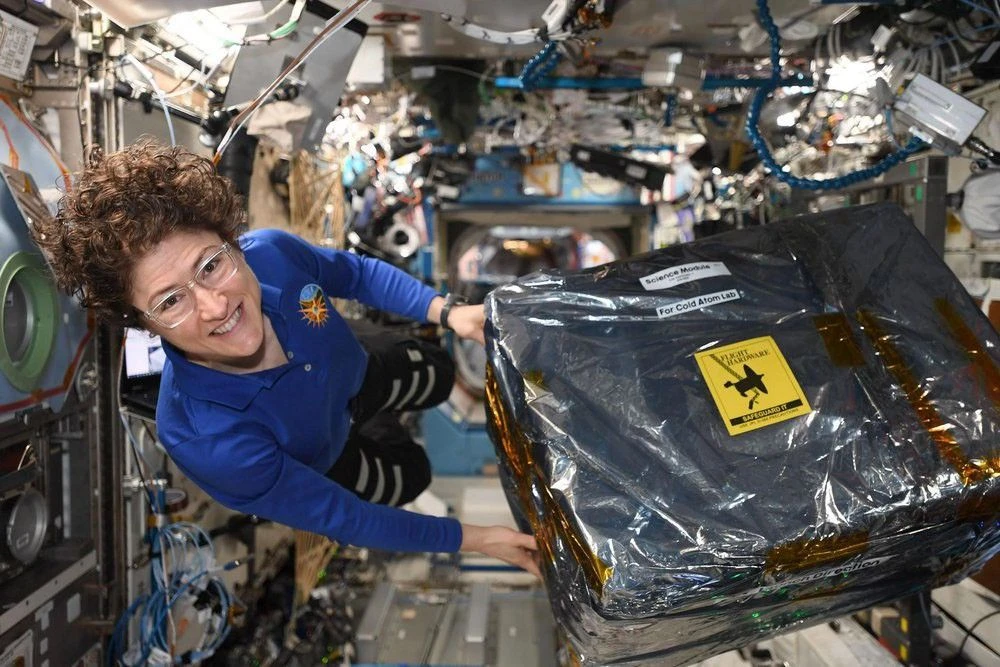
Cold Atom Lab has operated on the station since 2018 and was launched May 21 of that year, making it the first facility of its kind in Earth orbit. NASA says it has already produced the first Bose-Einstein condensates in space and has hosted dozens of experiments, with multiple international teams working remotely from NASA’s Jet Propulsion Laboratory in Southern California. The earlier 2020 upgrade took eight days and was performed by Christina Koch and Jessica Meir with ground support, adding an atom interferometer for precision gravity studies.
NASA is using the lab to push beyond basic curiosity. Its science teams tie the work to precision timekeeping, gravity measurements, spacecraft acceleration sensing, deep-space navigation, communications and computing. The agency also links the project to tests of Einstein’s relativity and investigations into dark matter and dark energy, underscoring why a minifridge-sized experiment on the station carries weight far beyond low Earth orbit.
Sources
- [1]jpl.nasa.gov
- [2]science.nasa.gov
- [3]nasa.gov