Science
NASA’s Artemis Progress Highlights Human Lander Challenge
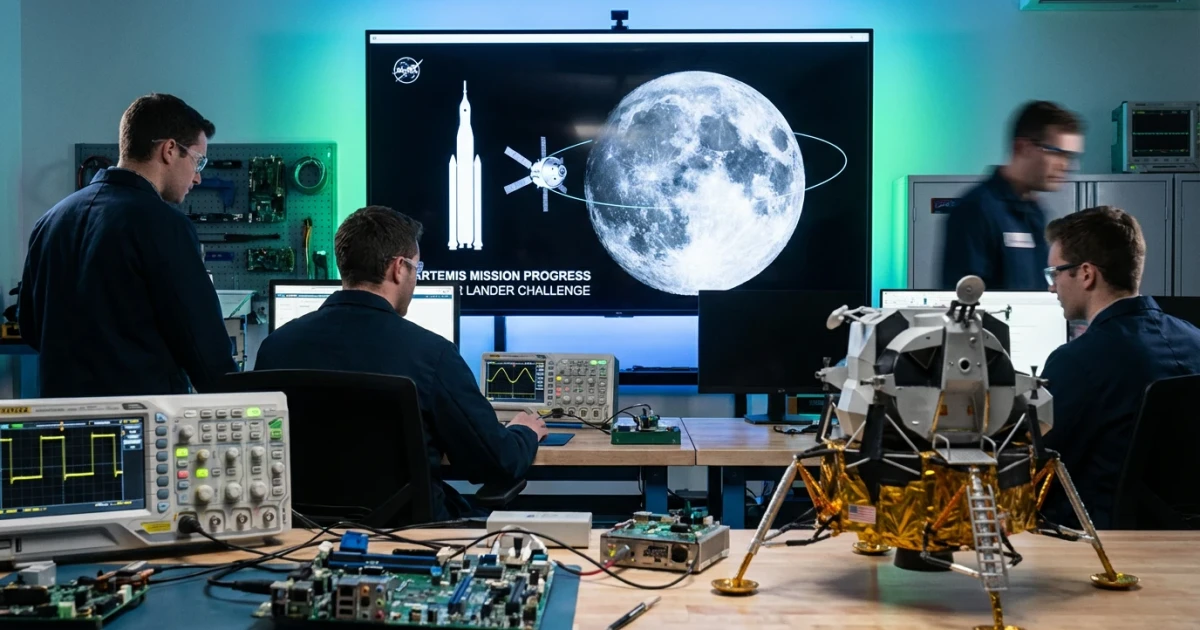
NASA’s Artemis program has achieved significant milestones with its Space Launch System (SLS) rocket and Orion spacecraft demonstrating strong performance. As these core systems prove their reliability, the next critical piece for a successful return to the lunar surface is the development of a Human Landing System (HLS). The focus now shifts to ensuring that lunar landers are ready to safely carry astronauts from lunar orbit down to the Moon’s surface and back.
Artemis Program Achievements So Far
Since launching the Artemis initiative, NASA has invested heavily in modernizing its launch and crew systems. The SLS rocket has successfully completed multiple test flights and missions, including the crucial Artemis I, which validated the rocket’s capabilities and verified the integration between SLS and Orion. According to technical data from NASA’s Artemis I Mission Report, the mission met or exceeded most performance goals, demonstrating robust propulsion, guidance, and safety systems.
- SLS is NASA’s most powerful rocket, designed to lift heavy payloads beyond low Earth orbit.
- Orion is capable of supporting deep space crewed missions, with advanced life support and navigation systems.
- The integrated stack has passed key milestones, paving the way for future crewed missions to the Moon and beyond.
The Critical Role of Lunar Landers
Despite progress with the rocket and crew vehicle, the success of Artemis hinges on the development of a reliable lunar landing system. NASA’s Human Landing System is tasked with ferrying astronauts from lunar orbit to the surface and returning them safely to Orion for the trip home. As outlined in NASA’s official HLS requirements, the lander must meet stringent safety, payload, and operational criteria.
- Multiple commercial partners, including SpaceX and Blue Origin, are competing to deliver their own versions of the HLS.
- NASA’s selection process evaluates proposals based on technical merit, cost, and schedule risk.
- SpaceX’s design leverages its Starship platform for lunar operations, with a focus on reusability and cargo capacity.
The agency’s review process, detailed in the Artemis III Science Definition Team Report, emphasizes the importance of integrating the lander seamlessly with Orion and SLS for mission success.
Remaining Challenges and Timelines
While the SLS and Orion have proven themselves, the lunar lander presents unique engineering and logistical hurdles. Among these are:
- Developing propulsion systems capable of both descent and ascent in the lunar environment.
- Ensuring astronaut safety during surface operations, including life support and mobility.
- Coordinating launches, orbital rendezvous, and surface mission timelines with SLS and Orion.
NASA’s official lander requirements demand not only technical excellence but also the ability to deliver on schedule. The selection of a winning HLS design will determine the feasibility of the first crewed lunar landing in over half a century.
What’s Next for Artemis?
The successful operation of the SLS and Orion sets the stage for the next Artemis missions, but the spotlight is now on the lander teams. NASA’s schedule aims for an Artemis III landing, with the first astronauts stepping onto the Moon’s surface as soon as the lander passes all milestones. Continued investment, rigorous testing, and collaboration with commercial partners will be essential to meet these ambitious goals.
As the lunar lander development enters its critical phase, the world watches to see if NASA and its partners can deliver on the promise of returning humans to the Moon—and lay the groundwork for future deep space exploration.