Science
NASA’s Cutting-Edge AI Uncovers Thousands of New Planet Candidates in Historic Breakthrough
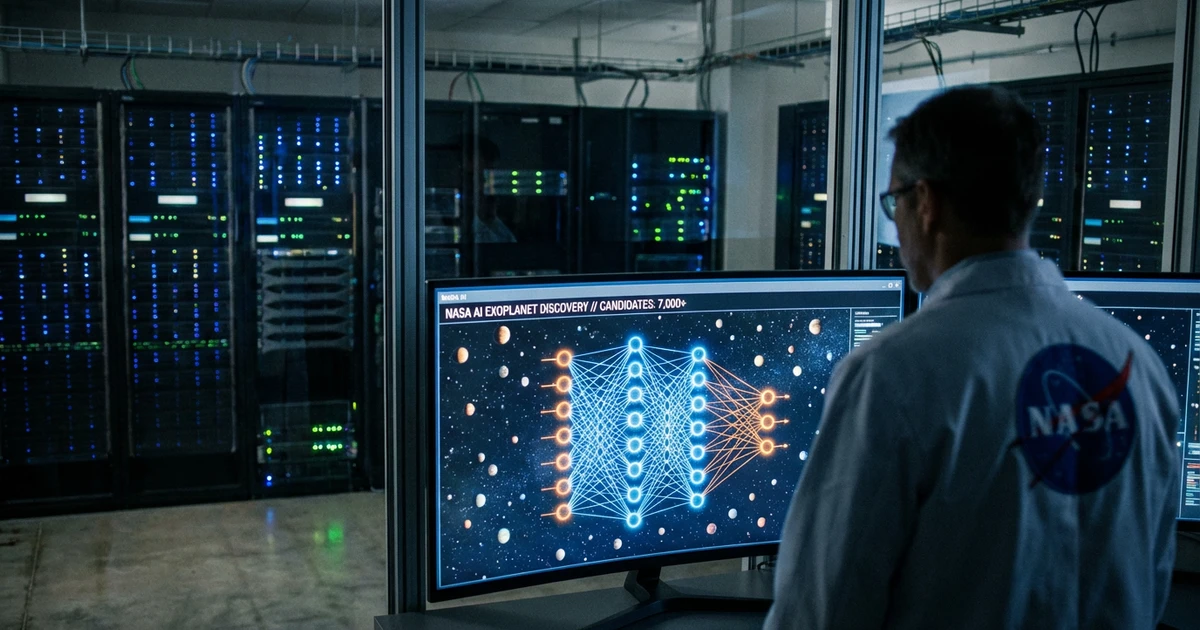
NASA has achieved a remarkable milestone in the search for worlds beyond our solar system. Utilizing a state-of-the-art artificial intelligence model, NASA’s team has identified more than 7,000 candidate planets in one comprehensive sweep of astronomical data—a discovery that could reshape our understanding of the universe and accelerate the hunt for habitable exoplanets.
The Power of Next-Generation AI in Space Exploration
NASA’s new AI model represents a significant leap forward in data analysis capabilities. Initially developed to spot subtle patterns and signals in vast datasets, the technology had already demonstrated its prowess by previously confirming 370 exoplanets in earlier projects. Now, with enhanced algorithms and optimized for large-scale planetary searches, the AI has been deployed on data from the ongoing Transiting Exoplanet Survey Satellite (TESS) mission.
- Over 7,000 planet candidates identified in a single sweep
- AI previously confirmed 370 exoplanets in earlier NASA missions
- Analysis leverages data from the TESS mission, designed to find exoplanets orbiting nearby stars
How AI Revolutionizes Exoplanet Discovery
Traditional methods of exoplanet detection—such as manual review of light curve data—are time-consuming and resource-intensive. NASA’s AI model automates these processes, using machine learning to identify the characteristic dips in starlight that indicate a planet passing in front of its host star. By doing so, the AI can scan through millions of data points far more efficiently than human astronomers ever could.
This technology significantly reduces the time between data collection and candidate identification, allowing scientists to focus their efforts on confirmation and further analysis. The sheer volume of candidates uncovered highlights the potential for AI to revolutionize not only exoplanet discovery but also the broader field of astronomical research.
What This Means for the Search for Life
The identification of over 7,000 planet candidates expands the catalog of worlds that could be studied for signs of habitability or extraterrestrial life. Each candidate represents a potential target for follow-up observations, including investigations of atmosphere, composition, and the possibility of water or other life-supporting conditions.
This surge in planet candidates will help refine our understanding of planetary system formation and the prevalence of Earth-like planets in our galaxy. The findings will also prioritize targets for NASA’s future space telescopes and observational campaigns, focusing efforts on the most promising worlds.
Next Steps in Verification and Exploration
While the AI’s findings are impressive, scientists caution that these are candidates—not yet confirmed exoplanets. The next phase involves rigorous verification using additional observations and data cross-checks. Many candidates will be examined by ground-based telescopes and upcoming missions to determine their true planetary nature and assess their potential habitability.
NASA’s embrace of advanced AI tools signals a new era in space exploration, where the scale and speed of discovery are dramatically accelerated. As AI continues to evolve, the prospects for uncovering Earth-like planets—and possibly life beyond our solar system—grow ever brighter.
Learn More
In summary, NASA’s innovative AI has set a new benchmark in exoplanet detection, uncovering thousands of potential new worlds in a single analysis. As the astronomical community embarks on the next phase of verification and exploration, humanity edges closer to answering the age-old question: Are we alone in the universe?