Technology
NASA's Lucy reveals asteroid Donaldjohanson's wobbly, peanut-shaped past
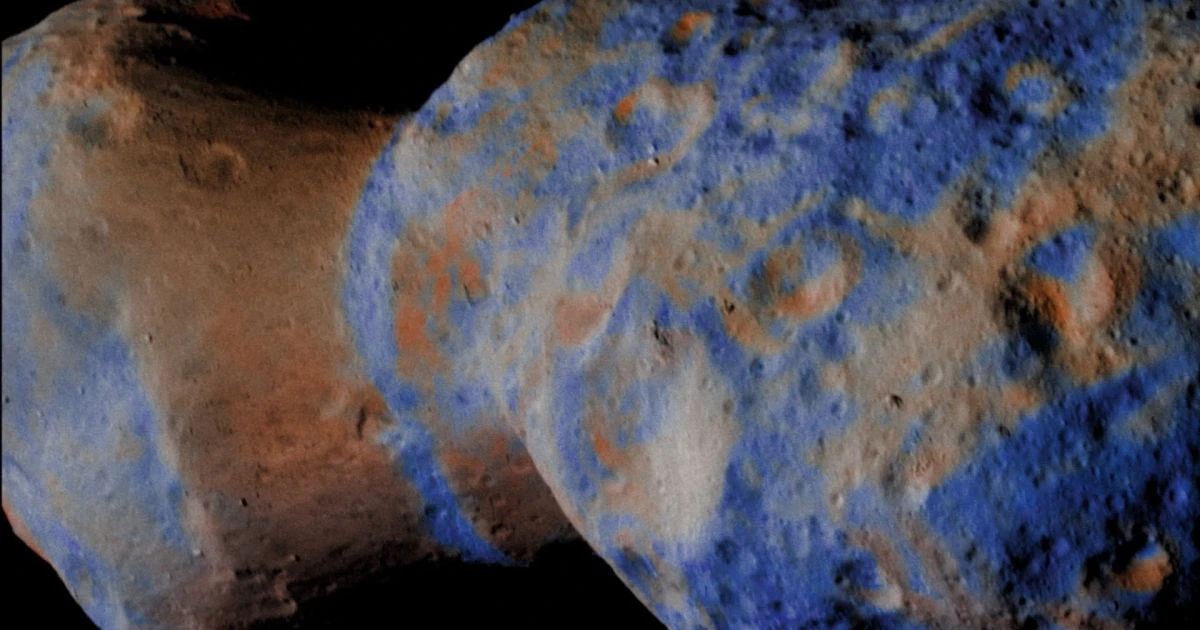
NASA’s Lucy spacecraft found that asteroid Donaldjohanson is far more complicated than its modest size suggests. During a close flyby on April 20, 2025, Lucy came within about 600 miles of the roughly 5-mile-long body and returned the first detailed images of a world that wobbles, spins and carries the scars of a violent past.
Scientists said the asteroid appears to have formed from fragments after a collision about 155 million years ago, then been reshaped over time by the Sun’s tiny but persistent radiation pressure. The new views also showed that Donaldjohanson does not behave like a simple spinning rock. Southwest Research Institute reported that it rotates end over end once every 10.5 Earth days while wobbling around its horizontal axis on a 26.5-day cycle, a two-axis motion that points to a far more layered history than Earth-based telescope data had suggested.
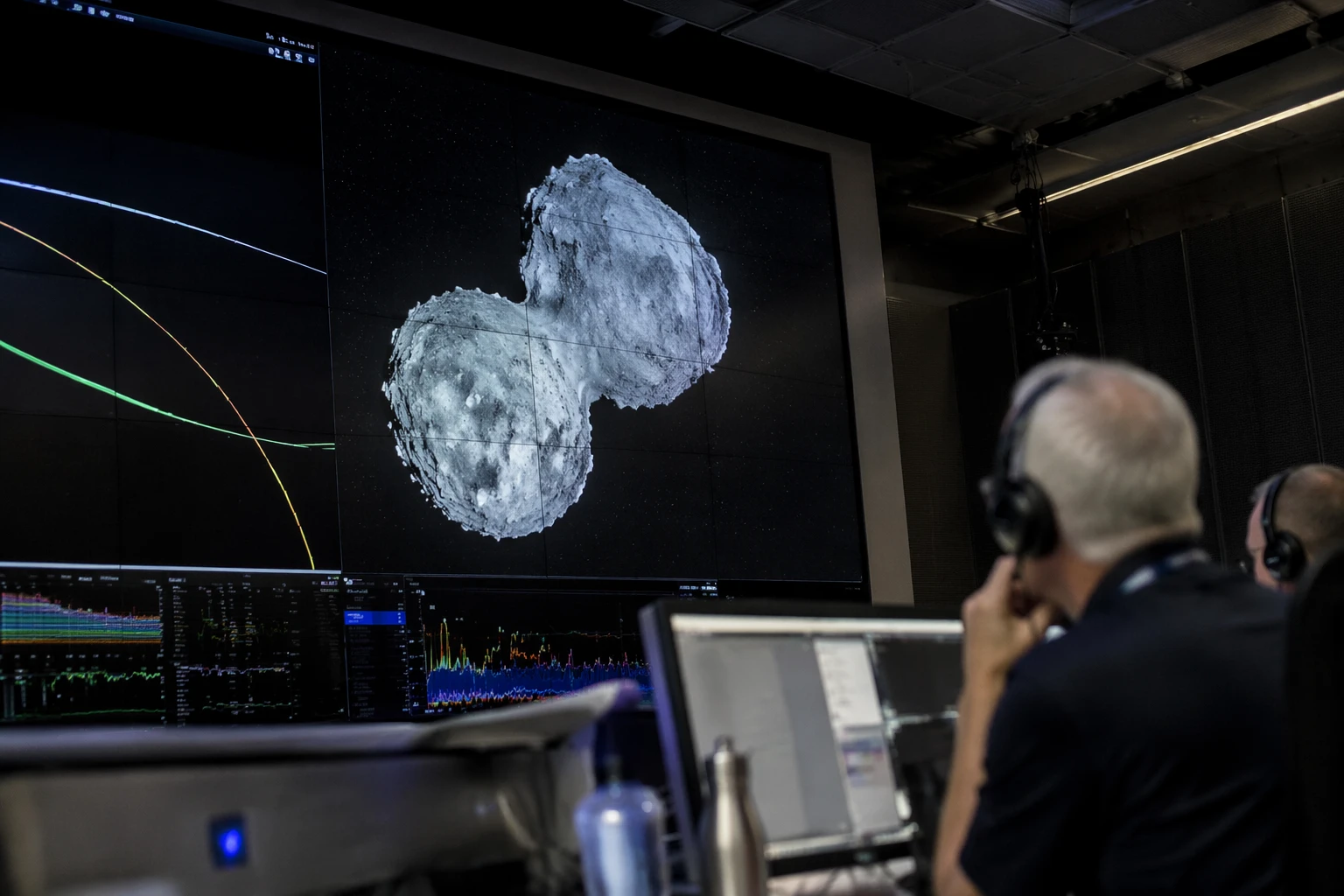
Those images confirmed an elongated, peanut-like contact binary, with a shape that one Lucy scientist compared to two nesting ice cream cones. The asteroid also appears to be larger than first estimated, measuring about 5 miles long and 2 miles wide at its broadest point. Craters and ridges on the surface add to the picture, giving researchers a closer look at how impacts and later surface evolution have left their mark.
Donaldjohanson belongs to the Erigone family in the inner main belt, a region linked to the source areas of asteroids such as Bennu and Ryugu. Earlier modeling had described it as a primitive C-type asteroid, and researchers have reported iron-rich clay minerals that indicate liquid water was present there long ago. Another line of analysis suggests its spin may once have been much faster before the YORP effect, the sunlight-driven process that alters asteroid rotation, slowed it over tens of millions of years.
The flyby also served as a rehearsal for Lucy’s main mission. The spacecraft’s next major target is the Trojan asteroid Eurybates, which is scheduled for an August 12, 2027 encounter with its small satellite Queta, the first of four Trojan flybys in the mission’s core phase. Donald Johanson, the asteroid’s namesake, attended the flyby event as an invited guest, underscoring how a brief look at a small asteroid can connect deep-time geology with the human story of discovery. The Science report reinforces the value of close-up missions: they can overturn assumptions built from distant observation and reveal how much even the smallest worlds still have to teach about the early solar system.
Sources
- [1]science.nasa.gov
- [2]swri.org
- [3]lucy.swri.edu
- [4]nasa.gov
- [5]arxiv.org