Science
NASA’s Roman Space Telescope Ready to Transform Search for Alien Worlds and Cosmic Explosions
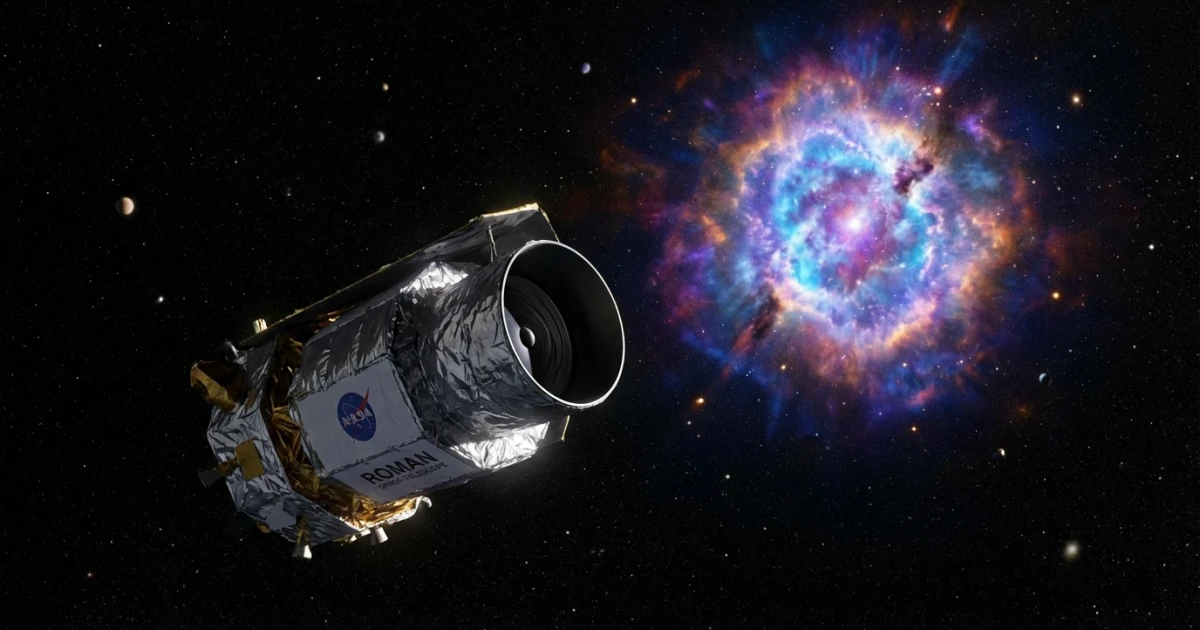
NASA’s Nancy Grace Roman Space Telescope is now officially complete, setting the stage for one of the most ambitious astronomical missions to date. The observatory, equipped with state-of-the-art technology, is expected to uncover 100,000 alien worlds and detect a similar number of cosmic explosions, dramatically expanding our knowledge of the universe.
Roman Space Telescope: A New Era of Discovery
The completion of the Roman Space Telescope marks a major milestone for NASA’s astrophysics division. The telescope is designed to scan vast stretches of the cosmos with unprecedented sensitivity and resolution, thanks to its advanced wide-field instrument and powerful detectors.
- Mission objectives: Survey over 100,000 exoplanets across the Milky Way and observe 100,000 cosmic explosions such as supernovae.
- Technological leap: The Roman Space Telescope’s field of view is 100 times greater than that of the Hubble Space Telescope, allowing for rapid and comprehensive sky surveys.
- Launch readiness: With assembly complete, the telescope is undergoing final preparations ahead of its launch phase.
Hunting for Alien Worlds
One of the Roman Space Telescope’s primary missions is the search for exoplanets—planets orbiting stars outside our solar system. By monitoring the brightness of millions of stars, the telescope aims to spot the subtle dimming caused when planets cross in front of their host stars, a technique known as the transit method.
This large-scale search is expected to yield a database of more than 100,000 alien worlds, providing astronomers with a treasure trove of targets for further study. The data will contribute to our understanding of planetary systems’ diversity and the potential for life elsewhere in the galaxy.
Detecting Cosmic Explosions
Besides exoplanets, the Roman Space Telescope is poised to detect up to 100,000 new cosmic explosions, including supernovae and other transient events. These discoveries will help scientists probe the life cycles of stars, the expansion of the universe, and the nature of dark energy.
Researchers anticipate that the telescope’s broad survey capabilities will yield unexpected findings. The mission team has expressed excitement about the possibility of uncovering phenomena never before observed, highlighting the exploratory spirit that drives space science.
Expecting the Unexpected
With its powerful technology and unprecedented survey scale, the Roman Space Telescope embodies NASA’s commitment to pushing the boundaries of cosmic discovery. The mission’s dual focus—on both exoplanets and stellar explosions—positions it to answer pressing questions about the universe’s structure and origins while leaving room for serendipitous discoveries.
As the telescope nears launch, astronomers worldwide are preparing for a flood of new data that could reshape our understanding of everything from planetary systems to the fate of the cosmos itself.
What’s Next?
With the hardware complete and scientific goals set, the Roman Space Telescope is entering its final pre-launch phase. Once deployed, it will begin its sweeping surveys, promising a new era of astronomical insight and discovery.
For more on the Roman Space Telescope mission and updates on its scientific findings, visit the official NASA mission page.
Sources
- [1]Live Science
- [2]Space