US News
NCAA says no plan to change transgender athlete rules after ruling
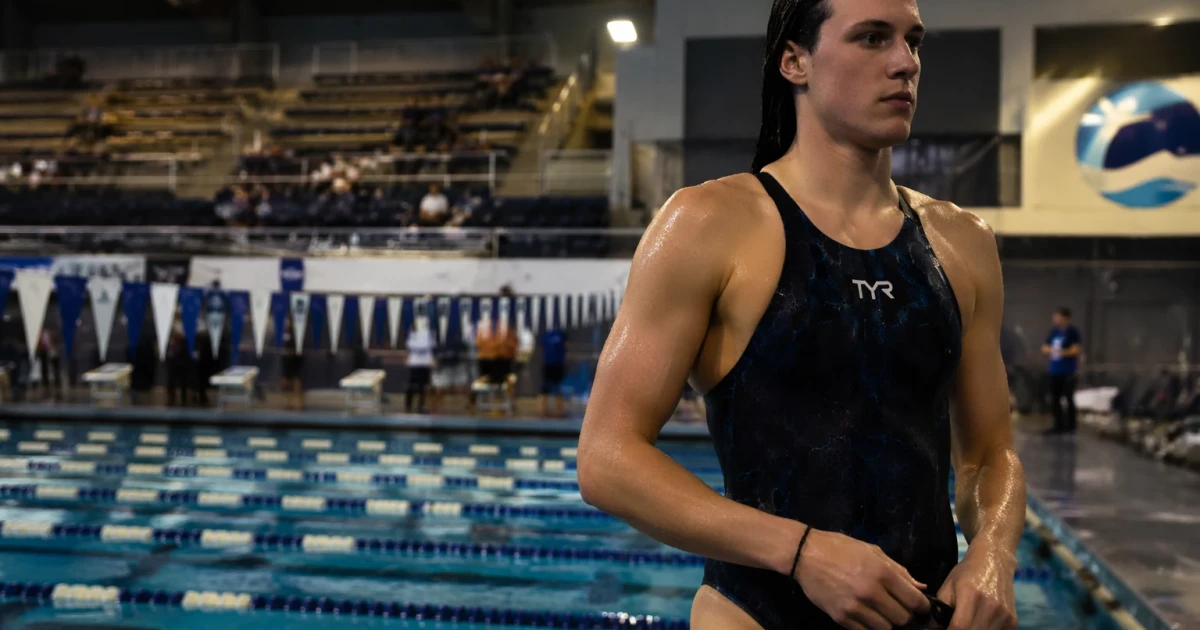
NCAA President Charlie Baker said the association had already “adopted and comply[ied] with the standard” set by the Trump administration. The NCAA does not plan to change its transgender-athlete policy after the Supreme Court upheld state bans on transgender girls and women in school sports.
Colleges and conferences are left with the same NCAA rule adopted by board vote on February 6, 2025. Under that policy, women’s competition is limited to student-athletes assigned female at birth, while student-athletes assigned male at birth may still practice with women’s teams and receive benefits such as medical care while practicing. The NCAA has about 1,100 member colleges and universities in all 50 states and more than 530,000 student-athletes, and it wants a “clear, consistent, and uniform” national standard instead of competing state laws and court orders.
The Supreme Court case came from Idaho and West Virginia, two of 25 to 27 states with restrictions on transgender girls and women in school sports. Idaho’s HB 500, signed by Gov. Brad Little in 2020, made Idaho the first state to impose an outright ban on transgender student-athletes. The challenge also involved Becky Pepper-Jackson, a transgender high school student from Bridgeport, West Virginia, and Lindsay Hecox, a Boise State University student and runner.
The court granted review on June 30, 2025, and ruled on June 30, 2026. The ruling was 6-3, with Justice Brett Kavanaugh writing for the conservative majority and Justice Sonia Sotomayor dissenting. Sotomayor criticized the majority for allowing categorical bans “even if the facts show that they do not” have an athletic advantage. The court had heard more than three and a half hours of oral arguments in January 2026.
The ruling adds pressure on schools in states that already have restrictions, but it does not force the NCAA to rewrite its own eligibility policy. Education Secretary Linda McMahon called the ruling a “tremendous victory,” while the ACLU called categorical exclusions “less safe and more hurtful places for all youth.”
The debate over transgender sports exploded after Lia Thomas won the women’s 500-yard freestyle at the 2022 NCAA Swimming and Diving Championships, becoming the first Division I title winner as a transgender athlete.
Sources
- [1]news.google.com
- [2]cbsnews.com
- [3]ncaa.org
- [4]aclu.org
- [5]cronkitenews.azpbs.org