Science
Neanderthal Brain Scans Challenge Long-Held Intelligence Myths
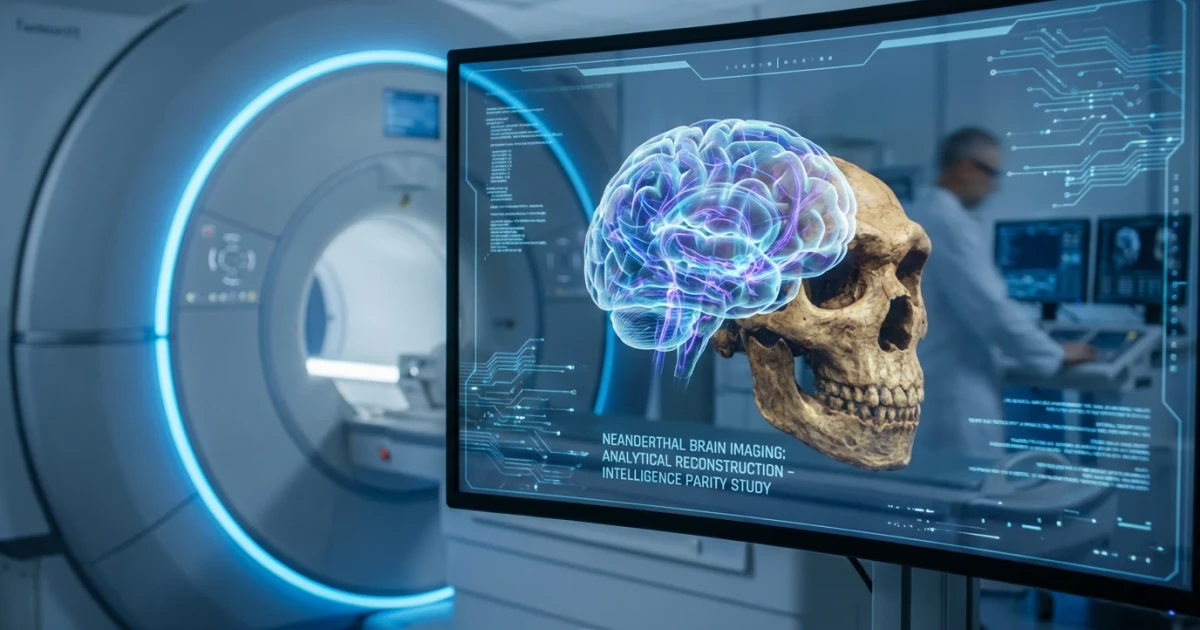
Recent advances in brain imaging have led scientists to rethink what we know about Neanderthal intelligence. New research using high-resolution scans suggests that Neanderthals' cognitive abilities were far more sophisticated than previously believed, casting doubt on the idea that their brain structure contributed to their extinction.
Reassessing Neanderthal Cognitive Capacities
For decades, the prevailing narrative has been that Neanderthals were outcompeted by Homo sapiens due to inferior cognitive skills. However, a newly published study featured in ScienceAlert and Live Science presents evidence from MRI-based reconstructions of Neanderthal brains, comparing them directly to early modern humans. The findings reveal that Neanderthal brains were not only similar in size but also organized in ways that would have supported complex behaviors and social learning.
- Neanderthal and Homo sapiens brain volumes overlapped significantly
- Key regions associated with planning, language, and social interactions were well-developed in Neanderthals
- Distinct brain morphologies suggest both species had the neural architecture for advanced tool use and communication
These results, corroborated by additional studies using fossil endocasts and digital reconstructions, undermine the simplistic view that Neanderthals were intellectually inferior. Instead, the differences found are more nuanced, relating to adaptation and ecological roles rather than a straightforward intelligence deficit.
What the Brain Data Shows
According to the research, Neanderthals exhibited robust development in the parietal and temporal lobes—regions involved in spatial reasoning and memory. The preprint analysis also demonstrates that Neanderthal frontal lobes, crucial for decision-making and social behavior, were highly complex.
Data repositories such as PANGAEA and PaleoRxiv offer morphometric measurements and scan records supporting these conclusions. While subtle anatomical differences exist—such as slightly larger visual processing areas in Neanderthals—these are interpreted as adaptive rather than indicative of diminished cognitive capability.
Implications for Human Evolution
This research challenges the notion that cognitive shortcomings led to Neanderthal extinction. ScienceAlert highlights that environmental pressures, genetic factors, and interbreeding with Homo sapiens are now seen as more significant contributors to their disappearance. The new findings support the idea that Neanderthals were capable of:
- Creating sophisticated tools and symbolic artifacts
- Engaging in complex social structures
- Potentially using rudimentary language
The Neanderthal genome project has already shown genetic overlap between Neanderthals and modern humans, and the brain organization data further reinforces the close evolutionary kinship. The Smithsonian’s Neanderthal Brain Evolution Project continues to explore these parallels, with ongoing discoveries reshaping our understanding of what it meant to be “human” in the Pleistocene.
Scientific Consensus and Future Directions
Across multiple publications, researchers agree that the simplistic view of Neanderthals as cognitively inferior is no longer tenable. Instead, the current consensus is that Neanderthal brains were capable of supporting advanced social and technical skills, and that their fate was determined by a complex mix of ecological and demographic factors—not mental shortcomings.
As more fossil evidence and digital reconstructions become available, scientists expect to refine our understanding of Neanderthal cognition even further, potentially illuminating the shared roots of human creativity and culture.
In summary, the latest brain scan studies offer a powerful reminder that intelligence is not the sole driver of survival in human evolution, and that Neanderthals deserve recognition as highly capable members of our ancestral family.