Politics
Nepal President Issues Ordinance Amid Political Appointment Debate
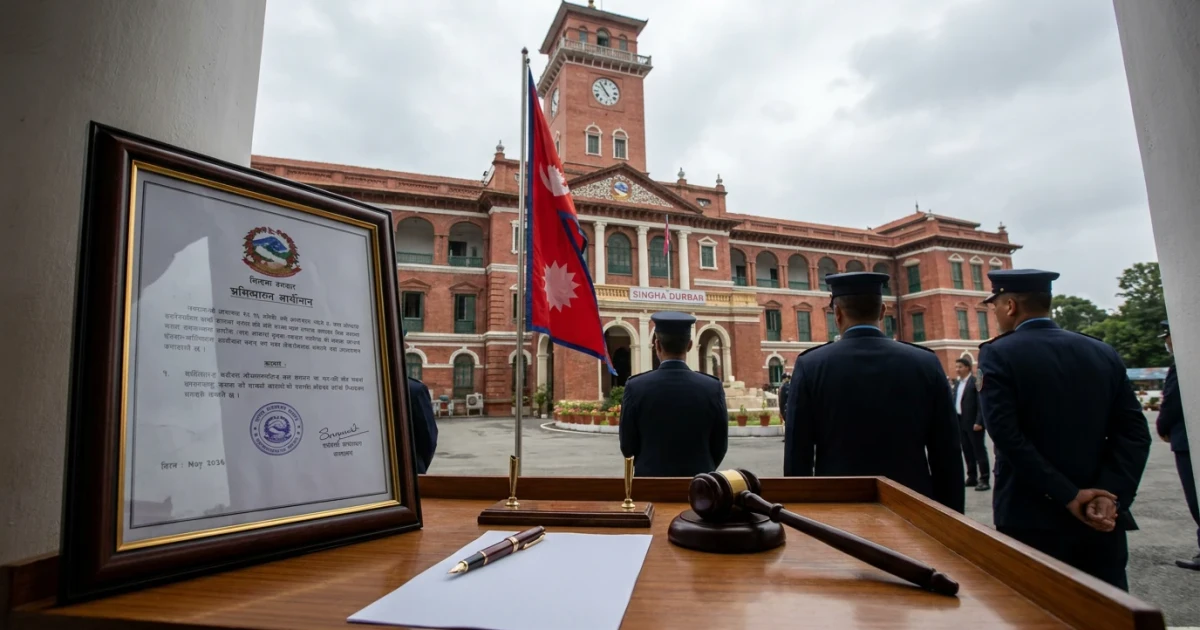
Nepal’s President has issued a new ordinance regulating political appointments, prompting significant reaction from the Nepali Congress and fueling discussions about executive power and party influence in government.
Presidential Ordinance Reshapes Appointment Process
The ordinance issued by the President introduces new provisions governing how key political appointments are made in Nepal. While the full text and scope of the ordinance are available via the Nepal Law Commission, initial reports highlight its potential impact on both the selection process and the powers held by the executive branch.
- The ordinance streamlines the process for appointing officials to constitutional bodies, commissions, and other high-level government posts.
- It grants the government increased authority to appoint individuals during periods when parliament is not in session, a practice that has become a point of contention in Nepal’s evolving political landscape.
- Official records maintained by the Office of the Prime Minister and Council of Ministers track ongoing and historical appointments, allowing for public scrutiny of changes resulting from the ordinance.
Nepali Congress Criticizes Executive Overreach
The Nepali Congress, one of Nepal’s largest and most influential parties, has expressed concern regarding the ordinance. According to Ratopati’s reporting, party leaders argue that the new rules may undermine parliamentary oversight and concentrate too much power in the hands of the executive.
- The party notes that previous use of ordinances for political appointments has sparked controversy over transparency and checks and balances.
- Data from Nepal Policy Monitor’s Ordinance Tracker shows a rising trend in the use of ordinances for governance-related decisions, a pattern that has generated debate among legal experts and political observers.
- While the text of the ordinance follows constitutional provisions outlined in Nepal’s legal framework, critics contend that repeated reliance on executive orders may weaken the parliamentary system.
Context: Political Appointments and Governance in Nepal
The issuance of ordinances on political appointments is not new in Nepal. Analysis from NepalMonitor highlights how such measures have been used by successive governments, particularly when legislative consensus has been difficult to achieve.
- Political appointments often play a critical role in shaping Nepal’s governance, with ruling parties seeking to place loyalists in key positions.
- As of 2026, over 100 parties are registered with the Election Commission, underscoring the country’s fragmented political environment and the intense competition for influence.
- International IDEA’s political party data offers further insight into the shifting alliances and appointment patterns that characterize Nepal’s multiparty system.
Analysis: Balancing Executive Action and Democratic Principles
The current debate centers on how Nepal balances the need for efficient governance with the principles of transparency and democratic oversight. While ordinances can provide flexibility in government operations, their frequent use—especially in politically sensitive areas like appointments—raises questions about the separation of powers.
Legal experts, as summarized in recent research, suggest that greater parliamentary involvement and public scrutiny of appointments could strengthen democratic legitimacy. At the same time, government officials maintain that ordinances are sometimes necessary to ensure continuity, especially when parliament is deadlocked or not in session.
Looking Forward
The fresh ordinance is likely to intensify political debate in Nepal, with opposition parties and civil society groups calling for reforms that limit executive discretion. As the Nepali Congress and other stakeholders mobilize, attention will remain focused on how the ordinance affects both the substance and perception of governance in the country. Readers can monitor the official record of ordinances and government appointments for ongoing updates.