US News
New Air Force One lacks key defensive systems, officials say

The Secret Service told Donald Trump to use the older Air Force One when he left Ankara, Turkey, on July 8, 2026, a move that put fresh pressure on the security setup inside the Qatari-gifted Boeing 747-8 now being adapted for presidential use. The dispute has sharpened a simple but consequential question: whether the rush to field the new aircraft preserved the survivability features that have long defined the presidential fleet.
The current Air Force One fleet consists of two specially configured Boeing 747-200B aircraft, tail numbers 28000 and 29000, known as VC-25A and in service since 1990. The Air Force says those planes differ from a standard 747 in several ways, including electronic and communications equipment, self-contained baggage loading, front and aft air-stairs, and in-flight refueling capability. Open-source aviation reporting has identified additional defensive gear on the presidential jet, including the AN/ALQ-204 Matador infrared countermeasure system, along with chaff and flares meant to help defeat heat-seeking missiles.
Those protections matter because the president often travels through foreign airspace and to airports that can present a wider threat picture than domestic routes. The exact defensive suite on Air Force One remains classified, but officials and experts have treated the missing capabilities on the new aircraft as more than a technical footnote. If a system intended to jam or misdirect incoming missiles was left out, the tradeoff would be plain: faster delivery and a quicker political victory, but less margin for error in a hostile environment.
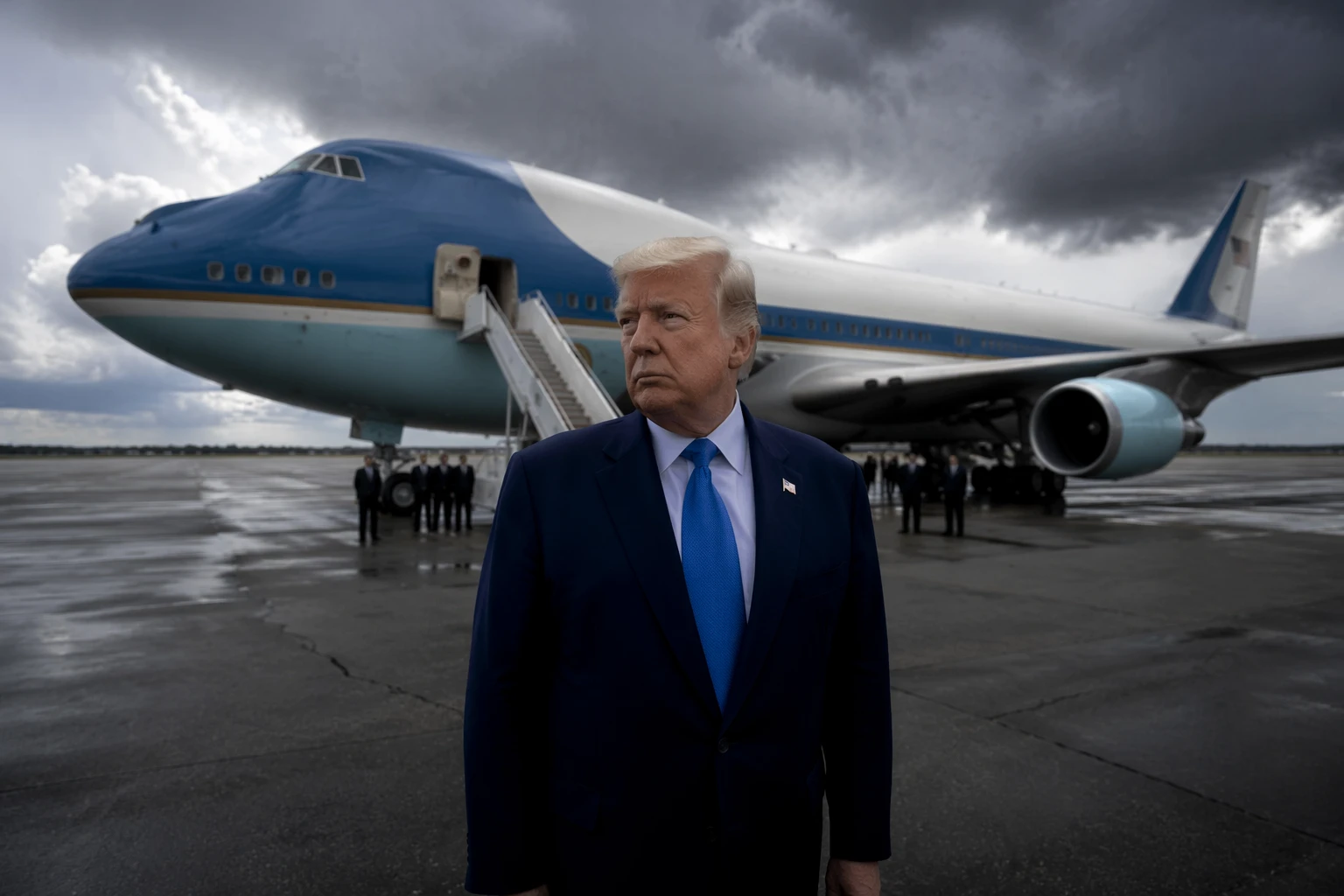
The Air Force said on May 1, 2026, that the VC-25B Bridge aircraft had completed modification and flight testing and was being painted in a new red, white and blue livery for a summer rollout. Even so, the long-term Boeing VC-25B replacement remains delayed until 2028, after the original target slipped from 2024. That gap has left the administration relying on a stopgap jet whose final configuration has become a target for scrutiny.
Thirteen Democratic senators, led by Chris Murphy, sent a letter on July 7 to Air Force Secretary Troy Meink and L3Harris chief executive Chris Kubasik, saying the bridge conversion had been compressed into roughly 10 months and demanding written answers by July 27. Their questions went to the heart of who signed off on the rapid modification, whether resources were pulled from other defense priorities, and whether survivability gave way to cost, speed, or optics in a program built to protect the commander in chief.
Sources
- [1]news.google.com
- [2]nytimes.com
- [3]af.mil
- [4]breakingdefense.com