US News
New analysis links iPhone era to falling U.S. birth rate

The iPhone arrived in June 2007, and the U.S. general fertility rate has fallen 22% since then. A new analysis argues the coincidence may be more than a coincidence, but it does not prove the phone caused America’s baby bust.
In a June 2026 working paper, economists Caitlin K. Myers and Ezekiel Hooper treated AT&T’s early iPhone exclusivity, which ran from June 2007 through February 2011, as a natural experiment. Their event-study models estimate that access to the iPhone reduced births by 4.5% to 8.0% among women ages 15 to 19 and by 3.2% to 6.6% among women ages 20 to 24, with smaller but statistically significant declines in older cohorts. The authors estimate that smartphone diffusion could explain 33% to 52% of the decline in the general fertility rate among women ages 15 to 44.
The case for phones remains only one piece of a much larger demographic shift. Federal vital statistics show fertility declined broadly after 2007, but the Centers for Disease Control and Prevention says changing social and cultural norms, higher educational attainment and contraceptive use have also contributed to lower birth rates among women under 35.
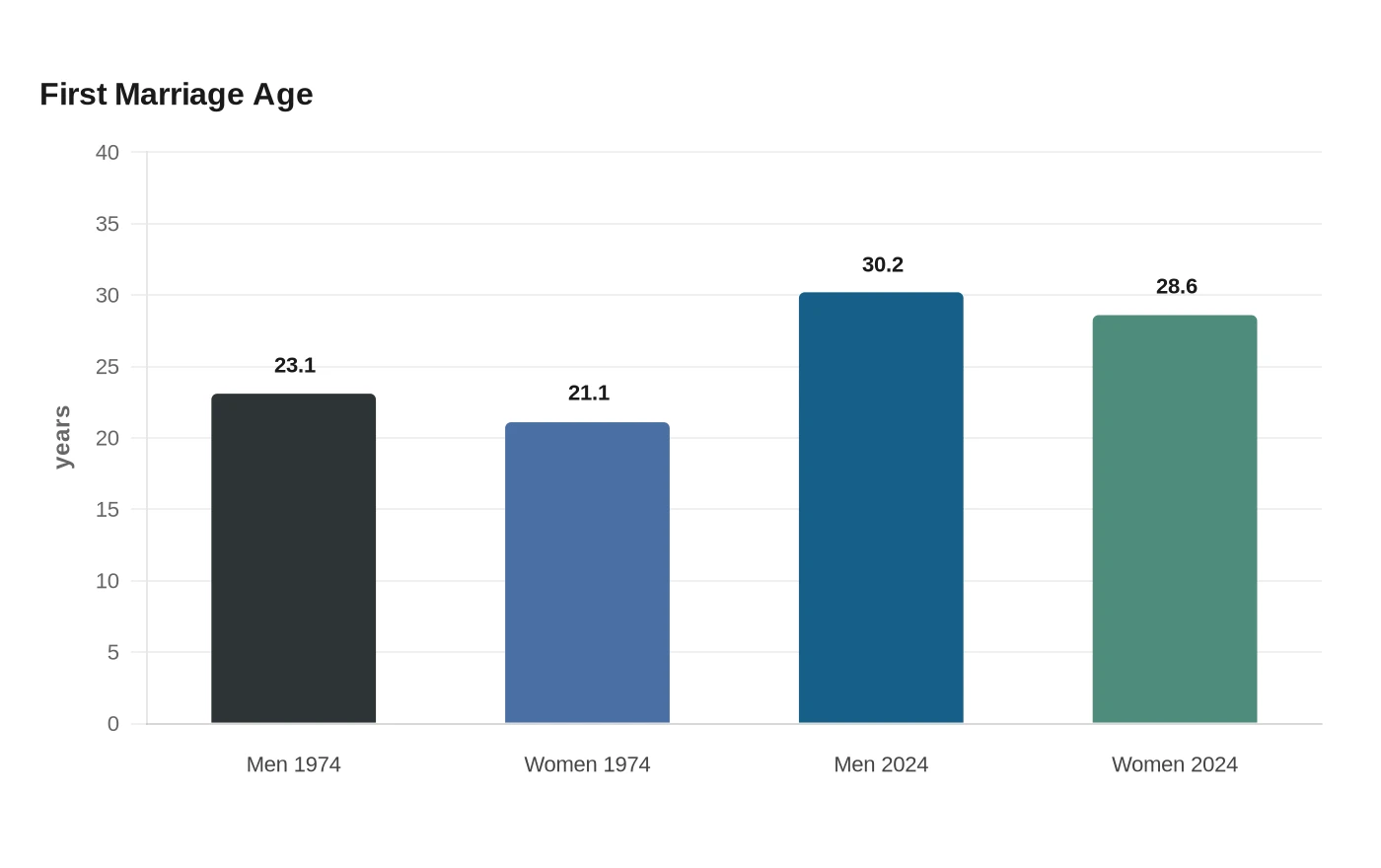
Delayed family formation points in the same direction. The Census Bureau said the median age at first marriage rose to 30.2 for men and 28.6 for women in 2024, compared with 23.1 and 21.1 in 1974, while 57% of adults ages 18 to 24 were still living in a parental home. Housing remains another brake: median home prices have climbed much faster than household incomes over the past 45 years, and lower marriage rates have limited new household formation. The new analysis also found survey evidence consistent with the iPhone reducing face-to-face interaction, increasing pornography use and lowering sexual frequency, but that looks more like one transmission channel than a standalone explanation for the long slide in births.
Sources
- [1]cbsnews.com