Health
New Antibiotic Targets Bacterial Ribosome E-Site
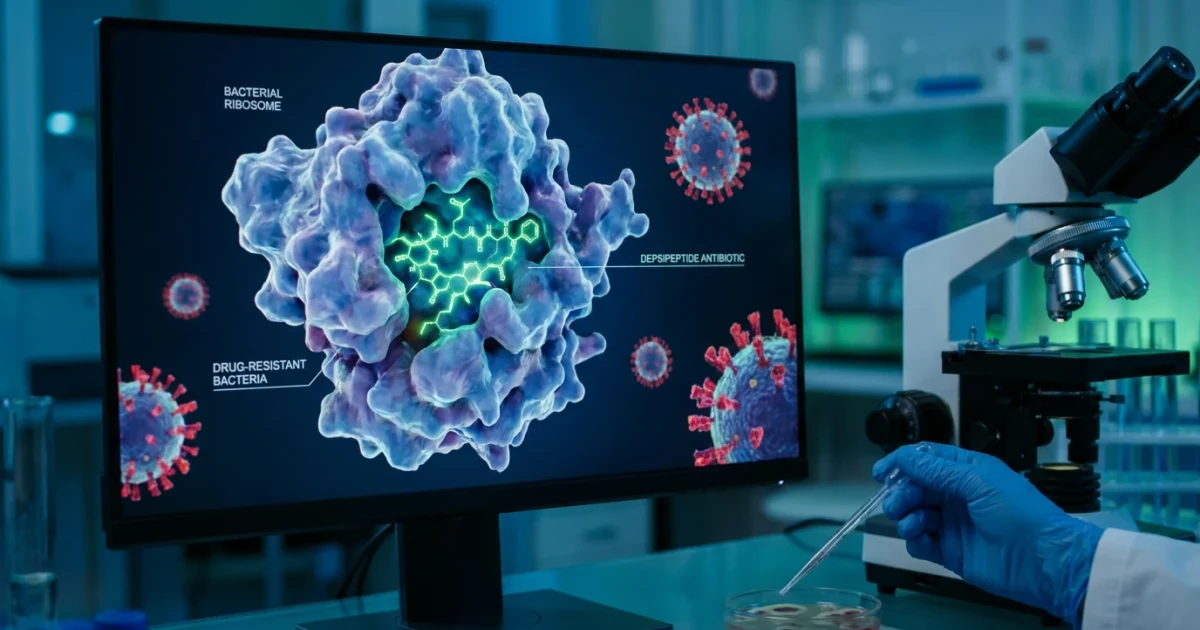
Researchers have identified a natural depsipeptide antibiotic capable of defeating drug-resistant bacteria by binding to a previously unexploited site on the bacterial ribosome, offering fresh hope in the fight against antimicrobial resistance. The breakthrough, published in Nature, details how this molecule acts on the ribosome’s E-site, a target not addressed by current antibiotics.
Uncovering a Novel Bacterial Weakness
Antibiotic resistance is a growing public health threat, with bacteria evolving to evade most available drugs. According to the CDC’s antibiotic resistance data, millions of infections and thousands of deaths in the US are attributed to drug-resistant bacteria annually. The new discovery focuses on a natural depsipeptide antibiotic, a class of compounds known for their complex structures and bioactivity.
The Nature study reveals that this antibiotic binds directly to the E-site of the bacterial ribosome—a molecular machine responsible for protein synthesis. While several antibiotics target the ribosome, the E-site had not previously been exploited, making resistance less likely to already exist. The research team used high-resolution structural techniques to show how the antibiotic docks into the E-site, disrupting the essential translation process for bacterial survival.
Mechanism of Action and Structural Insights
The detailed 3D structure of the ribosome-antibiotic complex reveals a unique mode of interaction. Unlike common drugs that bind either the A-site or P-site, this compound occupies the E-site, interfering with the exit of deacylated tRNA. This blockade effectively halts bacterial protein synthesis and leads to cell death, even in strains resistant to established antibiotics.
- Novel target: The E-site had not been previously exploited by antibiotics, lowering the likelihood of pre-existing resistance.
- Potency against resistant bacteria: The compound demonstrates strong efficacy in laboratory tests, including against multidrug-resistant strains.
- Structural data: The atomic details, available in the NCBI structure database, inform further drug design and optimization.
The Growing Need for New Antibiotics
The rise of bacterial resistance has outpaced the development of new drugs. The WHO’s 2022 antibacterial pipeline report highlights the scarcity of truly novel antibiotics entering clinical trials. Many new agents are modifications of existing drugs and are quickly met with resistance. The discovery of an antibiotic targeting a completely new ribosomal site represents a major advance.
Current mechanisms of resistance include enzymatic drug degradation, altered target sites, and efflux pumps. By binding the ribosome’s E-site, the depsipeptide bypasses many of these established defenses.
Implications and Next Steps
While this discovery demonstrates powerful activity in laboratory settings, further research is needed before clinical use. Toxicity, pharmacokinetics, and potential for resistance development in real-world bacterial populations remain to be evaluated. However, the unique target and mechanistic insights provided by the Nature study will guide the next generation of antibiotic innovation.
As antimicrobial resistance continues to undermine current treatments, breakthroughs like this highlight the importance of basic research and natural product exploration. If future testing confirms safety and effectiveness in humans, the E-site binding depsipeptide could become a critical tool in preserving the power of antibiotics for years to come.