World
New coffee frog species discovered in Costa Rica plantations
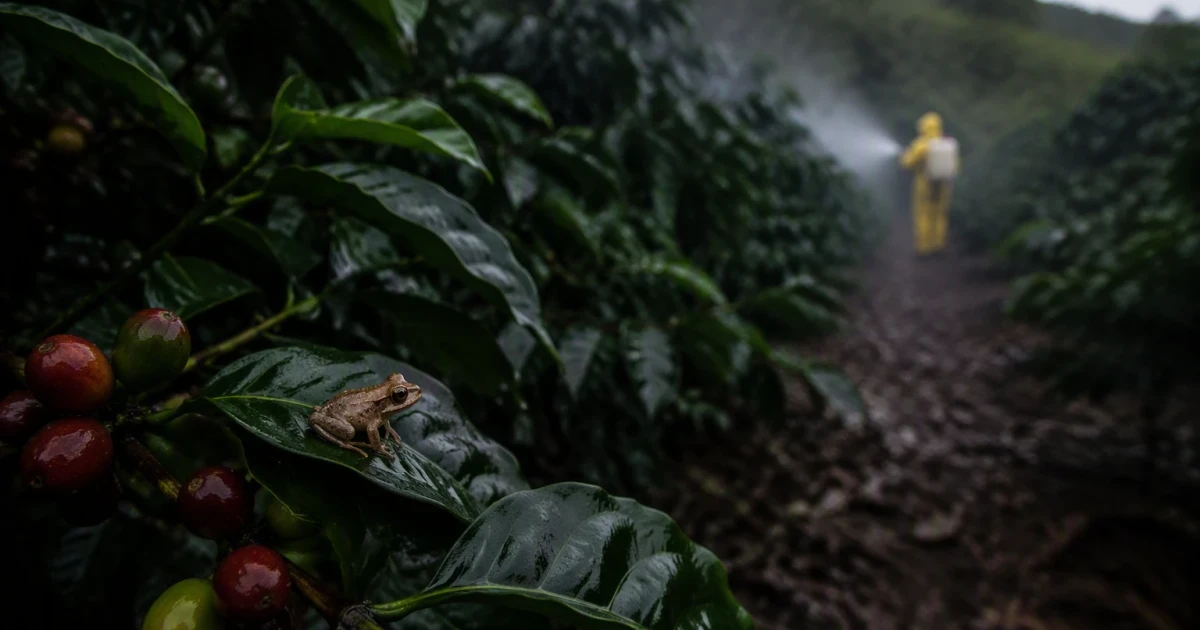
Scientists in Costa Rica identified a new nocturnal tree frog that lives in coffee plantations and measures less than four centimeters, a discovery that immediately tied a fresh species find to the pesticide-heavy agriculture around it. The dark green-spotted amphibian, nicknamed the spring frog and the coffee frog, was observed in San Lorenzo de Tarrazú and has also been identified in Tarrazú, Dota and León Cortés.
The frog thrives on coffee shrubs in Costa Rica's central Pacific region, where it feeds on small insects and comes out at night. Males have a translucent throat that inflates with a short, high-pitched call, a detail that helps distinguish the species and adds to the evidence that the animal is endemic to the area.
The find sharpened a familiar conservation problem: the same plantations that provide the frog's habitat also expose it to agrochemicals used in farming. Scientists warned that those chemicals pose risks to both the frogs and their tadpoles, a concern with wider stakes because amphibians are among the world's most endangered vertebrates and pesticide contamination is widely cited as a major driver of their decline.
Costa Rica's coffee country has become a recurring point of interest for herpetologists. In July, another new frog species was identified in the Los Santos region, underscoring how much biodiversity still remains in the patchwork of farms and forested slopes there. That pattern raises a practical question for growers and conservationists alike: whether export crops such as coffee can be managed in ways that protect wildlife rather than pushing it toward the edge.
Sources
- [1]cbsnews.com
- [2]france24.com
- [3]straitstimes.com
- [4]phys.org
- [5]koreatimes.co.kr
- [6]ticotimes.net