US News
New divorce book urges couples to end marriages without harm
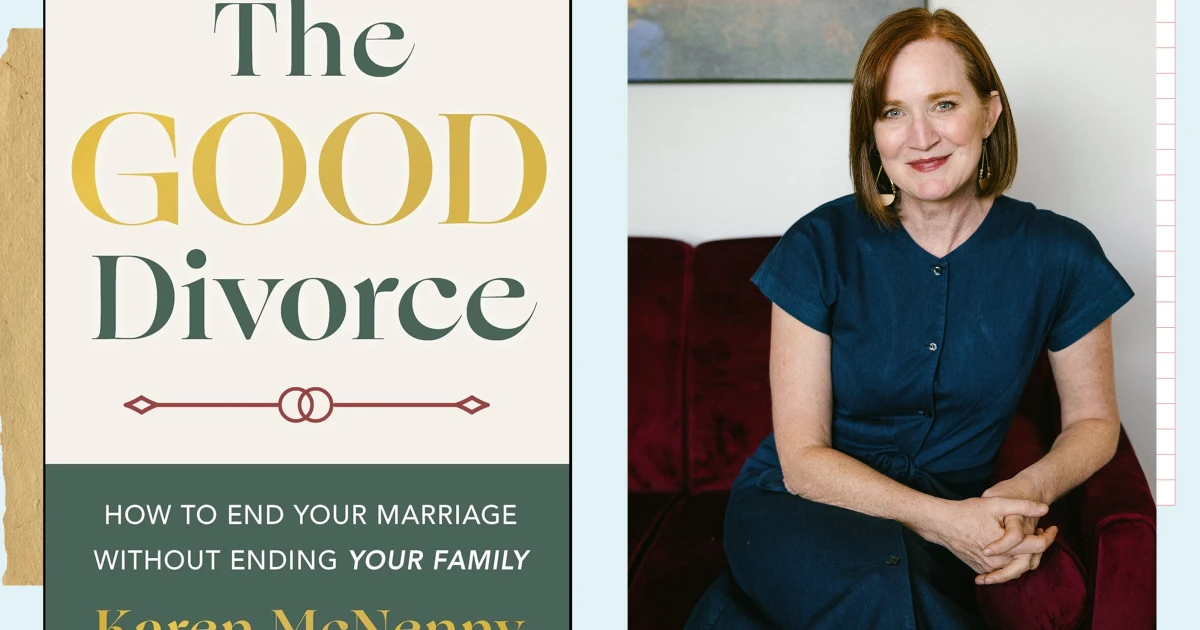
Karen McNenny’s new book, The Good Divorce: How to End Your Marriage Without Ending Your Family, makes its case in a blunt line: “divorce is a tool, not a weapon.” It argues that couples often make their first mistakes before anyone files, delaying decisions on money, housing, parenting schedules and health coverage and carrying that uncertainty into the separation itself. The better course is to treat divorce as a process to manage, not a battle to win, because the choices made early can shape both the legal outcome and the emotional damage that follows.
A different model for ending a marriage
McNenny is a certified divorce coach, a certified co-parenting specialist and a mediator. Wiley and Jossey-Bass list the book for May 2026, at 256 pages, with ISBN 978-1-394-37426-7.
That philosophy comes from her own life. McNenny traces it to her divorce about 15 years ago, and she and her former husband chose not to treat each other as enemies. Instead of trying to destroy the old family structure, she wanted to “renovate and transform” it. The book extends that mindset into practical advice for couples separating without destroying the family system, while keeping communication humane and co-parenting intact.
Why the book lands in a country where divorce remains common
Divorce is still a major part of American family life. About one-third of Americans who have ever been married have experienced divorce, and more than 1.8 million Americans divorced in 2023, according to Pew Research Center.
The Centers for Disease Control and Prevention’s provisional 2023 data show 672,502 divorces across 45 reporting states and the District of Columbia, with a divorce rate of 2.4 per 1,000 population.
She has also built a public platform around the same approach through The Good Divorce Show podcast and the Good Divorce Academy.
What research says hurts children most

The strongest support for McNenny’s approach comes from family research, which has long found that children’s outcomes after divorce are shaped less by the legal event itself than by what surrounds it. Studies point to the same cluster of risks: interparental conflict, weaker parenting, economic strain and reduced contact with one parent.
One recent peer-reviewed study estimates that parental divorce or separation affects about 1.1 million U.S. children each year. The highest mental-health risk falls on children in high-conflict separations, which is exactly why the tone parents use with each other matters so much. A divorce can be legally clean and still be emotionally chaotic if parents continue fighting in front of children or make them carry the pressure of adult decisions.
McNenny’s guidance on compassionate communication and preserving co-parenting relationships tracks that evidence.
The traps McNenny says parents should avoid
The book highlights the messier stages of divorce too, including what McNenny calls “relationship purgatory,” the in-between state where couples are no longer together but have not yet built a clear new structure. That limbo can keep emotions raw and prolong uncertainty for children, finances and housing. It can also leave one person trying to manage grief, identity loss and logistics all at once.
McNenny also warns against giving children too many choices. In practice, that means children should not be put in the middle of adult decisions or made responsible for managing the parents’ emotional comfort. The more adults offload conflict onto children, the more likely the separation is to become destabilizing rather than orderly.
For couples trying to avoid that outcome, the early steps matter:
• Get clear on money before the emotions harden into bargaining positions. • Set temporary housing plans so the household is not in constant limbo. • Decide how parenting time will work before children are asked to guess. • Keep health insurance and other coverage decisions on the table from the start. • Avoid turning children into messengers, referees or decision-makers.
Sources
- [1]npr.org
- [2]wprl.org
- [3]wiley.com
- [4]pewresearch.org
- [5]cdc.gov
- [6]pmc.ncbi.nlm.nih.gov
- [7]karenmcnenny.com