US News
New England's Black Patriots fought for independence and personal freedom
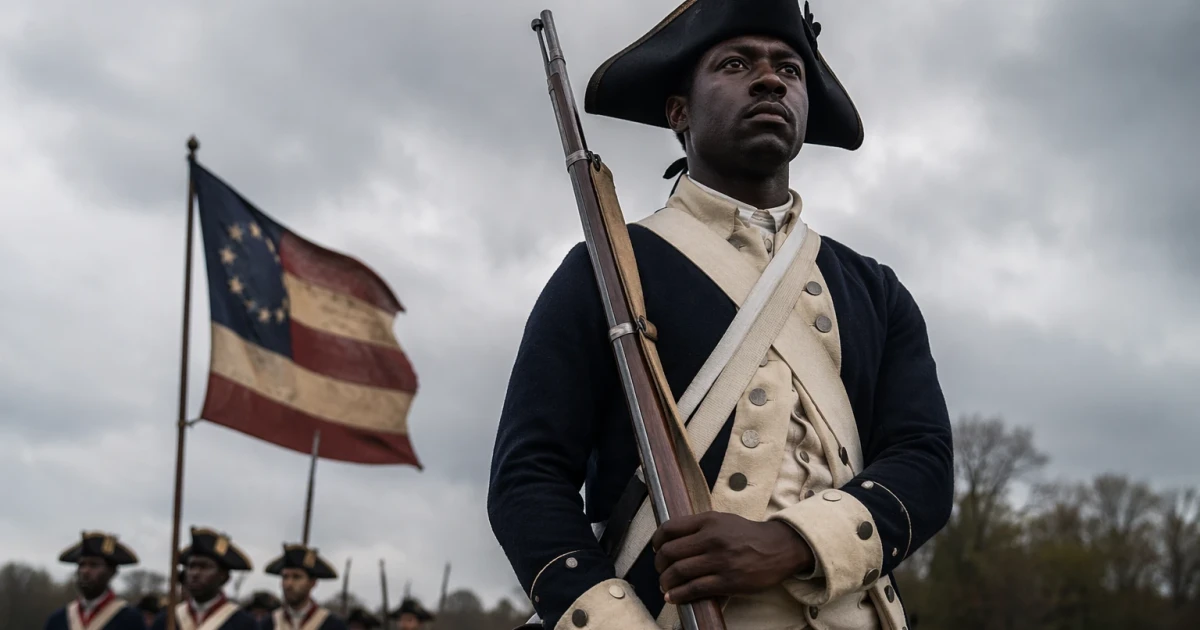
Across New England, the Revolution looks different when you follow the names that were almost left out of the record. Black men, both enslaved and free, served in local militias before the war began in 1775 and then fought at the opening battles of Lexington and Concord and at Bunker Hill, where the language of liberty collided with the reality of slavery.
The contradiction at the center of the Revolution
The American founding promised freedom while preserving bondage for many of the people who fought for it. Black Patriots entered that struggle with a double aim: independence from Britain and, for many, the hope of liberty for themselves and their families. That tension shaped military service across New England, where Black soldiers were not a side note but part of the region’s earliest war effort.
Massachusetts stood at the center of that story. It accounted for as much as 40% of Black Patriot enlistments overall, and it banned slavery in 1780, before the Revolutionary War ended. The state’s decision did not erase the contradiction, but it shows how closely military service, emancipation, and politics were tied together in New England.
Where the first battles included Black soldiers
The opening clashes of the Revolution were not fought by white colonists alone. Black men were present at the Battle of Lexington and Concord on April 19, 1775, and at the Battle of Bunker Hill on June 17, 1775. Their service places them inside the war’s first decisive moments, not at its margins.
That matters because memory often narrows the cast of the Revolution. Salem Poor and Peter Salem became part of the era’s public recollection, but many other names never did. The historical record shows a wider field of service than popular storytelling usually allows, with Black soldiers fighting in the same critical engagements that define the start of the war.
What the archives reveal, and what they once hid
The clearest evidence of this history survives in fragments that had to be assembled from military paperwork, payroll records, and enlistment materials. The Museum of the American Revolution has gathered nearly 200 rare documents in its Patriots of Color Archive, including muster rolls, pay vouchers, enlistment papers, and discharge forms. Those records make individual soldiers visible in a way standard narratives often do not.
The National Park Service estimates that about 2,100 soldiers of color from Massachusetts can be documented in Revolutionary War service. That figure comes from an intensive examination of surviving eighteenth-century military records, and it suggests the real number may be higher than older estimates long treated as final. The archive does more than count names, though: it exposes how dependent the history of Black service is on scattered paperwork that survived by chance.
Why New England matters to the national story
New England is not just a regional stop on the map of the Revolution. It is where the contradiction between liberty and slavery can be seen in sharp relief, because Black enlistments were part of the war effort from the beginning and Massachusetts later moved to abolish slavery while the conflict still continued. The region shows how the ideals of the Revolution were tested in daily life, in military service, and in the legal status of the men who fought.
Boston National Historical Park describes the local patriot ranks as including many people of African and Afro-Indigenous ancestries among the thousands who joined the cause. That framing matters because it shifts the story away from a narrow cast of founders and toward the broader population that carried the war forward. In New England, the Revolution was built in part by men whose names were preserved only in muster rolls and pay records.
How the journey through historic homes changes the record
Traveling down dirt paths and into historic homes across New England brings that buried history into view. The landscape itself still holds traces of the enslaved men who served, but the harder work is in reading what the archives left behind and asking why so many stories were minimized or lost. The journey through the region becomes a way to show how memory is shaped by access, preservation, and institutional choices.
That is the larger national point buried inside the local history. If the records for Black Patriots sit in fragments, then the public memory of the Revolution has been built from incomplete evidence. Names like Salem Poor and Peter Salem endure, but they stand in for many others whose service was real, documented, and long underrepresented.
Why this history still matters
The Revolutionary War is often remembered as a clean origin story, but the record from New England tells a more difficult truth. Black soldiers fought in the first battles, served in large numbers, and did so while slavery remained legal in Massachusetts until 1780. Their service was not just about national independence; it was also a claim on personal freedom in a country that had not yet granted it.
That unresolved contradiction is not a footnote. It is part of the founding itself, and the surviving documents from New England show how much of American liberty was contested by the people who were denied it.
Sources
- [1]nytimes.com
- [2]nps.gov
- [3]amrevmuseum.org
- [4]home.nps.gov
- [5]battlefields.org