US News
New Jersey heat wave death toll may rise to 29

New Jersey’s death toll from the early-July heat wave may be as high as 29, as state officials continued to sort suspected heat-related fatalities that began on Thursday, July 2. The count first stood at 19 on July 4, rose to 25 by July 6, and then climbed again as investigators tracked deaths concentrated in central and northern New Jersey.
State Health Commissioner Dr. Raynard Washington said many of the people who died were found in homes without air conditioning, a detail that underscores how extreme heat can kill indoors and out of sight. Gov. Mikie Sherrill urged residents to stay cool, stay hydrated, limit strenuous outdoor activity during the hottest part of the day, and never leave children or pets in parked vehicles.

The toll was still moving as severe storms, power outages and transportation disruptions complicated the holiday weekend, slowing travel and changing Fourth of July plans across the state. New Jersey officials said they were relying on heat-illness surveillance systems and cooling-center resources as the emergency unfolded.
The lag in the official count reflects how heat deaths are measured. New Jersey’s Heat-Related Illness dashboard tracks emergency department visits, hospitalizations and deaths from heat-related illness going back to 2000, a system built for a threat that repeatedly returns with little warning. The state’s own data show that extreme heat has become a recurring public-health risk, particularly for older adults and other vulnerable residents.

The latest fatalities came during a brutal stretch that some officials described as New Jersey’s worst heat emergency in 14 years. Record or near-record temperatures hit Newark, Trenton and Atlantic City, where some reports said the mercury reached 106 degrees on July 4. The National Weather Service issued extreme heat warnings across the Northeast as the heat spread over a wide swath of the eastern United States.
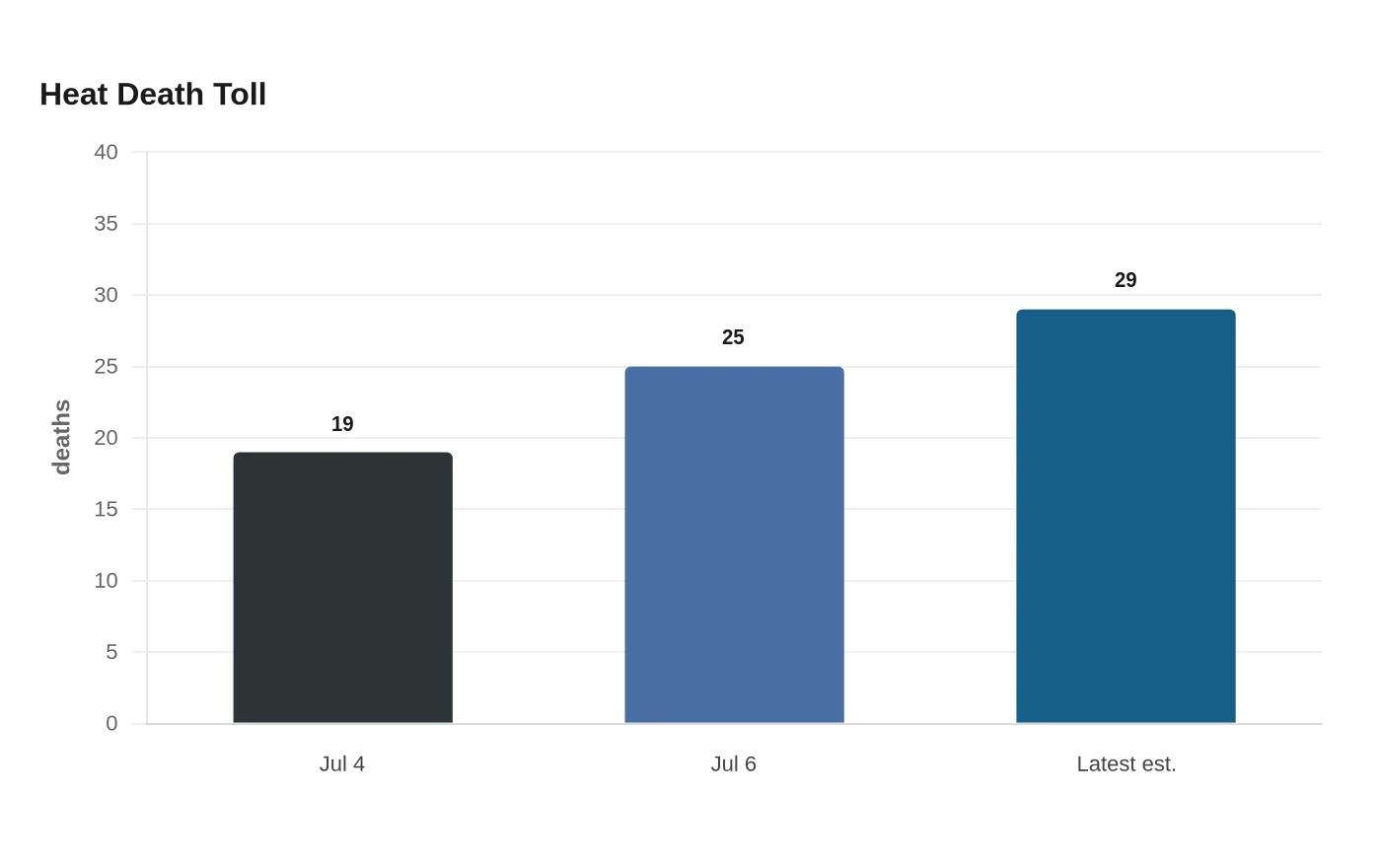
The rising death count made clear how quickly heat can overwhelm homes, infrastructure and emergency systems at the same time. In New Jersey, the hardest part of the disaster was not only the temperature itself, but the delay in fully seeing its toll.
Sources
- [1]news.google.com
- [2]nytimes.com
- [3]nj.com
- [4]nbcnewyork.com
- [5]pbs.org
- [6]nj.gov
- [7]northjersey.com
- [8]wusa9.com