Science
New Plant-Eating Dinosaur Species Discovered in Korea
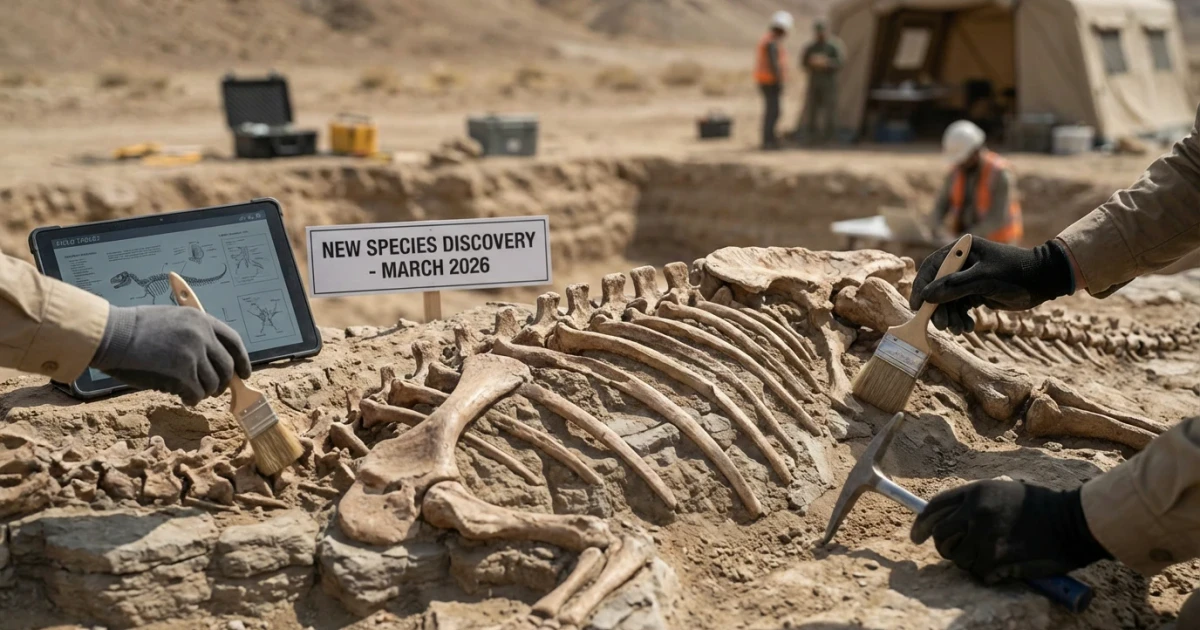
Paleontologists in South Korea have unearthed a new species of plant-eating dinosaur, shedding light on the region’s rich prehistoric biodiversity and adding to the growing list of significant fossil discoveries from the Korean Peninsula.
Discovery in Korea’s Fossil-Rich Terrain
The latest find, announced by Sci.News, was identified in sedimentary deposits well-known for yielding dinosaur remains. While South Korea is already recognized for its abundance of fossilized dinosaur footprints and eggs, the recovery of a well-preserved skeleton has enabled researchers to classify a completely new species of herbivorous dinosaur. This discovery continues Korea’s emergence as a key area for recent dinosaur discoveries in East Asia, especially those from the Cretaceous period.
Significance of the Find
According to Sci.News, the new dinosaur belongs to a group of plant-eating dinosaurs that once roamed the Korean landscape. The specimen’s anatomical features—analyzed through advanced fossil X-ray imaging—highlight unique adaptations for herbivory. Researchers note that the fossil, found in a juvenile state, is one of the most complete examples discovered in the region. This is particularly important for paleontologists working to understand the growth and development of Cretaceous dinosaurs in Asia.
While South Korea is famous for trace fossils, including extensive dinosaur species records, body fossils like this one are rare, making the find especially valuable for scientific study. The fossil’s preservation has allowed for detailed analysis of its skeletal structure, enabling researchers to distinguish it from previously known species.
Context in Korean Dinosaur Research
South Korea’s dinosaur fossil discoveries have grown steadily over the past few decades. Government research portals and the Paleobiology Database document numerous finds, including hadrosaurs, ceratopsians, and small theropods. This new species, described as a small, juvenile herbivore, adds to the diversity of known Cretaceous dinosaurs from the region. It also supports existing evidence that the Korean Peninsula was home to a variety of dinosaur species during the Mesozoic Era.
- South Korea’s fossil sites are especially noted for their detailed footprints, egg nests, and now, increasingly, skeletons.
- Many discoveries are concentrated in the southern provinces, where sedimentary rocks preserve the remains of Cretaceous ecosystems.
Broader Impacts and Future Research
Paleontologists emphasize that each new dinosaur discovery in Korea not only enriches the country’s paleontological record but also helps refine global understanding of dinosaur evolution and migration patterns. The juvenile skeleton allows researchers to study growth stages and compare them to related plant-eating dinosaurs in Asia and beyond. As advanced imaging techniques, such as X-ray analysis, become more common, the expectation is that more hidden details will emerge from existing and future fossil finds.
For readers interested in exploring the technical aspects of dinosaur classification or the anatomical details setting this species apart, resources like the Natural History Museum Dino Directory provide accessible, in-depth explanations.
Looking Ahead
The discovery of a new plant-eating dinosaur species in Korea highlights the ongoing importance of the region’s fossil beds and the potential for further significant paleontological breakthroughs. As research continues and new technologies allow for deeper analysis of fossil material, South Korea is set to remain at the forefront of dinosaur science.