World
New prime minister urged to tackle widening school disadvantage gap

England’s early-years disadvantage gap widened to 4.9 months in 2025, the widest since 2014, even as free school meal eligibility among reception pupils slipped to 17.4% from 17.7% a year earlier.
The Education Policy Institute’s new EverFSM measure gives a more consistent reading of disadvantage than the older Ever6 proxy, distorted by the rollout of Universal Credit. By the end of primary school, 31.4% of pupils were recorded as disadvantaged in 2025, and the year 6 gap remained at 10.0 months. The 16-19 gap has changed little since 2019, although disadvantaged students have become less likely to continue in education after key stage 4.
If disadvantaged pupils had the same absence rates as their peers in 2023, the age-11 gap would have been almost one month smaller and the age-16 gap more than four months smaller. EPI recommends earlier intervention, better school readiness, a higher early years pupil premium to match later years, more accessible childcare for disadvantaged children, stronger SEND training, a new absence strategy and a student premium in the 16-19 phase.
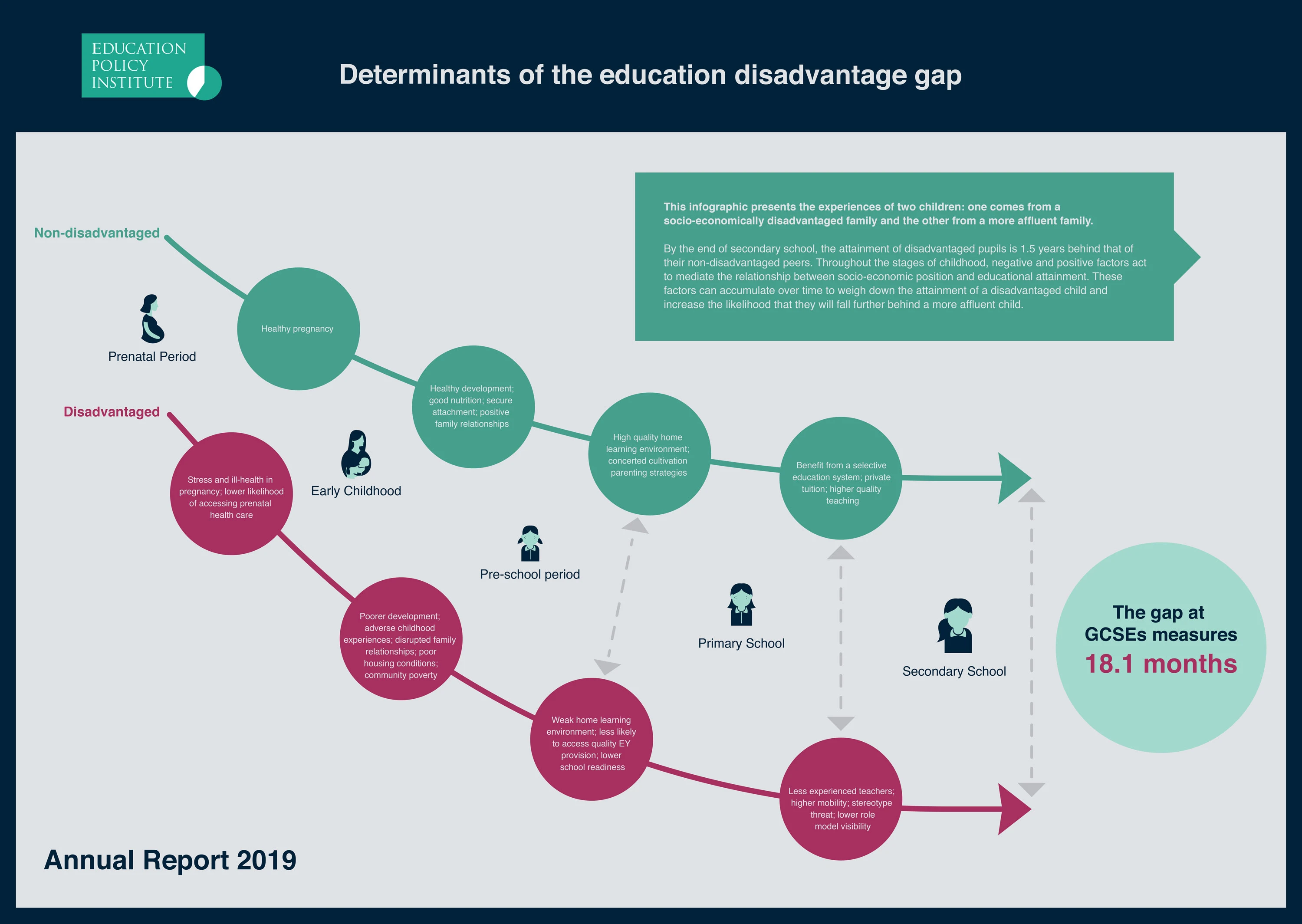
The House of Commons Public Accounts Committee put the number at around 2 million children from disadvantaged backgrounds in England behind their peers academically. In 2022/23, 25% of disadvantaged pupils achieved grade 5 or above in English and Maths GCSE, compared with 52% of those not known to be disadvantaged. The committee also found pupil premium spending fell 3% between 2018-19 and 2023-24, more than 90% of the estimated £9.2 billion of disadvantage-related funding was not ring-fenced, and 47% of school leaders were using pupil premium money to plug other budget gaps, up from 23% in 2019.

The National Education Union argues too many children fall through the cracks because eligibility rules exclude many families and registration processes create barriers to access. The pandemic entrenched the link between family income and educational achievement.