Science
New Study Uncovers Evidence of Ancient Martian Oceans
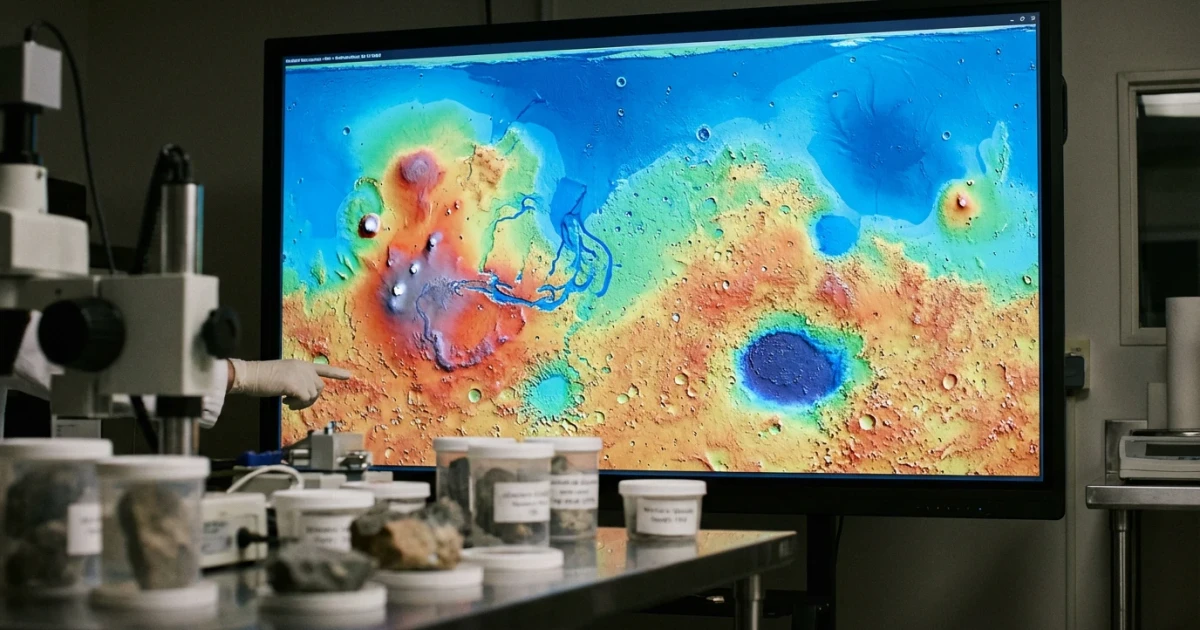
New research published in Nature offers striking evidence that Mars may once have hosted vast oceans, as planetary scientists identify key topographic features suggesting a watery past. The findings, which highlight so-called "bathtub rings" on the Martian surface, are fueling fresh discussion about the Red Planet's ancient climate and potential for past habitability.
Key Topographic Clues on Mars Surface
The study, featured in Nature, details how a team of planetary geologists analyzed high-resolution elevation data from the Mars Orbiter Laser Altimeter (MOLA). They focused on the identification of shoreline-like features—nicknamed "bathtub rings"—that encircle the planet’s northern lowlands. According to the USGS Gazetteer of Planetary Nomenclature, these regions have long been suspected as ancient ocean basins, but conclusive evidence has remained elusive until now.
- The researchers mapped subtle, continuous terraces and escarpments that closely resemble shorelines formed by standing water on Earth.
- They used global topographic datasets to trace these features at similar elevations, supporting the hypothesis that they mark the boundaries of a long-lost ocean.
- These findings are consistent with previous mapping efforts available in the NASA MOLA topography resources.
Implications for Mars’ Watery Past
The identification of these "bathtub rings" offers one of the strongest pieces of evidence yet for the existence of an ancient ocean in Mars’s northern hemisphere. The study suggests that, billions of years ago, water may have covered up to one-third of the Martian surface—potentially forming a body of water larger than the Arctic Ocean on Earth.
According to the Nature study, the elevations of these shoreline features are consistent across vast distances, indicating they could not have formed by random geological processes. Instead, the features suggest stable, long-lived bodies of water that left visible marks as they receded. This supports the notion that Mars’s climate was once warm and wet enough to sustain large, persistent oceans or seas.
How Scientists Mapped the Ocean’s Signature
The research team relied on new techniques for analyzing and filtering planetary elevation data, allowing them to distinguish genuine shoreline features from those produced by other processes such as volcanic activity or tectonics. By cross-referencing different datasets—including recent NASA Mars data releases—they were able to validate their findings and build a more robust case for the ocean hypothesis.
Debate and Future Exploration
While the study provides compelling evidence, some scientists urge caution. Previous attempts to identify shorelines on Mars have faced challenges, such as the planet’s dramatic crustal warping over billions of years. However, the precision and scale of features documented in this latest research have been described as “unusually convincing” by independent experts cited by Phys.org and other science outlets.
The findings also renew interest in the search for signs of life. Oceans provide stable, long-lived environments where life can emerge; confirming their existence on Mars strengthens the argument for searching for ancient biosignatures in Martian sediments.
What’s Next in the Search for Martian Oceans?
NASA and other agencies are expected to incorporate these results into future mission planning. Upcoming Mars landers and orbiters will likely target these putative shorelines to search for ancient sediments and chemical traces left by standing water.
As more high-resolution datasets become available through the MOLA Data Archive and related resources, researchers anticipate that additional features—such as deltas, riverbeds, and shoreline clays—will be found, painting an ever-clearer picture of Mars’s watery past.
Conclusion
The identification of ancient shoreline features on Mars marks a significant step forward in unraveling the planet’s geological history. As new data and analysis techniques emerge, the case for a once-oceanic Mars continues to strengthen—offering tantalizing clues about the Red Planet’s potential for past life and its evolving climate. For curious readers and researchers alike, these findings provide a launching point for deeper exploration of Mars’s mysterious surface and its implications for planetary science.