Science
New supernova study says the universe is still accelerating
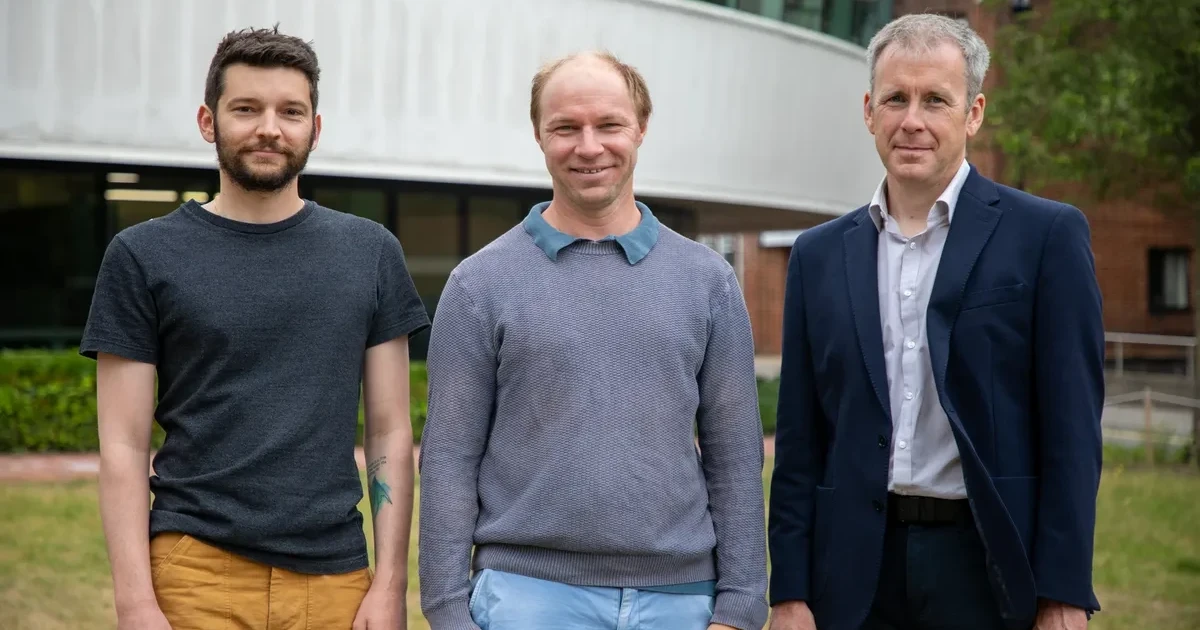
A new paper led by Brodie Popovic at the University of Southampton said the universe is still expanding at an accelerated pace, after rechecking a 2025 claim that dark energy was weakening. The study, still in press at Monthly Notices of the Royal Astronomical Society, said the earlier result leaned on a misunderstanding of supernova age estimates and left out a standard host-galaxy stellar-mass correction used in modern supernova work.
The paper, titled Still Accelerating: Type Ia supernova cosmology is robust to host galaxy age evolution, was submitted on Jan. 20, 2026, revised on May 8 and later accepted for publication. Its author list includes Phil Wiseman, Mark Sullivan, Adam G. Riess, Dan Scolnic, Rebecca C. Chen, Tamara M. Davis, Lluís Galbany, Isobel M. Hook, Saurabh W. Jha, Lisa Kelsey, Yukei S. Murakami, Mickaël Rigault, Benjamin M. Rose, Brian Schmidt, Mat Smith and Maria Vincenzi. The team said the 2025 scenario overstated the claimed progenitor-age difference by a factor of three to five.
Type Ia supernovas sit at the center of the dispute because astronomers treat them as standard candles, explosions thought to have roughly the same intrinsic brightness. By comparing their true brightness to how bright they look from Earth, scientists can measure distance and, because distant light has traveled for billions of years, reconstruct how expansion has changed over time. That method helped deliver the 1998 discovery that the universe is accelerating, a result reached independently by the Supernova Cosmology Project, started in 1988, and the High-z Supernova Search Team, launched in 1994. The work later helped earn the 2011 Nobel Prize in Physics for Saul Perlmutter, Brian Schmidt and Adam Riess.
The new analysis said the Dark Energy Survey supernova sample measured redshift evolution of -0.028 plus or minus 0.034 mag z^-1, a value consistent with zero. It also said including that evolution changes the dark-energy equation-of-state parameter w by less than 0.01, too small to alter the standard picture. Riess said the evidence for cosmic acceleration remains remarkably consistent once supernovas are calibrated for host environments and populations.
The stakes remain high because the standard cosmological model puts the universe at about 13.8 billion years old, with ordinary matter making up roughly 5 percent of everything, dark matter about 27 percent and dark energy about 68 percent. If the 2025 slowdown claim had held up, it would have implied dark energy was fading and the universe’s fate was less settled. Instead, the new study reinforced the older result: the expansion is still accelerating, and the force driving it remains one of cosmology’s deepest mysteries.
Sources
- [1]japannews.yomiuri.co.jp
- [2]southampton.ac.uk
- [3]arxiv.org
- [4]nobelprize.org
- [5]newscenter.lbl.gov
- [6]yahoo.com
- [7]reuters.com