Science
New Telescope Image Reveals Stunning Details of Dying Star
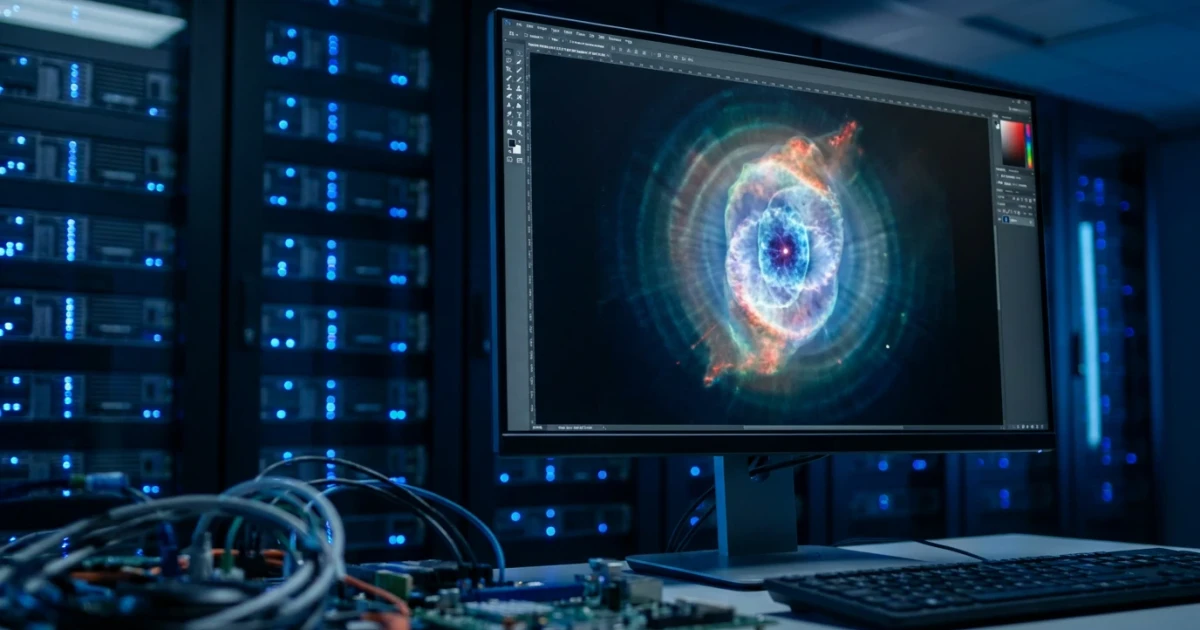
A newly released image from the James Webb Space Telescope is offering astronomers and the public a breathtaking look at a dying star, with its luminous layers resembling a billowing crystal ball. This star, located at the heart of the famous Cat's Eye Nebula (NGC 6543), is in the final stages of its stellar evolution, providing a vivid snapshot of the cosmic processes that shape planetary nebulae.
Webb’s Detailed View Captivates Scientists
The official NASA release highlights the extraordinary detail captured in this latest observation. Using the advanced capabilities of the James Webb Space Telescope, astronomers have been able to resolve delicate filaments, concentric shells, and glowing gas clouds that make up the nebula’s intricate structure. The Cat's Eye Nebula has long fascinated scientists, but Webb's enhanced sensitivity and resolution have revealed new features that were previously hidden from view.
- The nebula lies approximately 3,300 light-years from Earth, in the constellation Draco.
- It is one of the most complex planetary nebulae known, displaying multiple rings and knots of ejected material.
- The central star is shedding its outer layers, creating the nebula’s distinctive glowing patterns.
Understanding the Life Cycle of Stars
The Cat’s Eye Nebula is a textbook example of a planetary nebula, a phase that occurs when medium-sized stars (like our Sun) exhaust their nuclear fuel. As the star dies, it expels its outer layers into space, forming beautiful and often complex nebulae. According to background information compiled by the European Space Agency, the Cat's Eye's unique appearance comes from a series of ejections over thousands of years, each adding a new layer to the nebula’s shell.
Detailed data archives provide astronomers with spectral and imaging data that help decode the nebula’s physical conditions. Studies have shown that the nebula’s temperature can reach over 10,000 Kelvin, and its expanding shells move at speeds of up to 20 kilometers per second.
Scientific Insights from Webb’s Observations
Webb’s image not only stuns visually but also serves as a critical tool for researchers. By analyzing the nebula’s light, astronomers can determine the chemical composition of the ejected material, offering clues about the star’s past and the elements released into the interstellar medium. This ongoing process is crucial for enriching future generations of stars and planets with heavy elements.
Research published in the Astrophysical Journal explains that the Cat’s Eye’s complex structure may be shaped by the presence of a binary companion star, which could account for the nebula’s symmetrical rings and jets. These findings make NGC 6543 an important subject in the study of stellar evolution and nebular dynamics.
The Public’s Window to the Universe
The Cat's Eye Nebula has been a favorite target for astronomers since its discovery, and images like Webb’s continue to inspire wonder. NASA’s Astronomy Picture of the Day offers annotated images and technical explanations, making complex astronomical phenomena more accessible to the public.
- Webb’s observations complement decades of data from the Hubble Space Telescope and other observatories.
- The image contributes to a growing data archive that supports ongoing and future research.
As the Webb telescope continues its mission, astronomers anticipate further discoveries that will deepen our understanding of how stars die and recycle their material into the cosmos.
Looking Ahead
The new image of the Cat’s Eye Nebula underscores the power of modern space telescopes to reveal the universe’s hidden beauty and complexity. By combining high-resolution imaging, advanced spectroscopy, and multi-wavelength observations, researchers are piecing together the intricate story of stellar life and death. With each new observation, the boundary of human knowledge expands—and our appreciation for the cosmos grows ever deeper.