Health
New York City ERs see surge in heat illness as New Jersey deaths rise

New York City emergency rooms logged their highest number of heat-illness patients in years as an early-summer heat wave pushed the region into one of its most dangerous stretches of the season. On Wednesday, emergency medical crews responded to 209 heat-related calls and hospitals recorded 151 heat-related emergency room visits.
City officials said more than 200 cooling centers were open across the five boroughs as temperatures strained hospitals and ambulance crews. The New York City Health Department also worked with New York City Emergency Management to open three new cooling centers in communities with the highest risk of heat-related illness and death, part of a response aimed at getting people out of dangerous indoor heat before their symptoms turned severe.

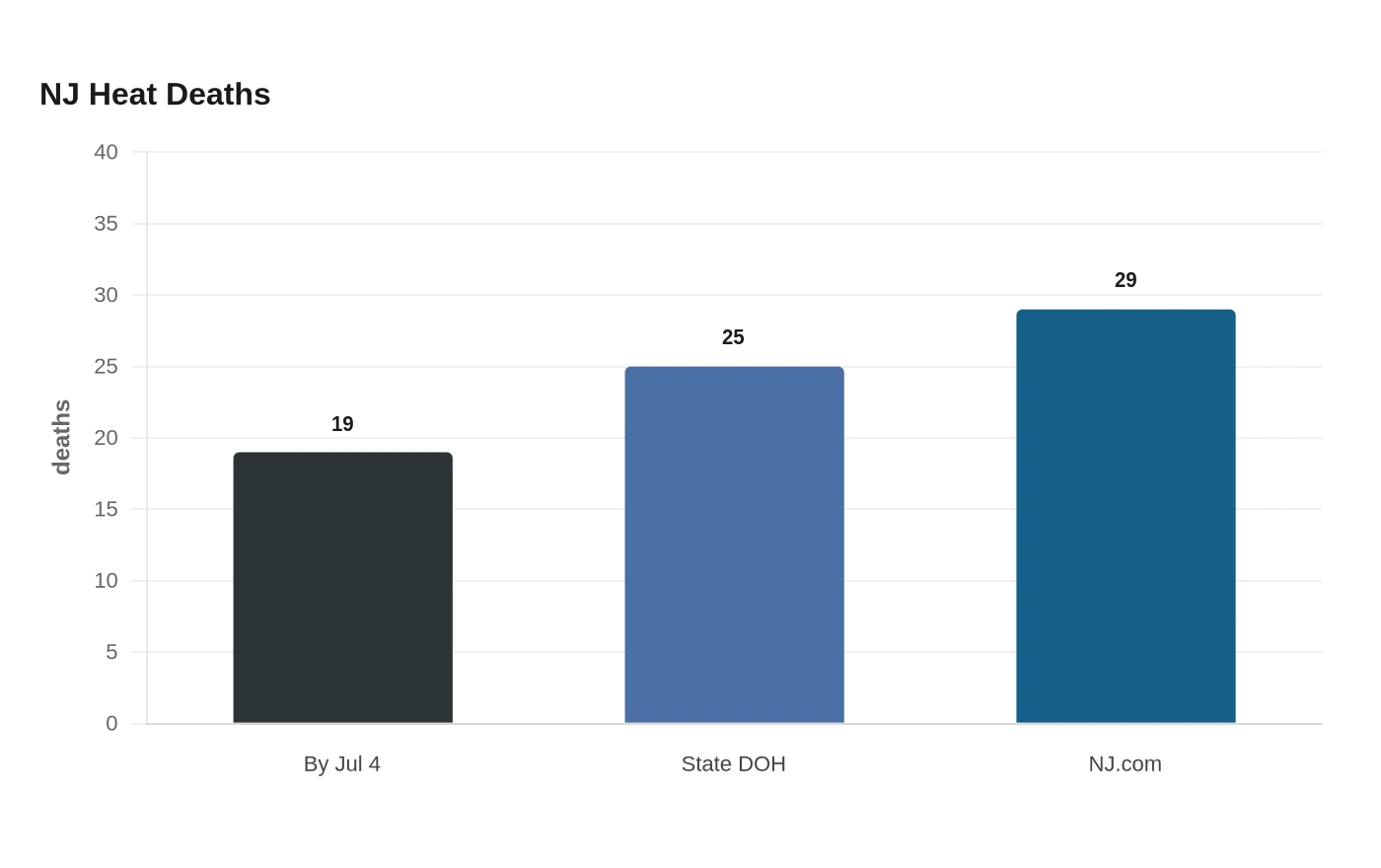
The toll in New Jersey kept rising. State officials said at least 19 suspected heat-related deaths had been reported by July 4, and the state Department of Health later put the figure at 25. NJ.com said the count may be as high as 29. NJ Advance Media reported deaths in 10 counties and victims ranging in age from their 30s to their 80s, showing how widely the heat has cut across the state.
New Jersey has urged residents to use cooling centers, drink water, avoid strenuous outdoor activity during the hottest part of the day and check on older adults and other vulnerable people. The state defines a heat wave as three or more days with temperatures of 90 degrees or higher, a threshold that has become increasingly important as extreme heat arrives earlier and with more force.
New York City’s own health data puts the long-term burden in stark terms: about 500 New Yorkers die prematurely each summer from hot weather. The city health department said a record-breaking heat event in June 2025 caused 19 heat-stress deaths, a reminder that the emergency is not limited to a single day or city block. New Jersey’s Heat-Related Illness dashboard tracks emergency-department visits, hospitalizations and heat-related deaths going back to 2000, giving officials a longer record of how often hot weather turns into a medical crisis.
Sources
- [1]nytimes.com
- [2]gothamist.com
- [3]nyc.gov
- [4]a816-dohbesp.nyc.gov
- [5]nj.com
- [6]dep.nj.gov
- [7]nj.gov
- [8]ny1.com